
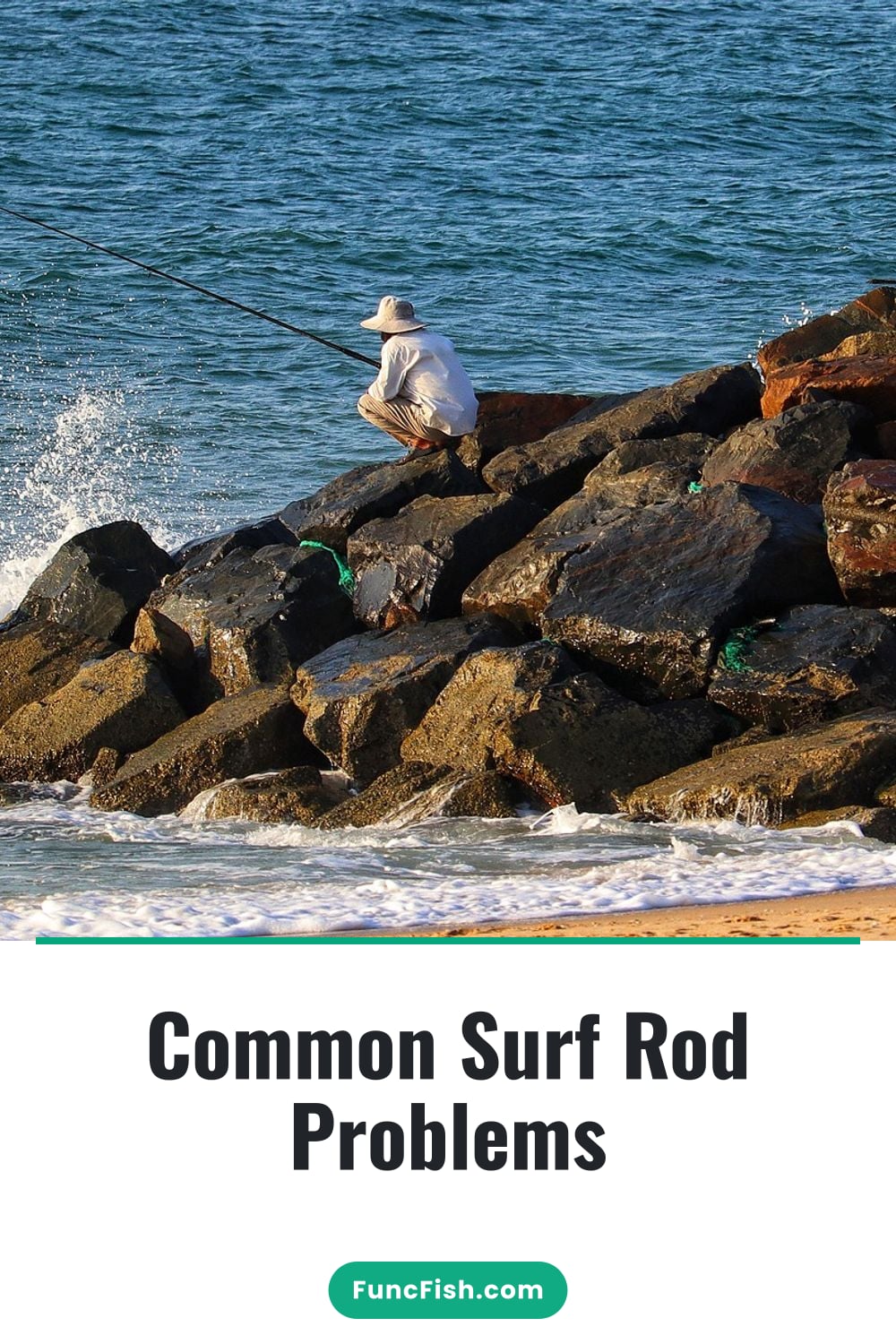
There’s something about the way a rod feels when you pick it up. It feel solid and is balanced perfectly for what you think will be thrown at you by tides. You like the look of it on the rack, your buddy liked the action of it and told you to get one.
So you do. And then reality sets in. Fishing isn’t done on showroom floor, but outdoors where salt spray, sun glare and beating on some hard fish takes its toll on the hardware.
What was rock solid the first day has a few small imperfection that throw off your cast or cause it to snap under pressure unless you catch the clues early. Few of us check anything until it breaks, and by then it is usually too late. Most guys don’t check for a loose guide till one blows up, or they don’t see a broken blank till it finally snaps in half.
Anglers are wise to be suspicious of new beaches, yet most won’t even look at their own fishing tackle. You don’t go fishing to wrestle your rods and reels; you go fishing to catch fish. Understanding where things break allow you to change them before they fail in the middle of fight.
It also gives you an indication that something needs attention before fish gets into it. The ferrule connection is number one overlooked item. That is where two pieces of carbon fiber is connected via a metal sleeve that depends on friction to hold it in place.
Five Common Surf Rod Problems To Watch
1. Ferrule Connection Issues
When you force a wet section home, the friction drop and the next thing you know, it whips all over the place on a cast. Salt corrosion will eat at the thread surfaces over time as well as the actual metal surface. When you load up the blank, a loose ferrule does not transmit energy to your line but rather loses it in the backbone, creating a weak spot.
Always wipe down the sections after each trip and dry thoroughy before storing. Some waterproof grease on the threads can prevent this problem from happening on a big fish when they decide to take off. Mismatched guides is another cause of lost accuracy and distance.
2. Mismatched Guides Alignment
Guides are small rings located down the length of your rod that allow your line to travel in a straight line. A single guide knocked out of position ever so slightly can cause the line to rub the opposite side of subsequent guide. This hot spot creates friction and eats up casting energy.
This weakens the mono or braid, which then breaks under tension. Unless you notice while looking down the rod from the tip back to the reel seat, you may not know if a guide is out of alignment. A subtle bend in the guides affect accuracy and power.
Guide replacement is inexpensive insurance and should of been done as soon as a guide is damaged. Hairline Fractures, Blanks can get hairline fractures that aren’t apparent to the naked eye until they reach a total break status. Under torsional stress or when hit suddenly, carbon fiber is very strong in tension but brittle.
3. Hairline Fractures In Blanks
You can actualy cause micro-cracks in the weave of the blank by slamming your rod too hard closed, dropping it on a hard boat deck, etc. The cracks will grow over time with usage and you’ll begin to notice where it has changed slightly in its action. It may feel stiffer or more loose than previously felt. When this happens, you know the blank is compromised.
There’s no going back once a crack begins spreading. Eventually, the rod will give way at max load and snap. If you’re concerned about a potential fracture, lay off using it for heavy fighting fish right away.
It’s just not worth the risk of losing the catch and gear. A corroding reel seat can be a very serious safety issue, turning what was once just an irritating problem into a dangerous one. Your reel seat holds your prized fishing reels on through lock nuts or drag levers.
4. Corroding Reel Seat Risks
If the locking mechanism is not kept clean, aluminum or even stainless steel is eaten like candy by saltwater. It will pit the surface and seize the reel’s locking mechanism. In the heat of the battle when you get a fish charging the boat and have to get your spool stripped out quick, a seized reel seat can turn into a nightmare.
Either it won’t release when you need it to or it will slip some during the course of the fight putting undue pressure on the drag. After each saltwater trip, rinse your reel seat out with fresh water and coat lightly with a rust preventer. Ten seconds now, hours of aggravation later.
Last but not least, there’s handle damage. This is more human error than anything else. Sun and sweat will take their toll on cork and EVA foam (commonly known as the grip).
5. Handle Damage And Wear
Cork in particular may lose its moisture content, crack up and make for an unpleasant handle to hold onto. A rough or slick grip stops your rod control, especially with sensitive fishing applications such as light lures and jigging. You’ll never get another chance if you can’t feel that tick-tick of a biting fish.
Replace your grips once they wear down. Do this before they fall apart completely. It is an easy job to do yourself, and it will make your rod feel comfortabley and sensitive again.
Taking proper care of the handle means you’re always connected to the rod and ready to take advantage of a bite whenever it occurs. Maintaining your gear doesn’t mean being perfect (just reliable and long lasting). A good rod will last years and always work when you need it.
Neglect causes things to fail at the worst times. Clean your reel seat, pay attention to your ferrules, inspect your guides, and take care of your grip. It’s a few simple habits that will get…
And keep, you on the water. Your wallet doesn’t matter much to the ocean, but it takes care of those who treat their tools with respect. Tighten up your gear, and the fish won’t slip through the net as often.