Shank Length to Bait Calculator
Estimate hook shank length, nearest hook size, bait coverage, exit point, and gap clearance from bait length, body depth, hook pattern, rig style, and target species.
📌Shank and bait presets
⚙Bait and hook settings
Measure the rigged bait from nose to tail or cut edge to tail tip.
Use the tallest section where the point must clear the bait body.
Shank length recommendation
Full calculation breakdown
📊Hook pattern data grid
Octopus
Baitholder
EWG Worm
Circle
📏Bait coverage reference
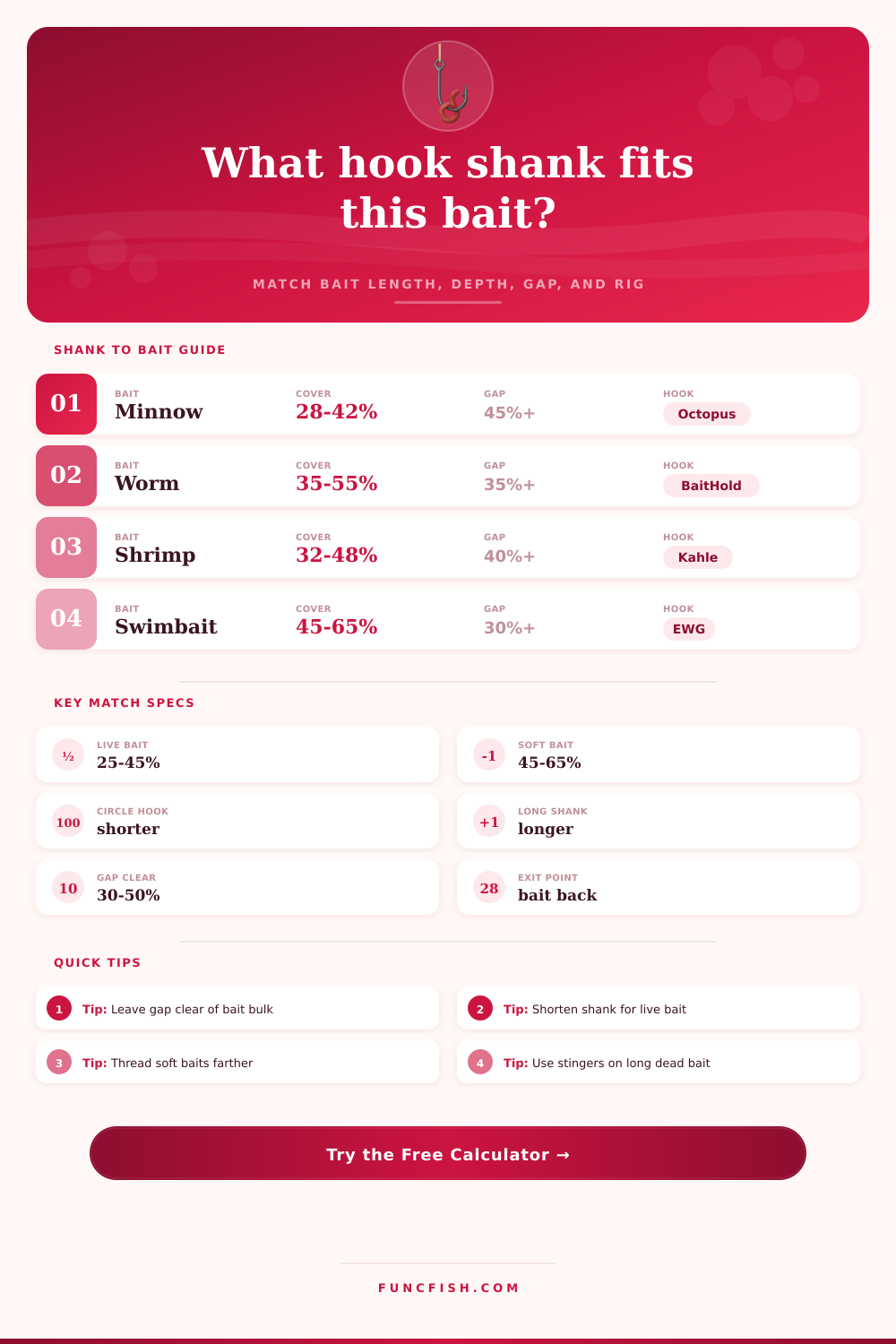
| Bait type | Usual shank coverage | Gap clearance target | Common hook pattern | Calculation note |
|---|---|---|---|---|
| Live minnow or shiner | 25% to 42% of bait length | 45%+ open gap after body depth | Octopus, Aberdeen, light baitholder | Shorter shank preserves swimming action and reduces leverage. |
| Nightcrawler or worm section | 35% to 55% of bait length | 35%+ open gap after compressed body | Baitholder, Aberdeen, long shank | Extra shank helps hold the bait without hiding the point. |
| Soft stick worm or jerkbait | 48% to 66% of bait length | 30%+ open gap plus point slot | EWG, offset worm, jig hook | Threading distance controls action, weedlessness, and hook-up angle. |
| Shrimp, prawn, or crab strip | 32% to 50% of bait length | 40%+ open gap past shell or tail mass | Kahle, octopus, baitholder | Body depth matters more than total bait length on bulky shrimp. |
| Cut bait, eel strip, or dead bait | 28% to 48% of bait length | 45%+ open gap for thick skin | Circle, octopus, long shank, stinger | Long bait often needs a stinger instead of a very long main hook. |
| Hair rig corn, pellet, or boilie stack | 0% to 22% of bait length | 50%+ clear gap because bait hangs off the shank | Short shank carp hook, wide gape | Use hair length and gape first; shank coverage is intentionally low. |
🪝Approximate hook shank and gap table
| Hook size | Typical shank length | Typical gap | Good bait length range | Common use |
|---|---|---|---|---|
| #10 | 0.45 in / 1.1 cm | 0.22 in / 5.6 mm | 0.7 to 1.3 in | Waxworm, small panfish bait |
| #8 | 0.55 in / 1.4 cm | 0.27 in / 6.9 mm | 0.9 to 1.7 in | Trout bait, small minnow, grub |
| #6 | 0.70 in / 1.8 cm | 0.34 in / 8.6 mm | 1.2 to 2.2 in | Crappie minnow, worm section |
| #4 | 0.85 in / 2.2 cm | 0.42 in / 10.7 mm | 1.5 to 2.8 in | Walleye live bait, shrimp piece |
| #2 | 1.05 in / 2.7 cm | 0.52 in / 13.2 mm | 1.8 to 3.5 in | Large minnow, crawler, inshore bait |
| #1 | 1.20 in / 3.0 cm | 0.60 in / 15.2 mm | 2.2 to 4.0 in | Bass bait, redfish shrimp, cut strip |
| 1/0 | 1.40 in / 3.6 cm | 0.72 in / 18.3 mm | 2.6 to 4.8 in | Soft jerkbait, catfish chunk |
| 2/0 | 1.60 in / 4.1 cm | 0.84 in / 21.3 mm | 3.0 to 5.5 in | Worm hook, swimbait, cut bait |
| 3/0 | 1.85 in / 4.7 cm | 0.96 in / 24.4 mm | 3.5 to 6.3 in | Texas rig, large shrimp, eel strip |
| 4/0 | 2.10 in / 5.3 cm | 1.10 in / 27.9 mm | 4.0 to 7.0 in | Swimbait, large worm, surf bait |
| 5/0 | 2.35 in / 6.0 cm | 1.25 in / 31.8 mm | 4.6 to 8.0 in | Pike soft bait, heavy cut bait |
| 6/0 | 2.65 in / 6.7 cm | 1.42 in / 36.1 mm | 5.2 to 9.0 in | Large swimbait, surf strip, dead bait |
🐟Species and bait matching table
| Target | Typical bait length | Starting hook style | Shank strategy | Gap priority |
|---|---|---|---|---|
| Panfish and crappie | 0.7 to 2.0 in | #10 to #6 Aberdeen | Light wire, moderate shank | Keep small bait from balling up |
| Trout | 1.0 to 2.5 in | #8 to #4 octopus or baitholder | Shorter shank for live action | Leave point clean on soft bait |
| Bass | 3.5 to 7.0 in | 1/0 to 5/0 EWG or offset | Thread 45% to 65% of bait | Match gap to body depth |
| Walleye | 2.0 to 4.0 in | #4 to 2/0 jig or live bait hook | Balance short bites and bait action | Clear minnow or grub shoulder |
| Redfish and snook | 2.5 to 5.0 in | #1 to 4/0 kahle or circle | Use enough shank to hold shrimp | Wide gap around shell bulk |
| Catfish | 2.0 to 6.0 in | 1/0 to 6/0 circle or octopus | Shorter shank with open gap | Avoid burying circle bend |
| Pike and muskie | 4.0 to 9.0 in | 3/0 to 6/0 swimbait or stinger | Use stinger when tail strikes dominate | Gap must clear deep soft bodies |
| Surf stripers | 4.0 to 10.0 in | 3/0 to 8/0 circle, octopus, stinger | Do not solve long bait with shank alone | Open circle gap drives hook-up |
⚖Hook pattern comparison grid
| Pattern | Shank bias | Best bait shape | Weak match | Calculator adjustment |
|---|---|---|---|---|
| Octopus | Short | Live minnow, roe, cut bait | Long threaded soft plastic | Reduces coverage and raises gap target |
| Aberdeen | Long | Minnow, worm, small jig bait | Heavy fish or thick cut bait | Adds shank length but keeps gap moderate |
| Baitholder | Medium long | Worm, shrimp, soft natural bait | Very deep soft swimbait | Adds holding coverage without extreme gap |
| Circle | Short | Cut bait, chunks, whole dead bait | Buried point or threaded plastic | Shortens shank and penalizes blocked gap |
| Kahle | Medium | Shrimp, shiner, crab strip | Skinny worm threaded far | Uses wide bend to clear body depth |
| EWG | Offset medium | Deep soft plastic body | Small live minnow | Raises coverage and accepts buried point |
| Jig hook | Fixed by head | Grub, tube, swimbait | Hair rig or free live bait | Checks collar-to-exit distance |
| Long shank | Long | Streamer, worm, toothy fish bait | Circle hook baiting | Raises shank but scores leverage risk |
💡Calculation tips
Gap clearance: After the bait is on the hook, the open space between point and shank should still clear the bait depth. A hook that matches length but hides the point will score poorly.
Long bait rule: When the calculator recommends a very long shank for cut bait, eel strips, or dead bait, compare the stinger note before upsizing. A stinger often protects the tail strike while keeping the main hook gap open.
Look at the hook like it’s a necessary part of a good cast, but you shouldn’t see it; that’s what we’re going for. A lot of guys don’t think about the shank size of their hooks and how they affects the presentation until it’s too late. The hook has to be large enough to catch fish, but what is that actualy going to achieve? Where does this piece of metal collide with the way this bait naturaly moves? I want my baits to appear natural so the hardware must becomes undetectable in the biology of whatever you’re tying onto.”
While most anglers spends way too much time worrying about hook size, they completely overlook the shank. This is where I believe you can do some damage. How long or short should the shank be to support as much of the bait as possible while leaving as little as possible hanging?
How to Choose the Right Hook for Your Bait
If you’re fishing a soft plastic swimbait with a shank that’s too small, then all that happens is a flopping, lifeless tail. If you’re using a live minnow with a shank that’s too large, then you’re pinning them down. This limits their ability to swim freely which doesn’t look very natural if you ask me.
Once you put your bait measurements into the calculator, it’ll do all the math for you so you don’t have to wonder if an extra 1/2 inch makes any real difference at all. So here’s the deal with gap clearance. Gap is the open space between the shank and hook point. As you thread a minnow or worm onto that shank, you’re moving the bulk of the bait into that gap.
If the bait is thicker than the hook gap can hold, you’ll bury the hook point in the bait. This prevents the hook from being exposed to poke through when you set on a bite. That’s particularly important with bulky shrimp or soft plastics whose bodies are deeper than expected. A hook that appears ideal on paper can have a very narrow gape that gets plugged up by a chunky section of nightcrawler. Your hook-up percentage suffers, not because the fish missed but because you didn’t have a point to catch them on.
The problem with live bait is it’s all about motion rather than coverage. A minnow or shiner need as little disruption as possible. That’s why shorter shanks maintains better swimming action but lack holding power. To put it another way: You have to balance control against realism.
And the table on the page illustrates that, suggesting lower coverage percentages for live baits versus plastics. It’s all about finding a happy medium between realism and control. And the table on the page illustrates that, recommending lower coverage percentages for live baits versus plastics. It’s all about finding a happy medium between realism and control.
Showing too much hook through the bait scares off shy fish. Using too little hook prevents slow drifting from keeping the bait in place long enough to get a bite. This calls for knowledge of target species‘ feeding behavior. Walleye or trout may not tolerate any mechanical restraint on their dinner plate, whereas bass will often hammer something so hard they forgive its presentation shortcomings.
For soft plastics, it’s another story, as you’re not penetrating the fish but instead simply threading a piece of plastic onto your hook. Coverage becomes a tool for rigging style. For example, with a Texas rig, you bury the point and need longer shanks to get good hook sets when ripping backward. With a wacky rig, you hook through the middle which totally changes the leverage.
The tool helps you visualize this difference by letting you enter different points and choose how much clearance you want. It forces you to think about how important holding power vs. Bait action is in each situation. Some days you can’t have one without the other and knowing what your conditions call for is most important.
Typically if there’s a lot of thick cover, you sacrifice some action for security. Clear water requires a perfect presentation above all else. So ultimately there is no precise measurement of shank to bait. Visual harmonization is key. Does the hook look like a single unit when I hold it in my hand? Or does it resemble me dragging a metal rod behind a piece of plastic?
The math gives you a jumping off point and then experience perfect those numbers. Some plastics compress. Some hang different than others. Some fish has a preference for how they want the bait to hang. So take the recommendations, head out on the water and see what works best. Then tweak as necessary.
The whole idea is to make the hook go away. All the fish will see is food.