
You caught a big crappie, but something just doesn’t feel right. This is all too familiar on the bank, you’ve got that big one in hand. Your brain says it should of weigh heavier, so you lay her out. From nose to tail, she’s measuring correctly, but something still isn’t feeling quite right. Chances are it has nothing to do with measurement; instead, it’s body condition.
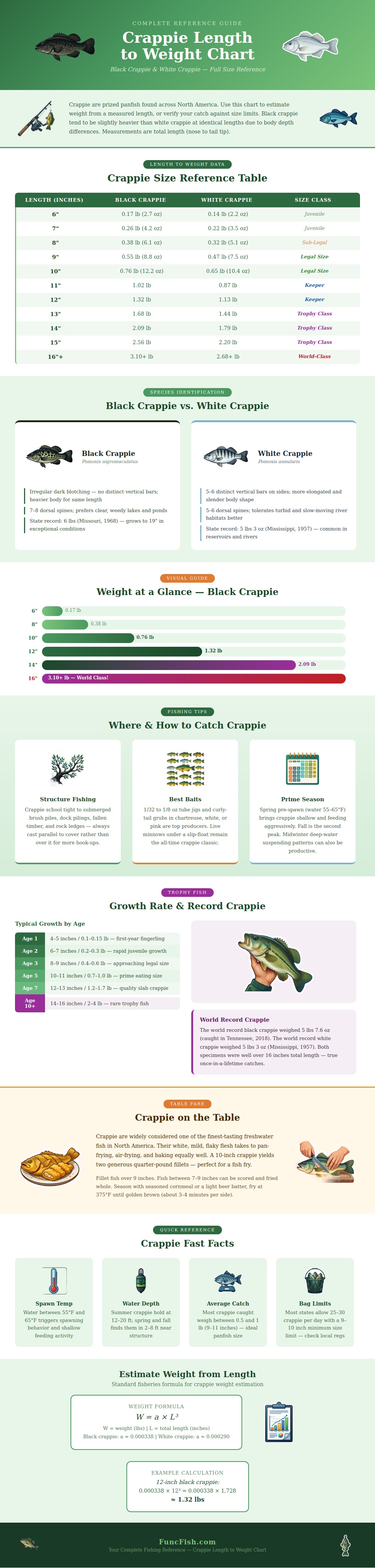
It turns out crappies vary greatly in their weight based off season, how recently they fed and whether they are breeding. Knowing these differences will help you form reasonable expectations when catching them. These estimates also differ with species, as indicated on the reference chart. Black crappie weighs more at every length then white crappie do. That is because white crappie is more slender, while black crappie have a deeper body structure.
Why Crappie Weight Changes
Don’t assume an eleven- or even a 12-inch white crappie will weigh the same as a black crappie of that size. This is especially true if you’re fishing murky river waters where white crappie live. It won’t be much but it’ll make a difference when trying to accurately weigh ’em.
Nine- to eleven-inch fish is what most folks chase. It’s a sweet mix of quantity and quality. They’re big enough for good fillet and there are plenty to sustain a great catch. And as you can see in the chart above, they also meet most keeper regulations. An average 10-inch black crappie will weigh approximately three-quarter pounds. That equates to two quarter-pound fillets which is enough for lunch or half of a fish fry.
If your goal is to find some trophy size fish, strategy shifts again. Big crappie don’t grows on trees, so it takes time and patience to get big ones. A 5-pound plus world record black crappie exists; that’s a lot bigger than average size. You have to seek out the old timers that has lived through many winters and summers. In winter, they will stay close to structure or sometimes even stays deep. And they won’t run up on the shallow banks with the rest of the small school feeding on the bank.
Weight depends on season more then novices know. In spring, crappie are fattest during pre-spawn for two reasons. They is aggressive feeders building up energy reserves, and water temperatures of fifty-five to sixty-five degrees activate that appetite. Late summer: They drop deeper, slow down and appear less plump. Measuring one in July? Don’t be shocked if it weigh less than what the chart indicates. Seasonal condition are the “hidden” factor in all estimates.
Crappie meat is mild and flakey; very easy to cook and a light beer or seasoned cornmeal batter brings out its naturally flavor. Fry three or four minutes on each side in 375-degree oil to get a golden brown batch of crappie. Crisp outside and tender within; what more can you ask? Anything under seven inches should be cooked whole or cut into sections as shown below, rather than filleted since there is not enough meat to make the effort worthwhile.
Remember, this is a guide, and it’s a guide to normal. It gives you a benchmark. When you catch one that is outside the norm, you know how much out of whack it is. You can enjoy catching ten-inchers if you like or try to catch some sixteen-inchers, but know what they should weigh and how their bodies works. Weight shows how well they’ve eaten recently. Length show their age and their ability to survive.