
Why won’t they bite? You’re standing on the bank, bag of bait in hand and an empty net dangling at your side. You swear they’re mocking your style. Odds are, though, that you’re simply not feeding according to the conditions (which), for carp, mean something else entirely.
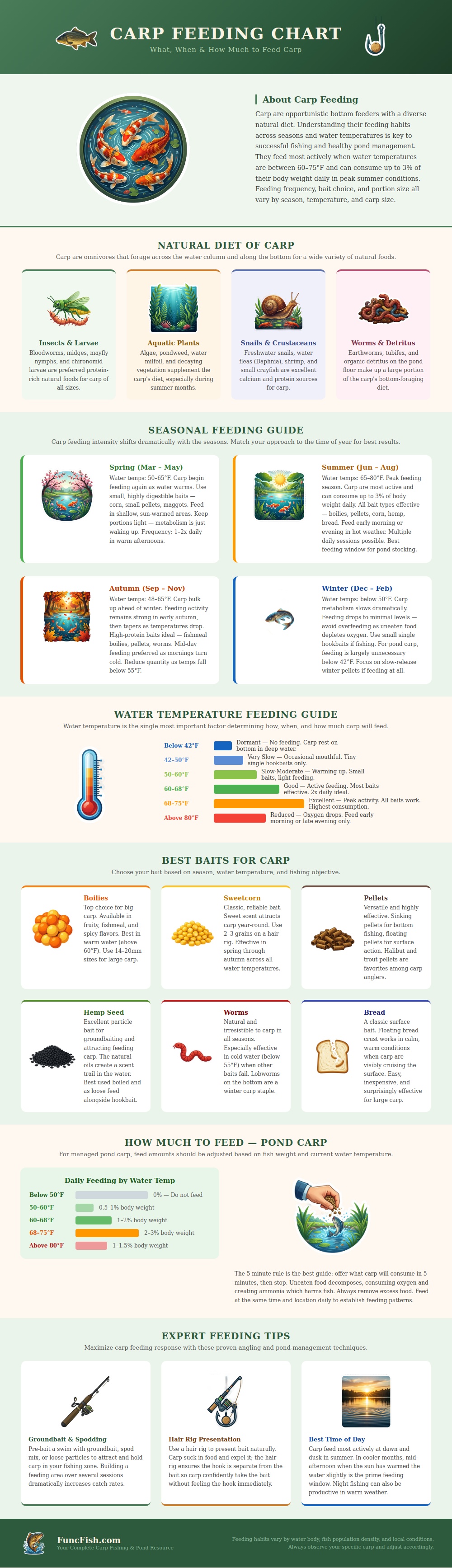
Contrary to popular belief, carp aren’t mindless eating machine. They’re cold blooded opportunists who live by their water’s thermostat. When it’s November but you’re still feeding like it’s July, you’re doing more harm then good to both yourself and the pond. The graph above clearly shows this annual rhythm, detailing shift in feeding intensity from voracious in summer months to dormant in the winter. Knowing this rhythm is the difference between a successful day and an afternoon filled with frustration.
How Water Temperature Changes Carp Feeding
Before you even unspool your line think of what’s really going on beneath the surface. Carp is slow in the springtime as they wake back up from winter hibernation. Since their bodies are still waking up, heavy feeders will just dirty the water and sit on the bottom. Look for shallow, sun-warmed areas that has easy-to-digest food such as small maggots or pellets.
Once it gets warmer in the summer months, their appetite is explosive. During the hottest part of the year, they’re able to eat up to 3% of their bodyweight each day. This is where you can start getting big. You can throw out corn and boilies but still pay attention to their daily rhythm. Because the midday sun heats up the surface of the water and depletes oxygen content, feeding early morning or late evening are even more important at this time.
It’s also worth noting that the natural diet shown by the infographic matches up with their most effective food items on the end of an angler’s line. When left to their own devices, carp will pick at debris, aquatic plants, larvae and other insect across the bottom of a pond. This is where the age old worm comes into its own. It is a protein rich bait that mimics exactly the diet carp encounter as they root around in the mud. If you can be confident in presenting them with something natural, there is no need for complicated artificial flavours.
Sweetcorn provides the easy carbohydrate hit they look for. Meanwhile, boilies stays in the water without disintegrating too quickly. By matching your baits to this natural foraging behaviour you’ll have a much higher strike rate. It’s all about providing them with what they’re familiar with and already trust.
The single most critical variable you can control is water temperature. Water temp are a huge factor. Carp pretty much turn off below 42 degrees. They won’t be feeding. Instead they’re holding out deep and resting on the bottom. If you’re trying to catch them in this range, well good luck but it’s gonna take some really slow tactics with small hookbaits.
The warmer the water gets the more active they become. Feeding windows gradually expand again. This is well shown in visual above. Pay attention. Alter your fishing accordingly. Quit trying to stuff them in cold water and start presenting them with single bait in a precise manner.
If you have any kind of stock or other animals, even if you just own a pond, those rules also hold true, albeit with some slight variation, but no less importance. One big one: overfeeding is deadly and removes oxygen while producing toxic ammonia from breaking down uneaten feed. You should of known this. The five minute rule holds for these guys too. Give them what they can eat in a few minutes then quit.
Feeding them at the same spot and time will help train the fish. This makes them easier to manage and watch, and it will also help you form a bond with them.
And lastly, think about your presentation. Carp are wary feeders. They’ll suck in some food but spit it back out if it doesn’t seem right. Hair rigs removes the hook from the bait so the fish can grab it confidantly without feeling the metal right away. Building a feeding area by spodding groundbait ahead of time maintains their interest over a long period of time. Here patience is a virtue. You’re not simply throwing food into the water, you’re inviting them into an area where they feel safe enough to eat.
Making these little tweaks will transform random fishing outings into predictable success. Whether you keep koi or are angling for sport, the key that gets the bite each time is to read the temperature and honor their natural rhythms.