
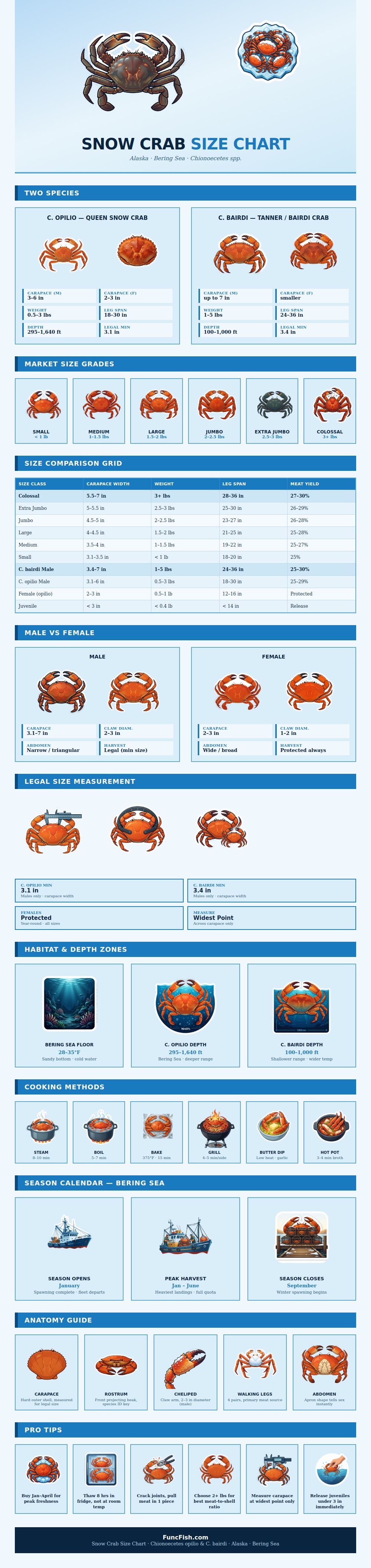
How many times have you been in the seafood case staring at those frozen snow crab legs? They all look alike. They all claim to be tasty, but not all lives up to their claims. It’s all about size. More accurately, it is about what they hold inside the shell versus how they appear on the outside. Bigger is better right? This is true up to a point.
If you don’t know how to read the fisheries grading system, then you’re rolling the dice with your dinner money. A chart show how these size classifications relate to meat content. That’ll keep you from spending top dollar on shells that won’t pay off in the end.
How to Choose Good Snow Crab
There are really only two types of snow crab found in the cold waters of Alaska and the Bering Sea: the Tanner, or Bairdi, crab; and the Queen snow crab. At first glance, they’re fairly indistinguishable; so much so that an untrained eye might mistake one for another. But each have a different legal definition and growth habit. In general, the Tanner crab grows larger then the Queen. Males can grows to have a leg span of up to three feet. The Queen crab generally stays small and lives deeper. Since the meat texture vary between the two species, keep that in mind if you buy either one. Generally speaking, people favor the firmer bite of Tanner crab. This is a slight difference in the marketplace but it helps explain why some batches fetch higher price.
The laws around harvesting them are pretty strict. The rules depends on their carapace width (not their weight). To determine if a male crab has reached maturity, regulators measures the width of its hard outer shell at its widest point. If it meets that criteria then it can be legally harvested from the ocean; otherwise, it goes back for another year. This protects females of all sizes. This constant protection helps maintain population. Therefore, you won’t find any female snow crabs in your grocery store, ever. That’s also part of the reason why some years there seem to be an inconsistent supply. There are other factors too like water depth and temperature. Each species inhabits a specific zone along sea floor.
When it comes to commercial grades, they has some fancy names: Colossal, or Jumbo. But these words don’t just mean they look big. They actualy denote certain weight categories. In fact, a really big crab can go up to three pounds. Anything below a pound is in the small category. Interestingly enough, the percentage of actual meat remains pretty constant by size. Around 25% of body weight is edible. This basically means you’re largely getting water and shell with your purchase. So what’s the secret? Mostly psychology. Unless there’s more edible flesh from a larger crab, marketers will still push those biggest sizes.
If you purchase early in the season (January through April), you’ll be enjoying crab at its freshest. In September, the fishery shut down so crabs can spawn. That results in a built-in demand/supply chain that impacts the time of year. If you’re defrosting frozen legs at home, patience is your friend. Leaving them in the fridge overnight is much better than soaking them in lukewarm water. You don’t want warm water messing with the delicate texture before you cook ’em!
Often times, steamed is preferred over boiled. It keeps the meat from going bland and water-logged. Breaking open the legs is less a matter of brute strength than skill. What you’re aiming for is breaking the joints without crushing. That way you get really nice white meat all in one chunk (and no small bits clinging to the inside of the shell). Learning the rhythm comes with practice. When you get good at it, the cracking won’t seem like work, just something you are doing as part of the meal itself.
The sex of each crab will be revealed immediately by the apron underneath it. Processors and buyers relies on this to sort them in real time. You may never witness this process, but it influences which make it into your bag.
In conclusion, there’s no getting around it: You’re paying for snow crab so weigh your budget against how much delicious meat will be taken from the shell. Get to know the size chart to prevent overspending for small amounts of extra crab. This will not only help you practice sustainable harvest methods but ensure you respect the fragility in the Alaskan cold waters by making an informed purchase. When that first hunk of creamy sweetness comes free from its shell, you’ll know it would of been worth every penny. But knowing what you have on your plate will start long before cracking the first claw.