
At the fish market, there you are: standing in front of the counter full of translucent gray crustaceans. Why is this bag double the price than that? What does it all mean? The tags is unreadable; there’s some biological divide between shrimp and prawn that make things more mysterious. But marketing has blurred that line… And yet difference matters to what ends up on your table.
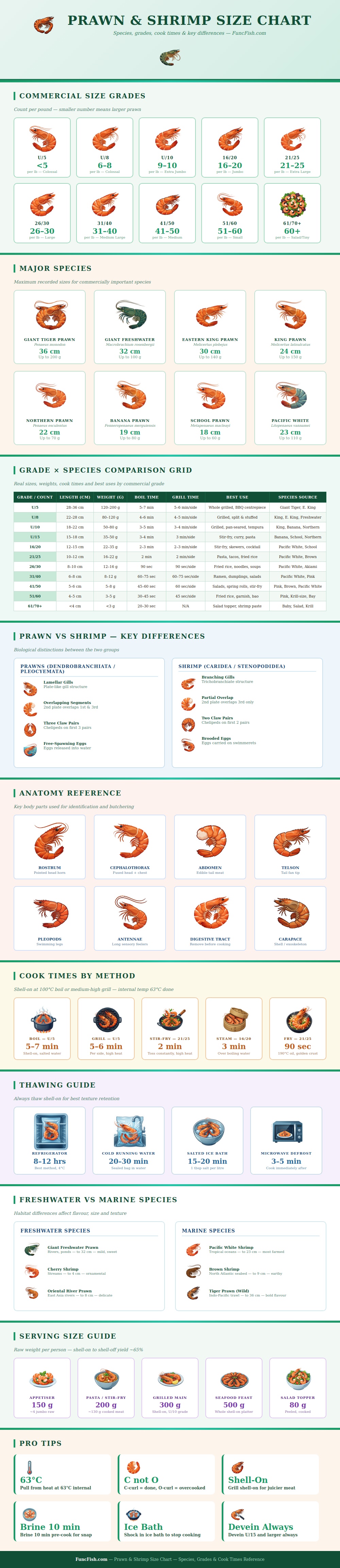
Here’s how commercial grading works (chart). The chart show how commercial grading works, which saves you from buying giant beasts for a quick stir-fry or tiny bits for a main course. Knowing the grades make cooking and shopping smarter.
How to Buy and Cook Shrimp and Prawns
The size system is based off weight. It doesn’t make sense at first. But look at the chart and it makes sense. If you have U/5 (for example), that’s less than five pieces per pound. So it must be really big. Yep. It is colossal. And that’s the wrong way to think when you’d think smaller = better. Those are main ingredients, perfect to grill whole so all the meaty goodness stay safe in its own protective shell.
On the flipside, if you see 61/70 count (same pound weight), that’s more than sixty tiny little creatures. They is too small to ever put on skewers, since they’ll slip right through the holes. But they are great for sprinkling onto rice or hiding within dumplings. So right away, visual chart tells you which one to use, and how.
It’s not all about volume; it’s also about picking the right size. Big prawns has a lot of thick flesh, so they needs more time to cook through than smaller ones without the outside getting overcooked and dry. Boil a U/8 giant for three minutes (the same as you would with a medium shrimp), and the interior will still be clear and raw while the outside turn rubbery. According to infographic, bigger guys take up to seven minutes in boiling water. This longer cooking period ensure that heat goes deeply into the meat.
On the other hand, petite prawns literal come together in seconds. Slightly too long on the stove, and what was once sweet and tender becomes shriveled and chewy. There is a brief window of perfection, so pay attention.
But then there’s this: What the hell are we even putting into our mouths? When it comes down to it, shrimp and prawns is biologically different. The way their body segments overlap and arrangement of their gills set them apart. Overlapping segments, with plate-like gills, mark a prawn. Branching gills marks a shrimp. Whether you’re carrying a copy of Biology 101 around with you at the supermarket doesn’t matter much for most home cooks. But if you know the difference, it can help answer questions about which species will stand up best to heavy-handed cooking techniques.
The giant tiger prawn has a firmer texture and bolder flavor, one that stands up well to high-heat grilling without disintegrating. The smaller and milder Pacific white is more delicate, making it a better choice when you want a subtle flavor, think quick sautés instead of gentle steams.
The choice is only part of it; how you prepare is equally important. Never try to rush things: If possible, defrost your crustaceans in the fridge overnight. Hot-water shocking the protein will shock it, literally, causing it to lose flavour. Your catch turn watery and tasteless. Look for C-curl when you’re ready to prepare: A tightly curled shrimp in an O-shape indicates overcooking. Bring them off the heat at exactly 63 degrees Celsius in their centre and you’ll have some tender prawns on your plate. Soaking them in brine for ten minutes first give you even more brightness and snap than plain old water alone.
There aren’t really any recipes here for cooking seafood. It’s all about letting the fish or shellfish do what comes naturaly to it, and cooking accordingly. Treat that huge king prawn just like a small bag of baby shrimp called salad shrimp; they’re both going to need the same thing. You should of used fresh water. Keep it simple. When the heat is correct, cook fast. Don’t complicate things with thick sauces that hide the true flavur.
Keep in mind that shellfish are sweet by their very nature. This chart can serve as a guide. But let your sense be your guide: let the curl of the tail determine the time, rather than the tick-tick of the stovetop clock.