
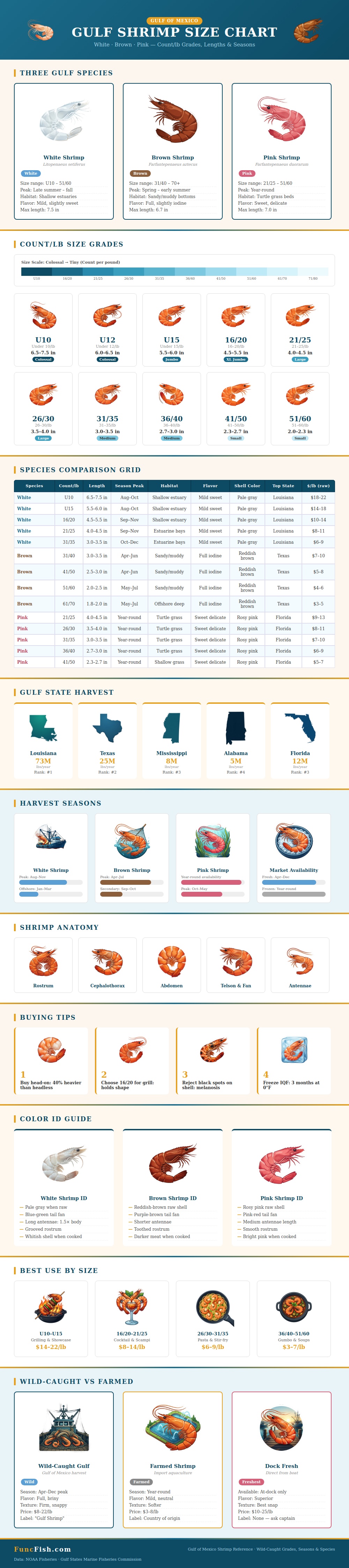
The gulf shrimp size chart explains those numbers on labels and shows you what will work for your recipe and what wont. This helps you avoid rubbery leftovers or buying top-quality meat only to have it melt away in the sauce. It’s all about getting the correct animal for the right meal. Most folks gets tripped up by this one initially.
The lower the number, the larger the size. This tell you how many shrimps per pound. So if you come across something U10, it is colossal and very pricey because there will be less than ten shrimps in that package. Then something like 71/80? That’s small as can be. This holds true throughout the industry. Once you catch on to the logic, it applies everywhere.
How to Choose the Right Shrimp for Your Meal
White shrimp are a personal favorite because they tend to be sweet and mild in flavor. White shrimp are harvested primarily from the Gulf in late summer through fall which is also when they reach their peak. They come from shallow calm waters in estuarine habitats that suit them. Their meat is clean and tender as a result, since it’s grown within its environment. These are generally U10 and below sizes although bigger specimens is often set aside for display on a platter, or for grilling. Under heat, they holds their form remarkably well.
Then there’s brown shrimp. These favor sandy bottoms and have a more full-bodied (and somewhat iodiny) taste that certain chefs adore for heavier preparations. Brown shrimp actualy bridge the period between the end of white shrimp season in the fall and beginning in late spring through the early summer. Good luck trying to rush-breed browns in October. Mother nature has her own timetable, and good buyers follows suit.
More’s to be said for pink shrimp. They’re available year round. Their habitat is turtle grass bed. They provide sweet, delicate meat on tap. In Florida at least (it’s the leader of the harvest), there’s enough of it going around to fill menus throughout the off months. Each of these species dance to his or her own beat as you’ll see from the chart.
Head-on Shrimp: If you can find these at the store, buy ‘em. The head contains water that weighs down shrimp and keeps it fresh while transporting to the store. And even though they’re heavier than their deveined counterparts, it totally pays off in terms of texture once cooked. Additionally, avoid any bag with black spots along the shell. This mean blackening, which is a natural aging process of the shrimp; in other words, they’ve been hanging around to long. Freshness is non-negotiable.
The key here, and this applies to any cooking application, is that it’s all about the size. You don’t want large cocktail shrimp; large (16/20, 21/25) are ideal for scampi and cocktails since you’re looking for separate pieces that pop on your plate. For soups and gumbo, smaller is better as it will break down somewhat and contribute flavor to the broth but not overwhelm the overall texture. Wasting huge shrimp on a stir fry doesn’t make much sense, nor does serving tiny ones up for a steak-like grilling experience that won’t satisfy.
But there is more to wild-caught gulf shrimp than just cost. Beyond being briny with a firm snappy texture, wild-harvested shrimp just tastes like the ocean in a way that aquaculture can’t really match. Aquacultured shrimp are milder and softer, acceptable for things like processed foods, but not up to par if you’re looking for something that tastes like the ocean. Giving yourself knowledge of your purchase lets you make an informed choice based off quality versus convenience. It is all about respect for the ingredient (respect enough to do it right).
The next time you’re at the market, pick up a bag… But think about what you want to make first. Count the shrimp, identify the species and cook accordingly. That’s where that chart (above) comes into play, but it’s how well you can work in the kitchen that decides where it leads. Each time, you would of had fewer questions and better food on the table.