Bait Shrimp Count per Pound Calculator
Estimate how many bait shrimp you have, how many usable hook baits they make, and how many pounds to carry for a planned rig cycle.
📌Scenario presets
⚙Bait and rig inputs
Bait shrimp plan
Calculation breakdown
🧮Trip planning snapshots
The midpoint or custom count used for all shrimp math.
Adjusted for pieces per shrimp and handling loss.
Estimated bait changes for rods and planned time.
Compares usable baits with demand plus reserve.
📊Rig comparison grid
Best for pinfish, whiting, croaker, and tiny bait stealers on small hooks.
Useful when medium shrimp are too long for a #4 to #2 hook gap.
Simple count for corks, jigheads, live-style hooks, and steady drifts.
Stretches large shrimp when tails and body sections are threaded cleanly.
📘Reference tables
| Shrimp grade | Typical count per pound | Average each | Common rig use |
|---|---|---|---|
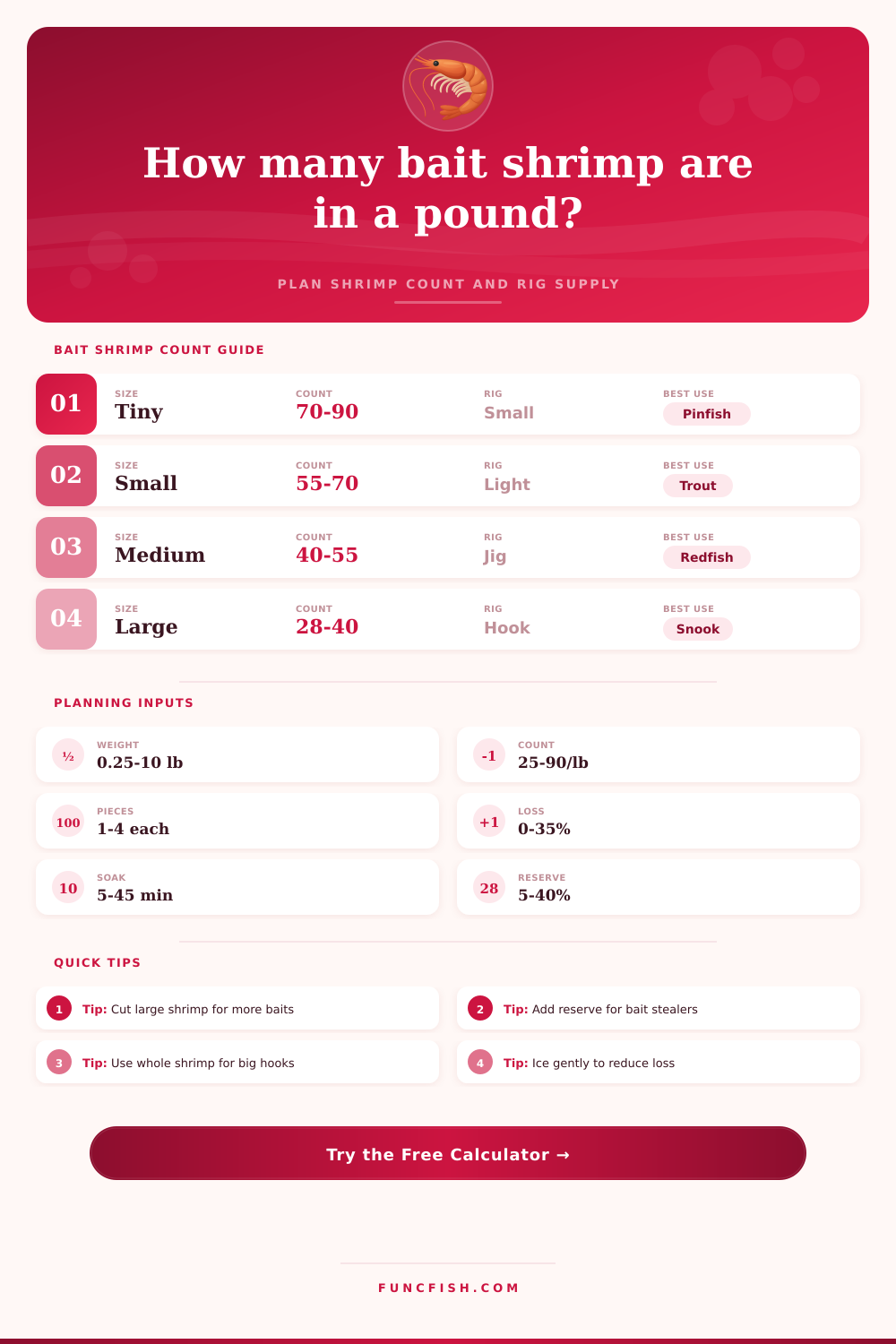
| Tiny bait shrimp | 70 to 90 per lb | 0.18 to 0.23 oz | Small pieces for pinfish, perch, croaker, and tiny hooks. |
| Small bait shrimp | 55 to 70 per lb | 0.23 to 0.29 oz | Whole or halved shrimp for trout, whiting, and light bottom rigs. |
| Medium bait shrimp | 40 to 55 per lb | 0.29 to 0.40 oz | General inshore size for jigheads, corks, and #2 to #1 hooks. |
| Large bait shrimp | 28 to 40 per lb | 0.40 to 0.57 oz | Whole bait for redfish, snook, flounder, and larger bottom rigs. |
| Jumbo bait shrimp | 20 to 28 per lb | 0.57 to 0.80 oz | Big-hook presentations or multiple pieces from one shrimp. |
| Rig style | Pieces per shrimp | Best hook range | Planning note |
|---|---|---|---|
| Small hook pieces | 3 to 4 | #8 to #4 | High count, high theft; add a larger reserve for short strikes. |
| Jighead tipped shrimp | 1 to 2 | #4 to #1 | Use tails or halves when scent is more important than profile. |
| Popping cork whole shrimp | 1 | #2 to 1/0 | Whole shrimp count closely matches actual casts and drifts. |
| Bottom rig whole or half | 1 to 2 | #4 to 2/0 | Use higher loss in areas with crabs, pins, or rough bottom. |
| Threaded strip bait | 1.5 to 3 | #6 to #1 | Large shrimp stretch farther when cut into durable strips. |
| Target scenario | Useful grade | Reserve range | Why it matters |
|---|---|---|---|
| Pier or dock bait stealers | Tiny to small | 20% to 35% | Many quick rebaits; smaller pieces stretch the pound. |
| Trout on corks | Small to medium | 10% to 20% | Whole shrimp present cleanly and count planning is simple. |
| Redfish around grass | Medium to large | 15% to 25% | Missed fish and pinfish make a moderate reserve useful. |
| Bridge snook or inlet fish | Large to jumbo | 15% to 30% | Bigger hooks use whole shrimp and damaged baits get rejected. |
| Surf whiting pieces | Tiny to medium | 20% to 40% | Sand fleas, crabs, and surf wash can raise bait turnover. |
| Handling style | Added loss factor | Best match | Planning adjustment |
|---|---|---|---|
| Gentle iced tray | 0% | Fresh dead shrimp | Use when shrimp stay firm and are separated from meltwater. |
| Standard cooler bag | 3% | Normal shore trips | Good default for a short walk and a half-day supply. |
| Crowded bait bucket | 7% | Shared bait box | Expect crushed tails and soft pieces near the bottom. |
| Hot deck or long walk | 12% | Summer surf or pier | Increase reserve when bait warms before it reaches the hook. |
| Aerated live well | -4% | Live shrimp planning | Loss can be lower when the well is cool, clean, and uncrowded. |
💡Planning tips
If I’m going for 30 casts and I open a cooler and find that I have sufficient shrimp for only three casts, what do I do? Panic. A pound of shrimp at the bait shop seem like more than adequate, but then you remember that you has little crabs trying to steal your dinner off the hook or that swarm of tiny pinfish on the dock. And the soft bodies disintegrate before reaching the water line. You end up counting shrimp based off only on their weight, thinking in terms of ounces on a tray instead of usable hook baits.
That switch in thinking make a huge difference about how much you will end up purchasing. Big looks like value, so most folks reach for whatever size shrimp are largest. But that’s not always the case. Sure a whole jumbo shrimp may impress visually…but when you start slicing ’em up for whiting or trout fishing with small hooks, you’re not getting nearly as many baits as you started with. Right there, the number of baits you’ll be able to use is instantally reduced by cutting.
How Much Shrimp Bait You Need
After you plug-in your cutting strategy and rig style, the calculator above do the rest. You don’t have to do all the hard math of figuring how many individual hook loads are left from some bulk quantity of shrimp. Instead, it compels you to face facts: If you’re fishing small hooks for smaller species, more smaller shrimp will last longer then fewer larger shrimp in a pound.
Every casual angler under-buys because of the loss factor. Before your fish even has a chance at them, you will lose bait to other species stealing it. You will also lose bait from handling it and from soft bodies fall apart during handling. That’s if you’re fishing a hard bottom like rock in the surf or on a crowded pier. Your loss rate will skyrocket. An extra amount takes into account this hidden leak. Otherwise, you’re planning on ideal conditions which hardly ever come true out there. Better to show up with more than less rather than running out just as the action starts.
What about other rig styles? From there, your bait selection is completly dictated by rig style. For example, a whole shrimp works best when fished under a popping cork with trout, more emphasis on profile than scent spreading. One shrimp to a hook is what you’re looking for. But when drifting flounder around structure, maybe threading a big strip of shrimp on the hook will provide two or three baits from one animal and still keep it secure on the hook. Your total count depend on how many pieces you get from each shrimp so you don’t overestimate your supply when changing techniques.
The second factor is timing. Bait will not last as long in hot air or warmer water. As soon as you take it off the ice if you’re fishing in mid-summer heat, the clock begin. Storing them in an iced down tray gently keeps your shrimp nice and firm, whereas a crowded bucket cause them to start crushing each other. Your expected loss depend on how you handle them. The calculator accounts for that by making adjustments based on your handling style. Plan like you fish in the messy real world; don’t ignore this variable and plan for a perfect world.
Match the bait grade to the hook size And don’t be afraid to consider hook size in relation to the bait size. Placing a huge jumbo shrimp on a little tiny pinfish hook is wasteful, and generaly not very effective since the fish can’t get a good bite at it. So matching your bait grade to the hook helps assure each piece of bait you have has a realistic chance of getting eaten by whatever species you’re targeting. This results in less waste and a more natural-looking rig.
This is the bottom line. Planning for your baits comes down to setting expectations. How many fish do I think I’ll catch? How many fish will eat it and fall off? How many will go limp in the livewell? If you can make those guesses correctly, then you’re going to be able to stay on the water longer. You won’t miss as many opportunities because you were distracted by empty cooler. Begin with your anticipated losses, trim your bait accordingly to the hook size and keep that cushion. Your future self who’s got a pile of live baits staring at them while everyone else walks up to the boat ramp would of appreciated it.