
If you just look at surface of Texas waters you may not even know they’re changing. Depending on where you stand, it might smell like mud or pine trees, and water may look calm. But there’s a lot going on under that calm surface as nonnative fish species has invaded rivers, reservoirs, and other bodies of water throughout the state.
They didn’t ask to come; in some cases, they arrived because well-intentioned aquarists and anglers wanted something exotic or fast-growing for their local ponds. In addition, these invasive species cause damage to the complex food web that developed over millions of years. Native fish has a hard time competing with them for resources like space and food.
They also change predation levels in its favor versus the natives. Conservation groups spend countless hours trying to regulate and track populations, but when you consider just how large Texas is, it’s tough to contain these intruders. Knowing what fish are most dangerous can help you understand why we’re not allowed to move fish from one lake to another or why some fishing regulations is in place.
Texas has experienced its share of invasions by non-native fish species, but each do it a little differently, all leaving an ecological mark in their wake. Some was brought here intentionally for recreational fishing; others escaped aquarium tanks; and some arrived through well-meaning but misguided actions by anglers and aquarists. What they all have in common is a warm climate, varied habitats, and surprisingly hospitable waters that made Texas a sweet spot for each of these invasive species.
Top Invasive Fish Species Found in Texas Waters
1. Asian Carp Complex
Bighead, silver, black, and grass carp is all part of an invasive species family known as the Asian carp complex. This group are arguably North America’s most dreaded aquatic invader. Originating in East Asia, these fish were imported to the U.S. They were imported for use in pond management and even fish farming, but they has escaped into our nation’s waterways during flooding events.
The Asian carp complex is made up of ferocious filter feeders that gobble up enormous amounts of plankton, a direct competitor to young bass, paddlefish, and other native species. Beyond consuming the same foods, carp also pose a danger to boaters due to their tendency to jump extremely high above the water surface. A startled school of carp can leap clear out of the water at the sight of a boat wake, causing significant damage to boats and injuring humans who get too close.
2. Snakehead Fish
Hardy predators Snakeheads, a hardy predator able to store oxygen in special organs that allow them to live out of water for days, have a well-earned reputation from both fact and fiction. They are voracious hunters who will consume almost any prey capable of fitting inside their mouth. Snakeheads can travel between linked bodies of water, even during times of drought when other fish could not survive.
Their ability to do so shows a change in the local ecosystem’s predator hierarchy, with native gamefish now being dinner instead of being at top of food chain. Once established, the snakehead’s resilience makes it all but impossible to eradicate; therefore, most management attempts focuses less on removing current populations completely and more on containment to prevent further spread. While the northern snakehead often shares the spotlight with its southern counterpart, it’s important to know that the two species has overlapping characteristics.
Both are members of the same family (Channidae) and share the notorious trait of being able to breathe air… An adaptation that give them much needed survival in low oxygen environments. Because of their hardy nature and special coloring, these species became sought after for aquarium market.
However, without knowing the environmental impact, many owners did not think twice about setting these fish loose into natural bodies of water. Fast-growing and reaching decent size, these fish offer no sport for recreational anglers and wreak havoc on native wildlife. They’re very good at camouflaging themselves within underwater plants, which makes visual counts a poor method for catching and removing them.
3. Walking Catfish
The walking catfish has some pretty strong body armor and pectoral fins which allow this species to pull itself across land from one water body to another during the rainy season. First introduced to Florida, the walking catfish has made its way up the coast into Texas as well, reaching tributaries with ease. The walking catfish can move across land, skipping over the usual barriers that keep invasive water species away.
This poses yet another stress on already strained wetland environments. It also out-competes native characiforms and reduces their genetic diversity.
4. Lionfish Invasion
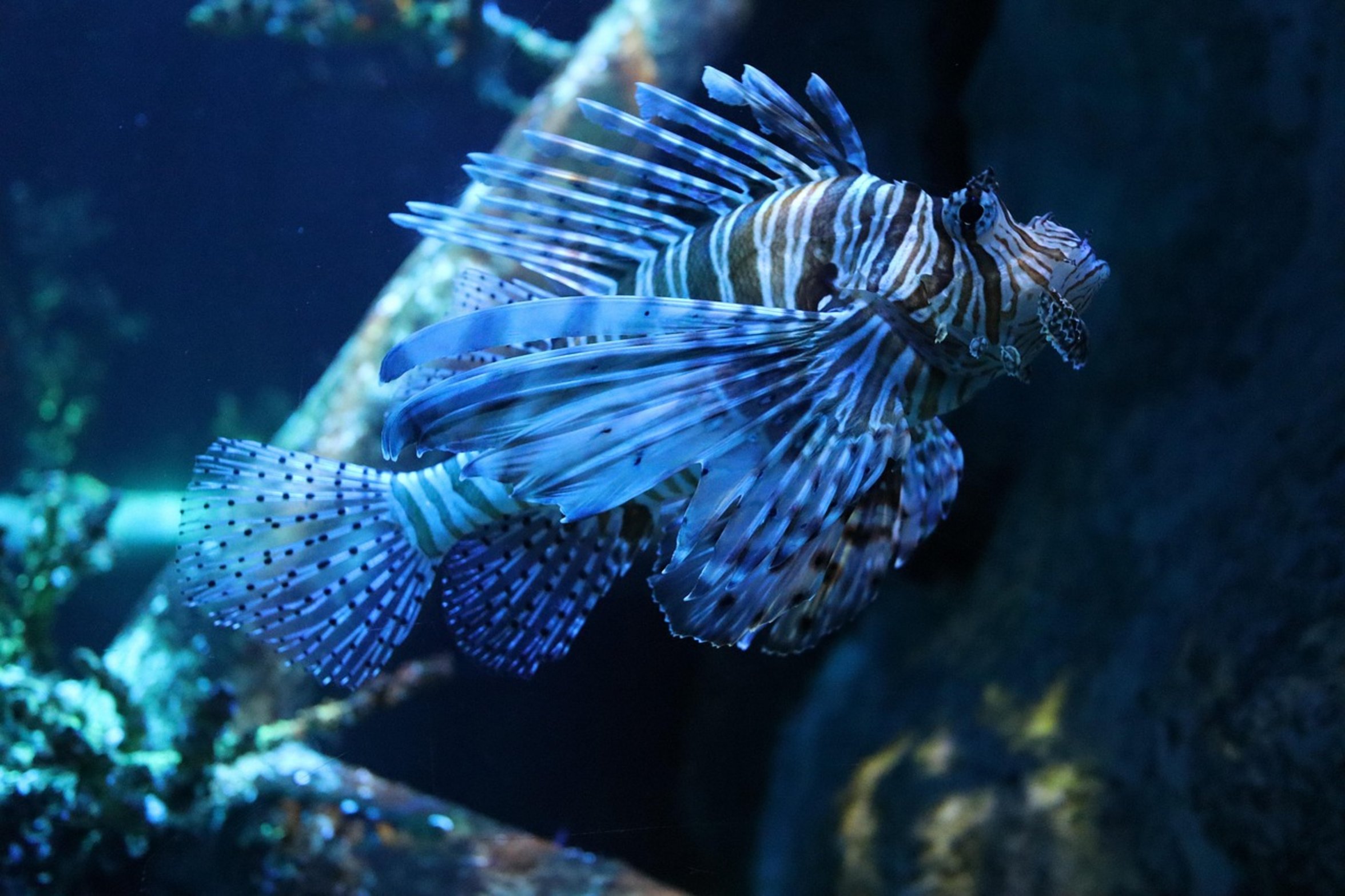
Lionfish were originally found only in the Indo-Pacific region.
Now as an invasive species, they cause damage to freshwaters and are mostly a problem on the Gulf Coast. They threaten both salt and freshwater systems. Lionfish were introduced into marine systems by aquarium hobbyists who no longer wanted them, and because of their venomous spines (which keep most predators at bay), they have exploded unchecked in new territories.
They reproduce very quickly and eat a wide variety of food items including crustaceans and juvenile reef fish. Lionfish threaten commercial fisheries such as sheepshead and red drum as well as the overall recruitment of fish around the Gulf of Mexico. To control them, there are organized hunting expeditions during which divers hunt them down and remove them using spearguns, but this method of removal has been greatly outweighed by the scale of the infestation.
5. Goldfish Impact
Invasive species can look harmless but are actualy invaders. The seemingly innocent goldfish is really causing out-of-proportion harm because it’s native to Asia; it was first domesticated from Asian carp centuries ago and escaped or was set free into Texas waters (lakes, streams, ponds) ever since. Disturbed habitats are perfect for goldfish because native species struggle to compete there.
The goldfish root around for food, which damages the bank structure. They also make the water less clear by uprooting aquatic plants. They breed like mad…thousands of offspring per season…and overwhelm what local area can support.
This overpopulation creates havoc with the delicate balance. If you own some “pet” fish and think you’re doing nature a favor when you dump them in your neighborhood waterway, think again! You’re not only disrupting the fragile balance…but bringing in a new competitor that will do the same.
Education campaigns focus on ending this habit. They teach people about proper disposal, such as surrendering animals at pet stores or humanely euthanizing them, instead of just dumping them in nearest waterway.