Anchor Drop Offset by Wind Calculator
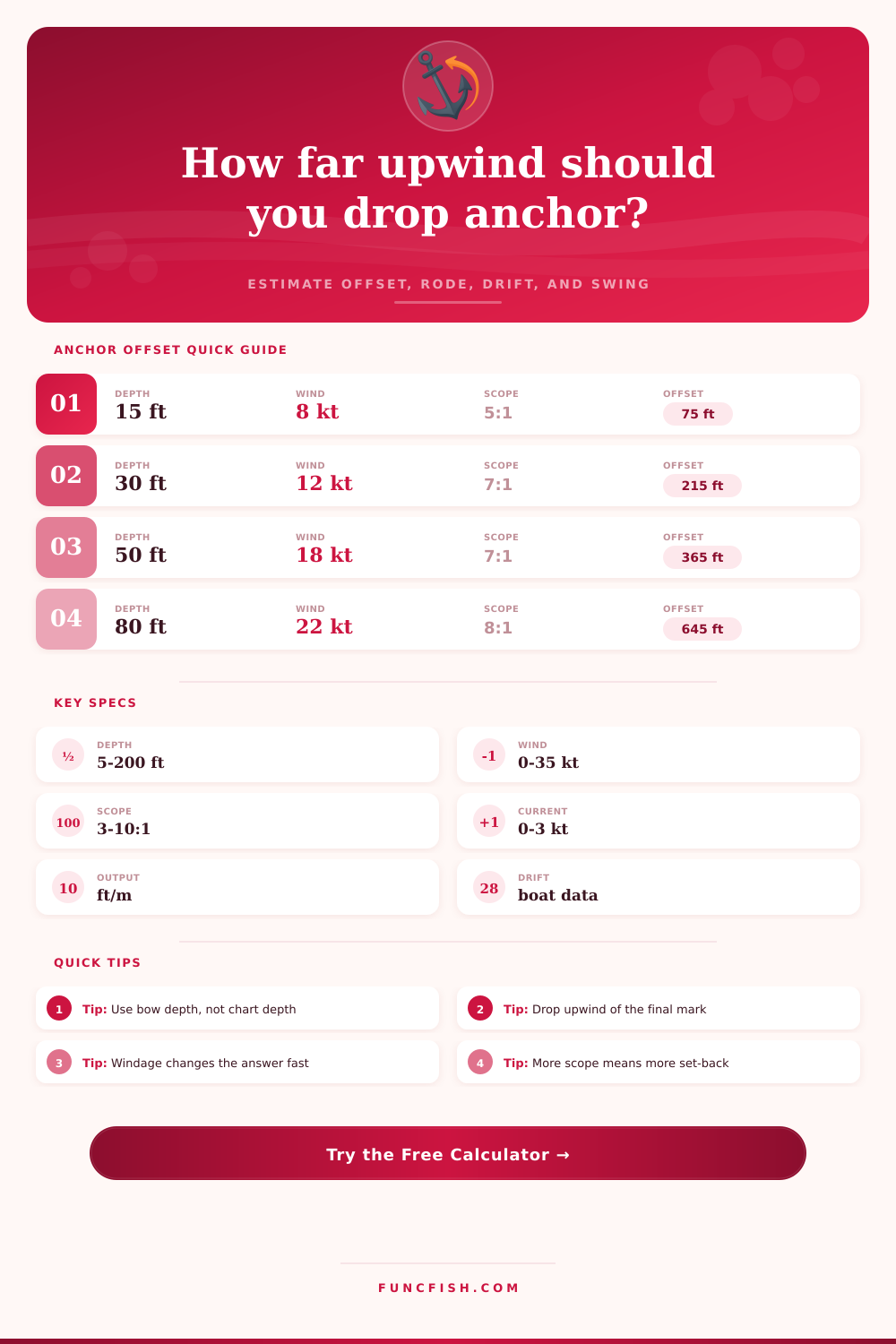
Estimate the upwind drop mark for fishing over a wreck, ledge, reef edge, or chum line by combining wind drift, anchor sink time, rode scope, and bottom set allowance.
📌Fishing anchor presets
⚙Offset inputs
Anchor drop result
Formula breakdown
⚓Anchor gear data grid
Wide flukes descend slower and need clean pull to bury.
Chain helps the anchor land straighter before the boat loads it.
Short stops in calm water use less horizontal set-back.
Windy fishing sets need more rode and a farther upwind drop.
🛠Gear comparison grid
Low windage, quick sink, small swing; best for flats and close-range edges.
High bow pull and common 7:1 scope create a long final set-back.
Usually aimed at structure, so tolerance should be conservative and tight.
Large windage and slow bite make drop distance sensitive to gusts.
📊Reference tables
| Boat profile | Wind drift factor | Typical use | Offset note |
|---|---|---|---|
| Kayak or low skiff | 0.8% of wind speed | Flats, creeks, shallow reefs | Small descent drift, but short rode magnifies aim errors. |
| Bass boat / open aluminum | 1.3% of wind speed | Lakes, points, humps | Usually stable unless the bow catches a quartering breeze. |
| Center console with T-top | 1.8% of wind speed | Nearshore reefs, wrecks, bridges | Expect noticeable drift while crew clears the rode. |
| Walkaround with curtains | 2.3% of wind speed | Inlets, coastal ledges | Canvas adds windage and increases the drop lead. |
| Pontoon or high rail boat | 2.8% of wind speed | Reservoirs, catfish flats | Large side area can move fast in moderate wind. |
| Cabin boat / pilothouse | 3.2% of wind speed | Offshore reefs, deep water | Offset grows quickly with both wind and depth. |
| Anchor type | Base sink rate | Set allowance | Best calculation use |
|---|---|---|---|
| Fluke anchor, rope rode | 0.70 ft/s (0.21 m/s) | 0.16 x depth | Sand and mud, common fishing anchor. |
| Claw anchor, chain leader | 1.05 ft/s (0.32 m/s) | 0.12 x depth | Mixed bottom, steady pull, moderate swing. |
| Plow anchor, chain leader | 0.95 ft/s (0.29 m/s) | 0.14 x depth | General anchoring where reset behavior matters. |
| Folding grapnel, kayak rode | 0.85 ft/s (0.26 m/s) | 0.08 x depth | Small craft, rock, weeds, short drops. |
| Mushroom anchor, light line | 0.55 ft/s (0.17 m/s) | 0.24 x depth | Soft bottom and low-load positioning. |
| River pyramid or navy anchor | 1.35 ft/s (0.41 m/s) | 0.10 x depth | Rivers and current where weight digs quickly. |
| Scope ratio | Horizontal set-back | Rode angle | Fishing use |
|---|---|---|---|
| 3:1 | 2.83 x depth | 19.5 degrees | Calm lunch stop or short kayak hold. |
| 5:1 | 4.90 x depth | 11.5 degrees | Light wind over broad targets. |
| 7:1 | 6.93 x depth | 8.2 degrees | Common working scope for fishing marks. |
| 8:1 | 7.94 x depth | 7.2 degrees | Windy ledges, offshore reefs, rougher water. |
| 10:1 | 9.95 x depth | 5.7 degrees | Maximum holding, very long final swing. |
| Fishing target | Suggested tolerance | Drop aim style | Result check |
|---|---|---|---|
| Small wreck or brush pile | 10-25 ft (3-8 m) | Aim exact and reset if swing misses. | Offset should be within one boat length after settling. |
| Ledge, reef edge, or drop-off | 20-50 ft (6-15 m) | Favor the upwind edge so baits settle on structure. | Compare swing radius with ledge width. |
| Bridge piling or channel edge | 15-35 ft (5-11 m) | Account for current direction before wind. | Cross-current error is often more important than distance. |
| Chum line or live-bait slick | 40-100 ft (12-30 m) | Use a longer set-back to keep stern flow downwind. | Final position should put chum behind the boat. |
| Flat, grass line, or open bottom | 50-150 ft (15-46 m) | Broad target allows conservative scope. | Comfort and holding power outrank exact position. |
💡Calculation tips
You drop the anchor into that murky green water and can’t see it any more. You’re looking for a large brush pile on the bottom where some largemouth bass has set up shop. So you check your depth sounder ten minutes later and see boat is not sitting over top of the spot… In fact it’s sitting 30 feet downwind of the spot. The fish still aren’t moving out of place, but the boat isn’t in place with them anymore.
That’s what happens when you’re anchoring into the wind, it makes anglers frustrated when they try to stay in one spot without using the motor. While most of the time it isn’t even a question of the anchor holding or not, it’s more of an issue of dropping the anchor next to the spot you wish to sit versus actualy sitting on it.
How Wind Moves Your Boat When You Anchor
The boat sits atop the water’s surface and is pushed around in the wind as well. As the anchor plummets through the water the wind drags on the rode and hauls the boat sideways until hook grabs a hold of the bottom. In those few seconds it takes to get your hook to grab hold, the boat has already drifted upwind and likely went past where you wanted the bow to land. Right over the edge of the ledge. That’s why you’re going to miss that ledge altogether if you try dropping your anchor straight down from the point.
That’s where the calculator we spoke about earlier comes into play. It uses all these variables (sink rates, boat profile, wind speed) to calculate an offset distance to give you a visual picture of the geometry involved. What it does is take into consideration that some boats with high sides like a cabin cruiser catch more breeze than say a low profile kayak. So it adjusts accordingly for how much lead you should of let go of before setting the hook.
The first variable that should enter the equation here are the rode. Not only does scope affect holding power, it also affects how far to the side (horizontally) you end up. While shorter scopes will keep you nearer to the point you dropped the hook, it gives the wind a lot more opportunity to rip it out when a gust comes along. The longer your scope, the better pull you have to tug with the line on the anchor’s claws or flukes to dig deeper into clay or mud, giving you better holding power. That’s why some folks feel like they are anchored in place but end up fishing over an empty flat bottom when what they wanted was structure beneath.
How forgiving is your target? This depends on what’s on the bottom. Clean sand anchors predictably with minimal fuss. You can tighten up your drop zone with a fluke anchor. But if you’re fishing scattered rock or shell hash, there’s often some bouncing around the bottom as the hook finally catches hold after a few seconds. That means the boat slides sideways for a few seconds while the wind pushes you off course. For example, when you’re fishing a small wreck or narrow ledge, that slide can make the difference between eating fish tonight and blowing bubbles all day long.
Knowing how the system works will tell you whether to add more line to your rode or change your heading to offset any cross-currents that might make the wind push worse. Keep in mind that how fast something falls will affect its ability to reach the bottom too. Something like a pyramid sinker with a heavier chain leader is going to hit bottom quicker then a light-weight grapnel anchored by thin rope. The closer it gets to the bottom, the less time there is for your line to pay out or for the wind to shove you off target. Even in somewhat calm water, some seasoned captains employ weighted leaders simply because they drop straight and begin setting instantly instead of tumbling or scraping along the bottom (every second counts).
If the wind is blowing steadily but from behind the boat, each second adds a couple feet to your error factor. To wrap up, anchoring is part art and part science. The wind’s an uncontrollable variable, but once you factor all the others properly, you can accurately anticipate what it will do to the boat. If you know roughly how far off-center you are and then include that as a safety margin on your mark and drop point, what was once a guessing game becomes a calculated move. It’s not about placing the anchor perfectly; it’s more about being consistent with your process.
Once you get a handle on how the boat flies through the air and how your gear acts underwater, you no longer fight nature. You embrace it. Release the line above the problem area, let the math pull you back under it, and arrive right where you want to be; no mess, no fuss, just waiting for them.