
The water is clear as a bell in BC, among the cleanest in all of North America. And it’s not for looks alone, those frigid rivers and lakes aren’t there by accident. There are creatures on the other side of your line who’ve adapted to endure brief periods of blistering heat followed by months-long stretches with the frosty fingers of winter.
If you’re casting into BC waters, it pays to know what’s waiting at the business end of the rod. And what a menagerie it is. From fighting steelhead in the teeth of coastal river currents to pursuing giant trout in alpine pools, the diversity is astonishing.
Knowing the unique nature of each species will alter every fishing trip. How will it affect your rods? What lures should you use?
It will even affect your catch and release ethic. When most people hit the water they have some general idea that they’d like to catch something. In BC there is more than one type of trout, all with very different personalities.
How do you react to pressure? Some fish moves fast and race up shallow riffles. Others tuck down into deep pools.
A cutthroat trout is not the same thing as a bull trout. And a steelhead is actualy a rainbow trout that returns to salt water. You can’t mix them up.
Different fishes lives in different areas. Catching them correctly requires a different approach for each.
Five Freshwater Fish Species Found In British Columbia
1. Rainbow Trout
The most iconic catch in the province is rainbow trout.
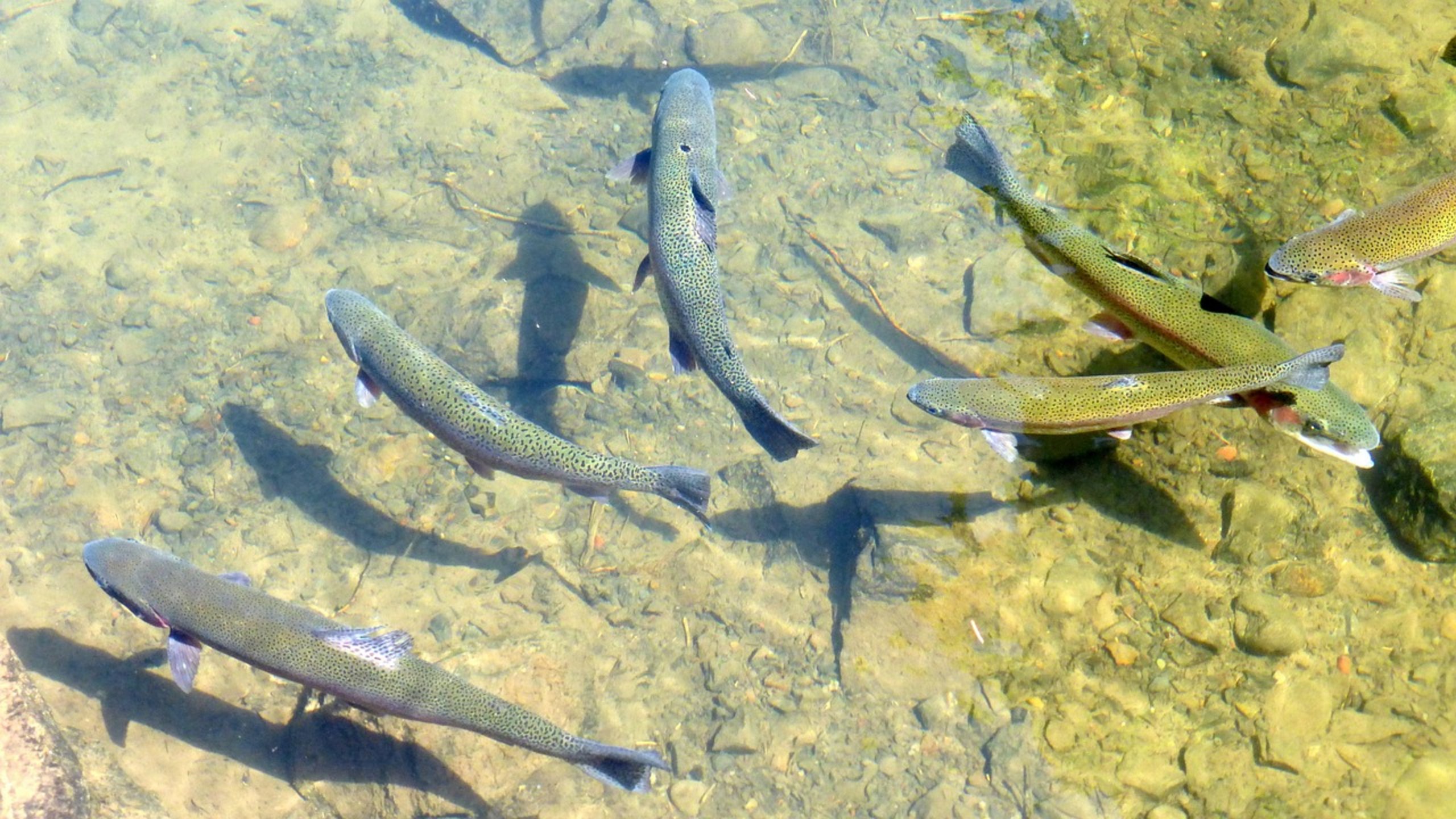
Whether they come from stocked rivers or mountain lakes, you see them everywhere. You can spot them immediately by their pink side stripe. They are also one of the most adaptable species.
They does well in both brackish estuaries and cool fresh water. In fact, the steelhead is simply a rainbow trout that migrates back into salt water before spawning once more. That adaptation means they is much harder to net and make better fighters.
Rainbow trout are aggressive feeders. From bright lures to dry flies, they’ll take just about anything. That’s what makes them the best starter fish if you’re looking for action without having to wait all day for it.
On the down side, however, their sensitivity to pressure can cause populations to crash quickly on overfished streams. That’s where careful catch and release comes in for the angler who cares about conservation.
2. Cutthroat Trout
Cutthroat trout have a long history in BC waters.
Cutthroats is native to most western rivers and historically important to Indigenous people. The first thing you notice about these fish is the red or orange mark under their jaw that looks like a cut throat. Cutthroats also inhabit cooler and cleaner water then rainbows do.
When located, they tend to hang around some form of cover like an overhanging bank or log. Wild cutthroat populations are rare because they was greatly displaced by non-native rainbow trout. So when you find one…it’s special.
Cutthroats can be finicky biters. If they see your heavy line before your lure touches down…you’ll never get a bite. Light tackle and stealth work best here.
And catching a native cutthroat in its last bastion isn’t just fishing. It’s saving a piece of natural history…a feat moddern management efforts work hard to preserve.
3. Lake Trout
Deep, clear water on larger lakes means it’s time for lake trout.
Lake trout are absolute monsters of fresh water. They’re bottom feeders unlike the surface feeding rainbows. They sits in the colder depths awaiting an unsuspecting meal to pass by.
So how do you catch them? Well, if you don’t know where the temperature layer lies, then you won’t be catching many trout. That’s when your fish finder becomes very valuable.
Trout group up and you are searching for temperature zones that they hang out in. Oily and dark meat, lake trout are great table fare but hard to clean. When they fight, the legend is real.
It’s not about speed but more about using their weight to tire you out. You need heavy tackle and some patience to land a lake trout. If you’re sticking to top-water lures in a lake trout lake, every trip will end with you going home empty handed.
It’s all about depth control.
4. Arctic Grayling
Grayling are not actualy trout (no surprise), although anyone who does not know better would be mistaken. Instead, Arctic grayling is members of the Salmon family that diverged from other salmon long ago in the ancient arctic.
In BC, we have some of the most southernly ranging populations of grayling. -> In BC, we have some of the populations of grayling that range furthest south. As such, they are very beautiful creatures with large, sail-shaped dorsal fins that flash black and white.
Since grayling is active predators around the surface, they feed primarily on insects. Fly fishing is super-effective for these fish. Many times an appropriately presented dry fly will result in an explosive take.
That being said, they’re very delicate fish. They don’t have any scales on most of their sides and their bones are quite fragile. If they get roughed up at all, they’ll die very quickly.
If you intend to keep them alive, just wet your hands and cradle them upright in the water. There’s nothing more pure in angling than seeing a grayling rocket out of the water to hit a fly.
5. Bull Trout
The largest fresh-water native salmonids found in BC’s freshwater systems are bull trout.
With their silvery-white hue and sparse, scattered spots, these fish resemble a cross between a cutthroat and a giant arctic char. In numerous headwater streams, they is the top predators. The regulations surrounding them are strict because they’re classified as threatened species in certain parts of their range.
You must immediately release any bull trout that you catch in many watersheds. And for good reason: Bull trout populations is vulnerable to habitat degradation and they’re now fragmented. This means you need special knowledge of their remote habitats to target these fish.
It also means that if we do catch one, it is a privilege that comes with a lot of responsibility. That’s what makes BC fishing so special: each fish is unique. Each species has its own reward, and its own challenge.
The rainbow trout gives us excitement with accessibility; cutthroat give us finesse with a sense of history; lake trout require both depth understanding and technical ability; grayling reward us with surface action and visual beauty; bull trout bring out our respect for nature and conservation success. Where we go and what tackle we have determines what we’ll choose. Do your homework and the province will pay off.
With each cast, you’ll think about what the fish might be eating. You will consider the water temperature, the insect hatch, or the habitat structure. It’s that level of engagement that brings anglers back year after year.
Next time you’re standing along a BC river, really look around. Find out which species is most likely lurking beneath the surface. Set up your equipment to catch just that fish.
The water will reveal its secrets if you’re willing to learn them. It will make your trip all the richer for the experience.