
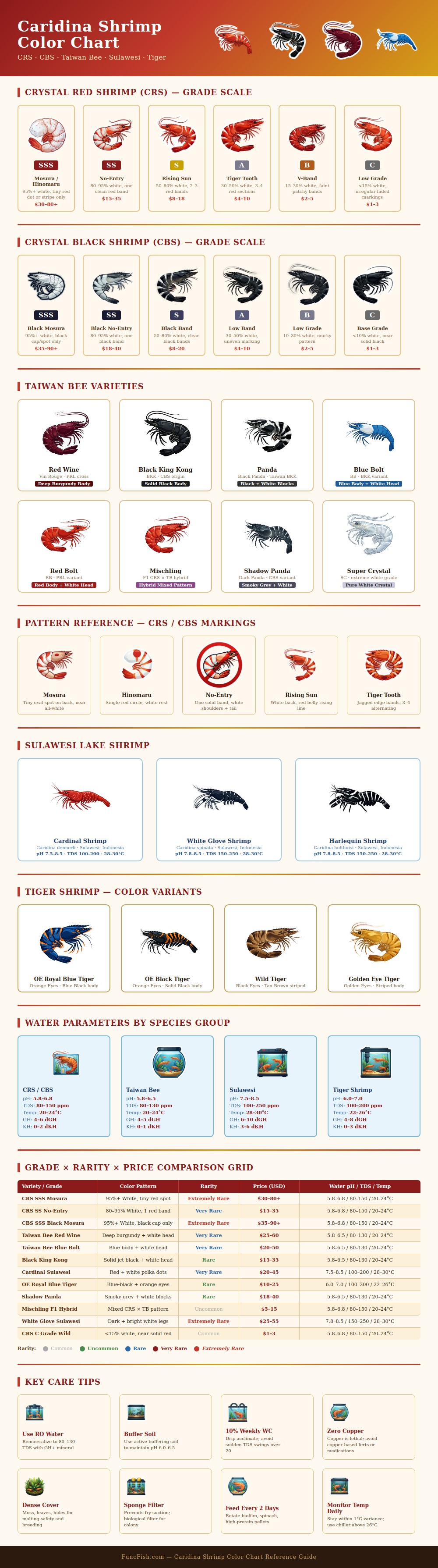
Imagine walking into an aquarium store and noticing two tanks situated right next to each other; from afar they appear almost exactly the same. The tank on the left contain “entry level” snacks at low prices, while the one on the right is so expensive that just looking at it hurt your wallet. You may not of even noticed what the difference was. Turns out, there’s a very strict language that describe color purity that sets a hobbyist apart from a breeder. To break this out further, here’s what that look like for various colors of crystals (above).
For Crystal Red Shrimp, you want as much white space covered as possible with as little red intruding. SSS class shrimp are typically referred to as either Mosura or Hinomaru based off where the spots is located. They are nearly all white, with perhaps a single very fine line of red or even just a small dot somewhere on the shrimp. That is a genetic lotto jackpot.
How to Choose Shrimp Grades and Water
Move down the scale into SS and No-Entry classes. You will see a little more red banding over the body, and your chances of finding one goes up considerably, but overall rarity goes down dramaticly. This shows itself in prices as well. Top quality specimens will be several times more expensive then their lesser grade cousins. It isn’t just for looks. It’s for genetic stability and staying the same over time when breeding.
The same is true with black shrimp except the red pigment are replaced with black, but they’re still all about that white. The rarest (and most expensive) is a Black Mosura grade which matches Red Mosura exactly: incredibly rare and very expensive. Below that, the amount of white starts decreasing and the bands gets patchy or less defined. This results in a lower grade… Typically B or C. While not as nice as higher grades, they’re still great pet shrimp and good starters if you’re learning about molting without worrying about killing a six-figure investment.
It’s sometimes hard to tell visually where one grade ends and another begins. You have to consider how uniform those white areas are and how distinct the band lines is. Over time this becomes easier, and knowing it will help when you go to buy some stock.
Besides the crystal types, there are other species that play by a whole other set of rules. For example, Taiwan Bee shrimp come in bolder solid colors such as jet black or deep burgundy, and they is usually marked with distinct white patches, sometimes even on their heads rather than in gradient bands. Contrast is key here. A good Red Wine shrimp should be rich and opaque, not washed out.
There’s also the Sulawesi species from Indonesia that have vastly different water chemistry demands. Crystal and bee shrimp does well in soft, acidic water with low conductivity, while Sulawesi shrimp want hard, alkaline conditions with elevated temperature. This is a common newbie mistake; assuming you can mix all Caridina and it’ll be okay. You can’t just swap them out without changing your whole remineralization and filtration strategy.
Water parameters are the silent killer in this hobby. Even slight changes in water temperature or a sudden change in total dissolved solids will stress out your shrimp, potentially leading to death and/or mass molting. Anything containing copper (medications, fertilizers) is absolute poison, so make sure to check all of your meds/ferts for trace amounts before adding them to your tank. This is a non-negotiable step.
The only way to have control over these variables is by using reverse osmosis water with specific remineralization salts. At first, it’ll feel like doing chemistry homework but soon it’ll become second nature.
There is something about watching your own little buddies’ colonies expand through breeding that makes them so attractive. Whether it’s the bright and uncomplicated coloration of a hardy bee shrimp strain or the elusive perfection of grade SSS, it all boils down to being detail-oriented and patient. As they get older, those barely noticeable markings on freshly molted shrimplets will intensify over time and with good food. Soon enough, what started out as a mere tweak of water parameters turns into an appreciation for the intricate beauty of nature when small things thrive under detailed care.