
You stand there in the chilly North Carolina surf, holding some bait, but you do not know what rules apply. Cast. Pray it bites. Wonder if it’s legal. That’s a cognitive burden, not one of fishing ability.
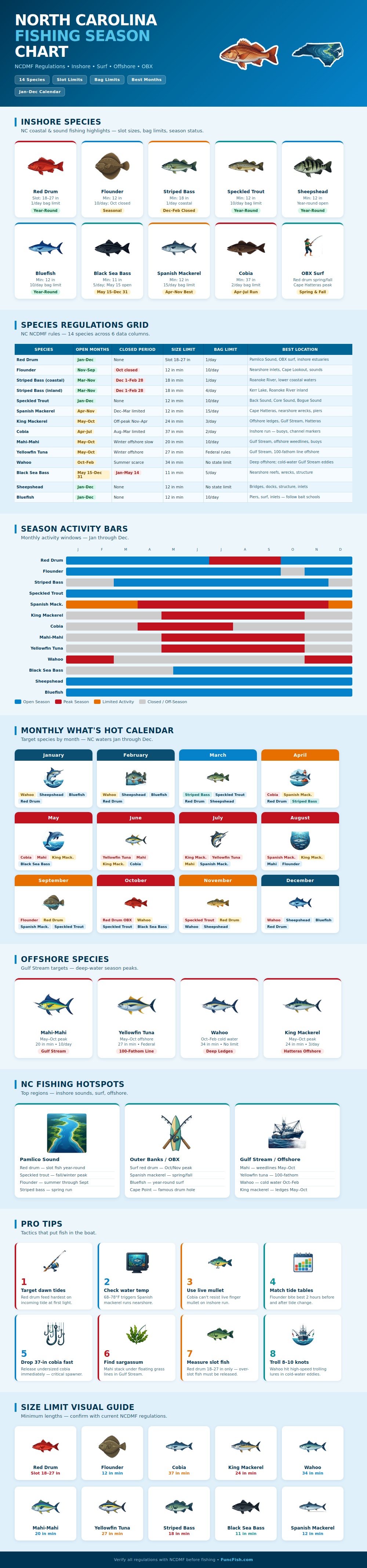
Here are fourteen species of fish with limits, seasons, and size regulations mapped onto a single chart. Suddenly the confusing law become digestible: A calendar. No more remembering each digit. Just grasp pattern. Then hit the water confidently… And not anxiously.
A Simple Chart to Help You Fish Better
As the seasons change, the shallow waters becomes calm while offshore becomes rough. Speckled trout and red drum provides consistency inshore. Red drum is under a slot limit rule. That means you can only keep a red drum measuring between eighteen and twenty-seven inches. The reason is to protect the breeding adult fish but allow anglers to catch trophies. So if your line goes tight on one of those out-of-range fish, put it back right away. These are the big female breeders of the next generation of fishs. It hurts the game for all of us, and you, moving forward.
Beyond that, things get dynamic. Species such as king mackerel and mahi-mahi has a narrow seasonal window offshore. That window is directly linked to bait movement and changes in water temperatures. In January, don’t expect to find those fish near shore. As the graphic shows, May-October is the sweet spot for targeting those fish. Why’s that? Because marine life follow warm waters as they migrate northward in the spring. Trying to chase wahoo or tuna in the winter will leave you cold (literally and figuratively) and your boat will be all alone. Respect the clock and adjust accordingly.
Focus on different types of fish like sheepshead or black sea bass when it gets chilly. Even though much of the marine life leaves reefs and structures, these fish stays around and can be great fun.
Remember: Location is only part off the equation. Time also plays a role in filling a cooler. I noted peak months for several species in the chart. If possible, plan your trip around those windows and you’ll have better odds. Going after cobia in spring channels is more productive then going after them haphazardly in the summer. Match your time with their activity pattern.
Flounder bite best on a changing tide, so check out the tide tables. Red drum often feed the hardest on an incoming tide around dawn. Those are biological needs based off feeding habits, not some random tips.
In North Carolina, catching fish is less about spending money and more about knowing the patterns of their ecosystems. The rules is set up so there will be plenty of fish for years to come. Knowing the rules means you can enjoy yourself without worrying about whether you are doing the right thing. It also means that every cast counts because you know which fish are biting and what the laws allow.
Before tying on your lure the next time out, get to know the size limits and trends by season. Then you can go casting all day long!