
Maybe you’ve been there before. You’re standing on the bank looking at all this clear water and can’t buy a bite. You throw a good lure and work it correctly and still nothing. It’s frustrating until you remember you may very well be fishing above or below right water temperature.
Smallmouth bass is cold-blooded, meaning almost everything in regards to their metabolism, energy and aggression hinges upon water temperature. Rather than deciding to be hungry, smallmouth simply react to change in heat which enables or inhibits there biological functions. Therefore, it’s important to learn how to read your surroundings instead of just memorizing a chart.
How Water Temperature Helps You Catch Bass
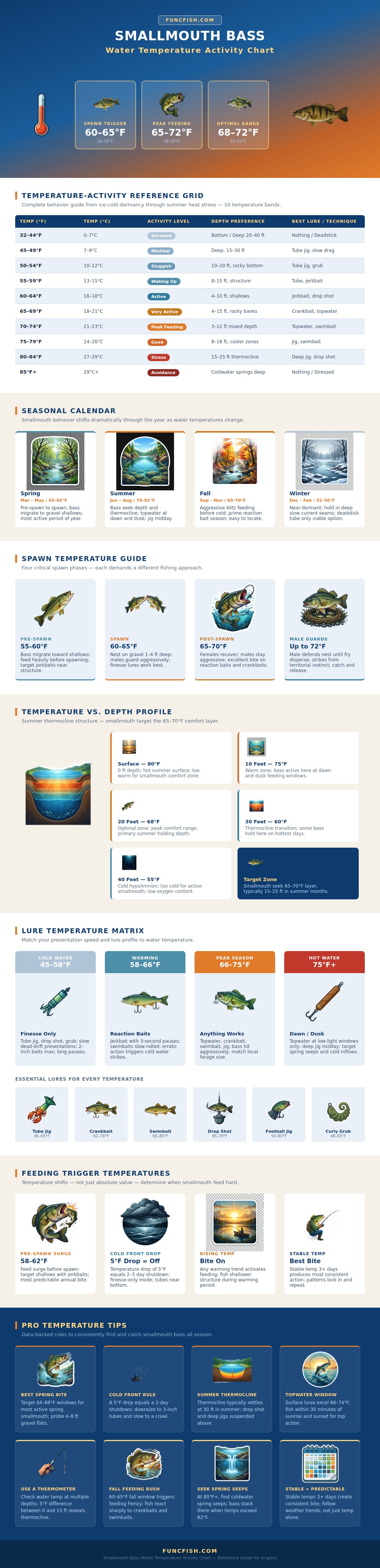
The visual guide breaks down these temperature ranges into actionable zones and shows how movement changes from winter dormancy to summer feeding. The key takeaway is that smallmouth bass operate within a narrow comfort zone. This range allow them to be comfortabley and have enough energy to pursue prey. Anything out of that sweet spot can drastically impact their behavior.
Below the forty-five degree mark you’ll find smallmouth bass sluggish and hanging deep in structure due to an inability to move around at high energy levels given the slow metabolism in cold water. As water begins warming up into the mid-sixty degree range there’s a drastic uptick in aggression. This doesn’t happen gradually either, but rather thresholds flipping from passive to active behavior.
One part of smallmouth fishing that’s easy to overlook is how much stability matter compared to a specific number. For instance, a consistent sixty-five degree water temp will catch more fish then a swingy seventy-two degrees simply because it gives the fish time to get into a pattern. When a cold front comes through and lowers the water five degrees, you’ll notice a shut down for two or three days. This is typically when you have to go to those smaller, slower offerings around the bottom.
The chart shows this clearly. It also suggests that as the water gets warmer and the fish become stressed they will move deeper into cooler areas. When it gets hot on top, you know summer has arrived. The water’s just too warm up there anymore. So now you’re looking for smallmouth around the thermocline, which is the point where the water temperature drops quickly as you go deeper. This typically means going down to about fifteen or twenty feet as opposed to shallow cover and shallow structure.
But the fishermen still want to stick to the shallow stuff. The fish don’t want to be stressed out by the heat. Find the comfort level and you’ll have your nose right in their faces.
The most consistent bite throughout the entire year occur when smallmouth make their annual spawning run to shallow gravel beds. Not only do you get an easy opportunity at sightcasting fish but the pre-spawn feeding frenzy is difficult to surpass. Smallies look to feed on crawfish and baitfish during this time so tube jigs and jerkbaits is effective.
By looking at the chart, you can see how depth preference change. It moves from summer to fall (deep channels) and spring (shallow flats). This provides a solid guide for when to change up presentations. To anticipate fish behavior before it happens, read the water temperature. There’s no need for fancy electronics. Learn how water temperature affects fish biology. Carry a handheld thermometer. These steps would of changed mediocre days into limit bags.
Aligning your lure selection with the thermal environment takes the guesswork out of fishing and lets you fish with intent instead of wondering. Knowing where the fish are is only half the battle; knowing why they’re there is what gets ‘em in the boat.