
You stand waist deep, holding your breath. You wait for a shadow to dart past the flow right before they attack your fly. There is a certain quietness that bonefish leave behind on the flat.
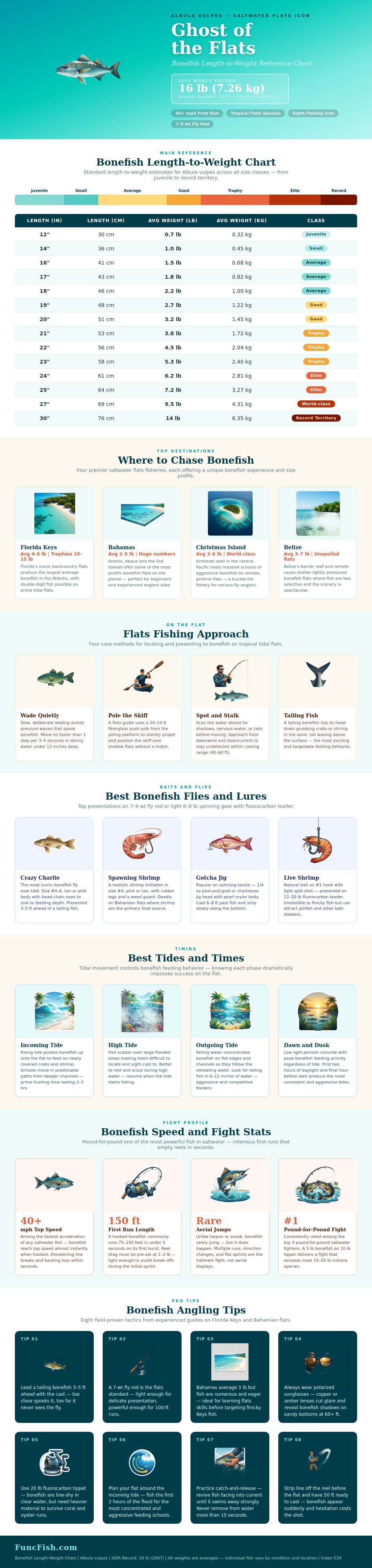
There is a mismatch between visual presence of a bonefish and its physical power. That’s why anglers try to estimate its weight so they know what to expect from this rush of energy. Here’s what this means for your weights in terms of length (this comes from the chart): You’ll notice that it’s not a straight-line gain. It’s a sharp curve. A twelve inch juvenile will be less than a pound. It is light as a feather in your hands, like piece of bait.
How to Catch Bonefish
Once the fish pass twenty inches long, the jump is pretty substantial because bonefish aren’t dense like other fish, they’re designed for speed, not mass. When you get to the twenty-four plus inch mark where trophies begin, you’re staring down six-pounds of pure machismo capable of spooling reels faster then your eyes can track. The rapid increase in their size is important to understand because that’s what determines what equipment you need.
A ten pounder isn’t going to play like a ten pound snook or redfish. The line pressure and initial burst are devastating. A major mistake most anglers make: setting their drag too tight. Heavier line = safer they believe. Problem? Bonefish is used to living in shallow water where they have eyes for all shadows. Setting your leader too heavy and you’ll spook ’em before you ever cast. Too light and you’ll drop ’em when they find a coral head. The data shows that even an average sized fish has some serious power; a five pounder on ten-pound tippet will put up a fight equal to much bigger species found inshore. That’s where folks go wrong, they don’t know how big of a heart a medium-sized bonefish can have till they snap off.
What is the difference maker? Where are you going? Each location has its own profile, as outlined in the infographic. The Bahamas tend to have more spots with fewer fish per spot, which is great for beginners who are still learning to see fish in clear water. The Florida Keys have bigger averages, often reaching double digits, so the fish fight harder and fishing is tougher on your rod. Christmas Island is just a big bucket list place to go. You have to do some work out there in those waters that aren’t on the map, and the schools will run around hard. It’s all about finding the right balance between size and quantity, if you want a lot of fish, go to the Bahamas. Want to get monster numbers, go to the Central Pacific atolls or Florida.
When it comes to the flat itself, timing is critical. Bonefish feed heavily as incoming tide deposits food on the sandbar, so you’ll have the best luck targeting this area during the initial couple of hours of flood water. Crabs and shrimp will be exposed then. In fact, high tide tends to disperse the fish into deeper channels where they’re more difficult to find. Your best bet is to wait through the slack water and pounce as the tide begins moving outward again. Low light conditions also help at dawn and dusk. At these times, you can see shadows that dissapears during bright, midday sunshine, and glare is minimized.
Be strategic. Wade slowly so your legs don’t disturb the water with pressure waves. Pole the skiff quietly from an elevated position using a fiberglass pole so you don’t drag the hull across the sand. Keep eyes peeled for nervous water ripling about unseen fish and look for tails waving above the surface. Make sure to give the fish a little room by casting three to five feet in front of their projected path, but avoid going too far. Quietly present the fly and allow it to float naturaly. Bonefish are easily spooked by line and need a clear view to see threats. Fly leaders should be made from fluorocarbon due to its ability to sink quicker and refract light less than nylon.
These fish are prone to stress and barotrauma, which makes catch-and-release a big deal here. Revive ’em and keep ’em in the water as long as you can before letting them swim off strong. Honor their subtlety, their speed and their place in the food chain. Remember, when you hook one, it isn’t just about catching it; it is about surviving that first sprint without breaking off. It’s less about your strength than your patience because that first run is going to test both of those things. Let the drag do its job and wait for the charge to subside.
And then, at the end of the fight, there is nothing but the sound of silence and the ripples left on the smooth surface by the ghost of the flats where it used to dart.