
There’s that moment out on the water where you’re pretty sure the fish are literal stacked under your boat. Each cast is a ghost story. You drop it down and feel bottom. You reel back with confidence, but nobody want to eat. That can be one of the more frustrating thing about fishing. The action is dialed in, it’s in the “right” depth, you’re technically pulling the lure through strike zone, but no dice.
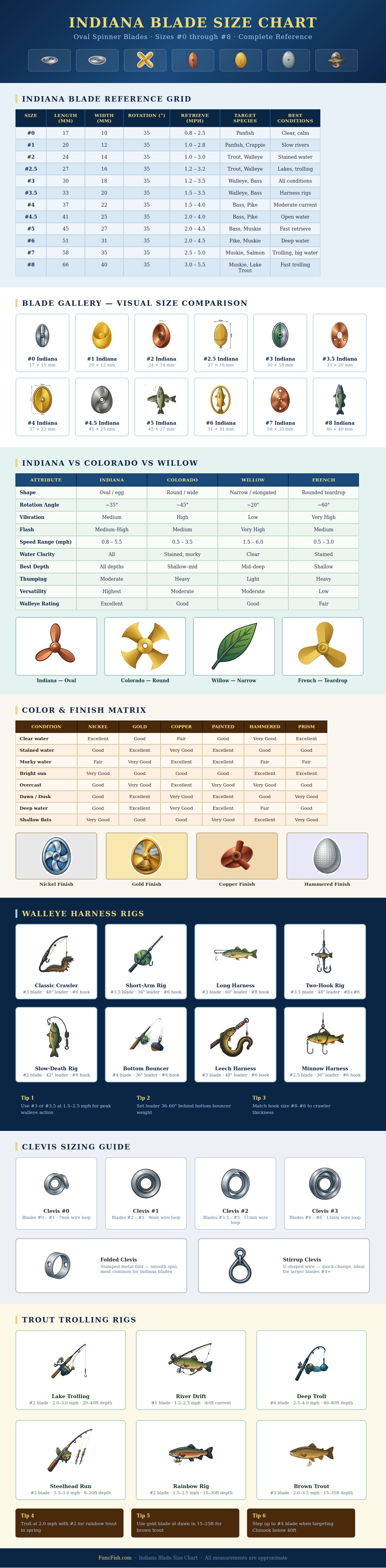
The issue typicaly isn’t the bait itself or your presentation, but rather a slight mismatch between your chosen blade size and the current conditions. When you get this dialed-in, fishing become a science…more specifically a science based off physics. It’s all broken down for you in the chart above so you don’t have to guess when you’re standing on deck. Do I use this size or do I try a bigger size? Just match blade to the situation.
How to Choose the Right Fishing Blade
If it’s calm and clear water, you might be fishing for crappie or panfish and a small size like a one or even a zero is great. But as you go from there to the three and the four, you’ll notice the action increase considerably. Sizes three and four is medium sized blades. They offer a good bit of vibration and some nice flash, which is realy what walleye crave. Throw those into some stained water, moderate current you need to counteract, and they’re hard to beat.
And then going to a big six through eight is all about power. They throw a ton of water around. They also put off a pretty heavy thumping vibration that carry well in deep lake water or in dirty water conditions when you want to troll for lake trout or muskie.
The shape of the blades also help explain why one choice is more effective then another. For example, Indiana blades have an oval shape that puts them somewhere in middle of the vibration range and they tend to be versatile across various depths. By contrast, Colorado blades are rounder so you get a heavier thump on bottom (good in shallow) but something that can feel sluggish if you want something faster. Willow leaf blades has very little vibration and a lot of flash. This makes them good in clear water when the fish see them from afar. The Indiana blade falls right in-between here. It has enough flash to draw attention but not too much sound to overwhelm the fish. It is a solid all-round option that will work well whether you are trolling a lake or drifting a river.
The choice of leader and hook for your setup is equally critical to blade selection. For example, a standard set-up on a crawler harness rig might feature a size three blade on a forty eight inch leader tied to a number six hook. The length of the leader give the bait natural action, trailing the blade and presenting a lifelike profile that triggers instinctive strikes. When faced with thick cover or big fish in area, bumping up to a bigger hook and longer leader will be the ticket to getting a bite and keeping it buttoned. Decide based off letting the blade work without interfering with the bait’s action.
A lot of anglers don’t realize how much finishes factor into their success rate. Nickel and prism finishes realy match the scales of natural baitfish and give them a real life look. Fish find it easier to commit when you have that realism in clear water. Copper and gold finishes shines better in dirty or stained water and provide contrast against darker backdrops. Overcast days are good for brighter colors to make up for lower light levels and bright sunny days sometimes fare best with more subtle tones that seem to blend well with the dappled light on top. You could of doubled your catch rate just by matching the finish to the amount of light penetration without ever having to change another variable.
Reading these tips is one thing; putting them into practice takes time, but that’s where practice makes perfect. Establish a starting point by trying medium blades in moderate conditions. From there, change to match current speed, fish activity and water clarity. Eventually, you’ll get to know your equipment and be able to match the situation almost instinctively. Those ghost stories will turn into successful days on the water before you know it.