Fillet Portion Per Person Calculator
Estimate how many fish fillets to portion for a meal from guest count, appetite, meal role, species yield, trimming style, shrink, sides, and planned leftovers.
📌Portion presets
⚙Meal and fillet inputs
Portion plan
Includes meal style, shrink, trim, and buffer.
Adjusted from your target serving.
Uses the selected yield percentage.
Rounded up to practical fillet pieces.
Calculation breakdown
🐟Species and portion gear grid
Lean White Fish
Rich Fillets
Steak Portions
Fish Fry Tray
Scale Setup
Tray Setup
Cooler Setup
Bag Setup
📊Serving reference tables
| Meal type | Light portion | Normal portion | Hearty portion | Planning note |
|---|---|---|---|---|
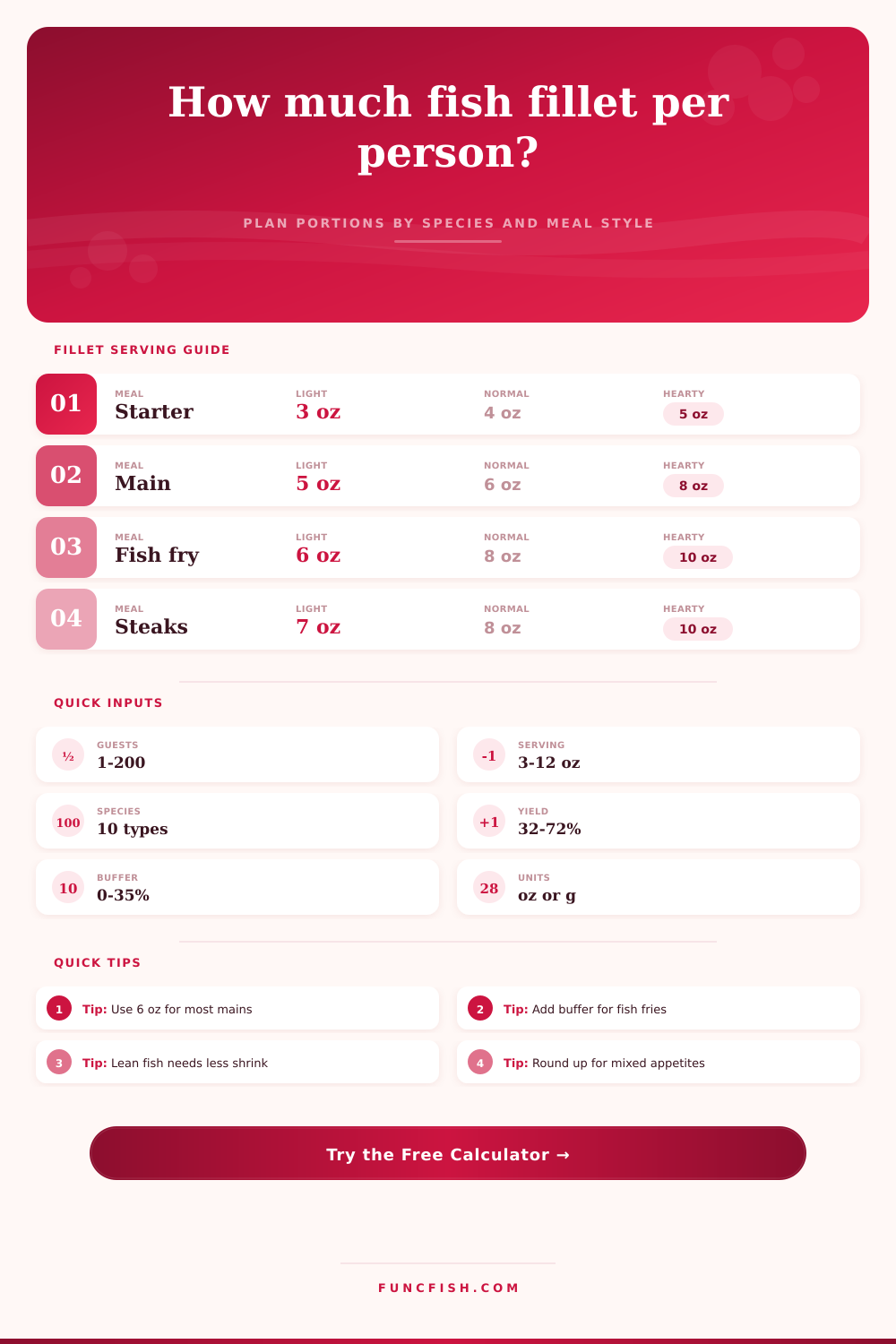
| Starter or tasting plate | 3 oz / 85 g | 4 oz / 113 g | 5 oz / 142 g | Best when another main item follows |
| Main course fillet | 5 oz / 142 g | 6 oz / 170 g | 8 oz / 227 g | Default for mixed groups |
| Fish fry or buffet | 6 oz / 170 g | 8 oz / 227 g | 10 oz / 283 g | Round up because seconds are common |
| Tacos, sandwiches, bowls | 4 oz / 113 g | 5 oz / 142 g | 7 oz / 198 g | Use lower portions with fillings |
| Steak-style center plate | 6 oz / 170 g | 8 oz / 227 g | 10 oz / 283 g | Works for tuna, halibut, swordfish style cuts |
| Species | Typical fillet yield | Default serving | Shrink range | Best planning use |
|---|---|---|---|---|
| Cod / pollock | 42% | 6 oz / 170 g | 10-14% | Flaky white fish portions |
| Trout | 58% | 5 oz / 142 g | 8-12% | Rich smaller fillets |
| Salmon | 68% | 6 oz / 170 g | 10-15% | Center-cut fillet portions |
| Walleye | 38% | 7 oz / 198 g | 8-12% | Shore lunch or fish fry |
| Bass | 36% | 6 oz / 170 g | 8-12% | Camp meal portions |
| Mahi mahi | 48% | 6 oz / 170 g | 10-14% | Firm grilled portions |
| Tuna | 72% | 7 oz / 198 g | 6-10% | Steak portions |
| Catfish | 42% | 7 oz / 198 g | 10-14% | Strips or platter portions |
| Snapper | 40% | 6 oz / 170 g | 9-13% | Whole-catch planning |
| Halibut | 52% | 8 oz / 227 g | 8-12% | Large firm portions |
| Adjustment | Light setting | Normal setting | Hearty setting | Calculator effect |
|---|---|---|---|---|
| Appetite | 0.85x | 1.00x | 1.18x | Changes target serving size |
| Side dishes | 0.90x with heavy sides | 1.00x with normal sides | 1.12x fish-forward | Accounts for what else is on the plate |
| Trim style | 0-3% clean trim | 5-8% mixed trim | 10-12% uneven pieces | Adds raw fillet before final rounding |
| Extra buffer | 0-5% | 10-15% | 20-35% | Covers seconds and serving variation |
| Leftovers | None | One meal | Several meals | Adds full serving equivalents |
| Portion piece size | Pieces for 4 people | Pieces for 8 people | Pieces for 12 people | Use case |
|---|---|---|---|---|
| 3 oz / 85 g small strips | 8-10 | 16-20 | 24-30 | Tacos, bowls, mixed trays |
| 5 oz / 142 g fillets | 5-6 | 10-12 | 15-17 | Trout, cod, smaller fish |
| 6 oz / 170 g portions | 4-5 | 9-10 | 13-15 | Standard main course |
| 8 oz / 227 g portions | 4 | 8-9 | 12-13 | Fish fry or steaks |
| 10 oz / 283 g portions | 3-4 | 7-8 | 10-11 | Very hearty service |
💡Portion planning tips
Weigh the batch first: Use the calculator total as the batch target, then divide into serving pieces after trimming. This keeps odd-shaped fillets from leaving one plate short.
Round after buffers: Add appetite, shrink, trim, and leftover allowances before rounding to pieces. Rounding too early can quietly add or remove a full serving.
Six hungry mouth gaze expectantly at you. You have a knife and a whole fish, and all you have to do is figure it out.
Should you cut each person a generous eight ounces, knowing there will be leftovers and no one will be happy? Or give them less so they want second helpings? This time your gut won’t get you very far, since preparing raw fish are not like cooking up some ground beef. Raw fish contracts, bones vanish, and skin dissapears. Half the pounds you thought were trout on the countertop turn out to be guts and head.
How to Use the Fish Portion Calculator
Guessing doesn’t work here, planning does. After entering your species and number of guest, the calculator do all the grunt work for you, calculating the appropriate amount of food, converting weights from whole fish to edible fillet, etc.
Home chef typically do not account for trim loss. For example, a cod fillet yield roughly forty percent of the original weight. In other words, you need at least double the original weight to serve one pound of fish. Without accounting for this conversion rate, there won’t be enough food on your plate. Depending on which species you choose, the calculator account for this automatically. It knows, for instance, that a bass have less meat than a salmon and therefore readjusts the necessary raw fish weight accordingly.
Portion selection depends completely on what other item are being served. Is it a side of fish? For example, is it served with mashed potatoes and coleslaw? Then the fish is probably just a flavor accent. That’s only five or six ounces each. But, how about a fish fry with some hushpuppies and light pickles? I think folks might be wanting more protein in that situation.
The table on the page do a good job of laying all of this out. It recommends increasing portion sizes up to eight or ten ounces for those hearty buffet situations. The calculator set these appetites and adjusts the total to match. If you have leftovers, people will ask for seconds, so those portions need to be accounted for.
Two things decreases the size of your portion. One is moisture loss. When fish reaches heat, it lose some moisture. Fatty fish such as trout or salmon loses more moisture than lean white fish. The tool takes into account how much each will shrink. The other reason is to ensure that what you intend to serve (six ounces) actualy comes out of the pan as six ounces. Without this step, generous portions becomes meager bites. It is a little thing, but it counts. Ten percent of raw weight can make all the difference between a hungry dinner and a satisfied one.
There is one trick with meal planning and leftovers: If you know you want something leftover for lunch the following day (sandwiches perhaps), enter it as an additional meal here. The calculator have space for it. This way you don’t panic at 9pm when you realize you didn’t get enough fish to make breakfast tomorrow. Put it down to zero if you’re going to eat it all immediately; put it down as another full serving if you plan on being forward-thinking. Better to have more than not enough because you raided the fridge for a repeat lunch.
It’s all about the species. If it’s halibut, which is dense and costly, cut the portions tightly. If it’s cod, which is flaky and forgiving, be loose with your estimates. The tool use industry-standard yield information on popular species. No more hunting down a coefficient for each kind of catch. Choose the fish, let it do the rest. And this makes the decision-making process easier while you stand there in the market holding a cooler of ice.
A pro tip: Weigh it out first. Don’t cut each fillet by eye. Instead, use your scale to weigh how much you should of be serving based off the calculator’s recommendation, and then cut those into even portion. That way no one ends up with a huge steak and someone else get the scraps because of an odd shape or cut. It is a fair way to feed people without stressing about grams and grams.
Round up to the next whole portion. Better to have one more little portion then to have someone leave hungry.
There’s a mathematical aspect to cooking fish just as much as there is one for flavor. Portion control remove the stress from entertaining. There’s no more need to worry whether you have enough or not… Enjoy your food. Let the calculator do the math while you concentrate on seasoning. Whether it’s two people or twenty, the same rules apply. Trim once, measure twice, and then serve with confidence. A happy crowd await, and a little planning will ensure everyone gets a full plate.