
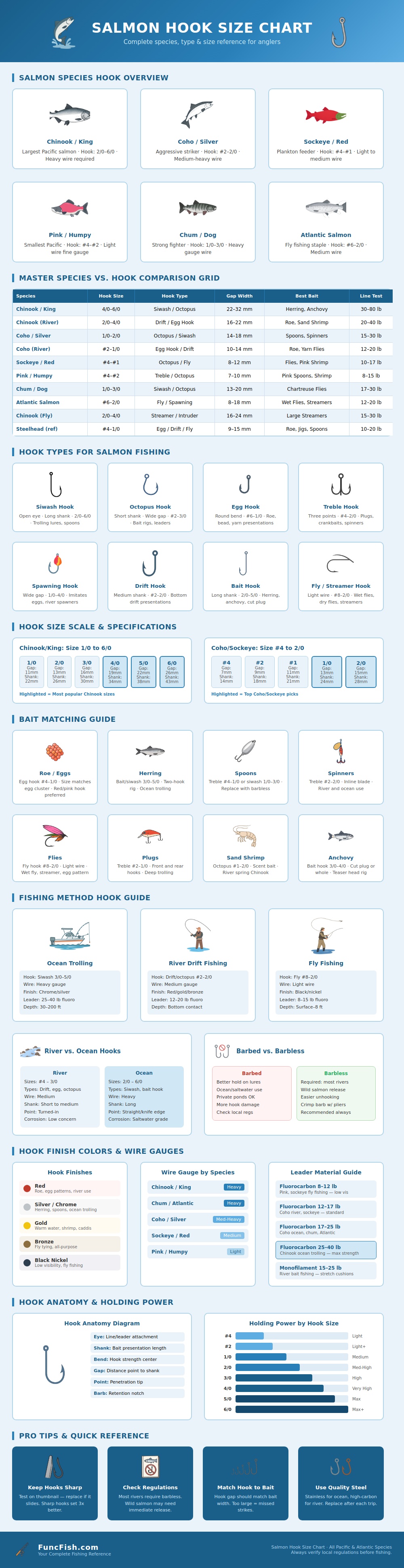
Selecting an correct hook is a necessary step in salmon fishing because the correct hook will allow a person to successfully land a salmon. If a person selects the wrong size or type of hook, a salmon will typically be unable to keep the hook in its mouth. The types of salmon that is being targeted will have an impact upon the type of hook that a person utilize when salmon fishing.
For instance, Chinook salmon are strong and powerful fishes that require heavy hooks to be fished for. Pink salmon are much more smaller and less strong, so fishermen utilize lighter hooks when fishing for pink salmon. Sockeye salmon eat plankton so lighter setups are used for these salmon species.
How to Pick the Right Hook for Salmon Fishing
Coho salmon are aggressive so medium heavy hooks are used when fishing for these salmon species. The types of hooks that is used will include hooks that is appropriate for the fishing methods that are to be utilized. The siwash hook is best utilized for trolling techniques because the long shanks on these hooks will allow the lures to swim correctly through the water.
Octopus hooks have wide gaps on the hook that enable them to grip the bait clusters when fishing in rivers. The fisherman must utilize the correct shape of the hook because the wrong shape will cause the bait to not be successfully presented to the salmon. Short shanks on the hooks allow for the compacting of the bait against the river currents and long shanks allow for the natural movement of baitfish in the ocean.
Hook size and hook gap width are two different factors in the salmon fishing process. The hook gap width is the space from the shank of the hook to the point of the hook. This gap must be wide enough to accommodate the bait.
If the hook gap is too narrow, the hook will not be able to catch the salmon. If the hook gap is too wide, the salmon may strike the hook but not be able to catch it with the hook. The size of the hook must match the species of salmon that is being targeted such as using a #4 hook for pink salmon or using a 4/0 hook for Chinook salmon.
The size of the hook must also be paired with the correct test of the fishing line because heavy leaders will be needed for Chinook salmon in the ocean but lighter fluorocarbon lines will be needed for salmon in rivers. The selection of the correct hook will depend upon the type of bait that are to be utilized in the salmon fishing process. Roe will require egg hooks because they mimic the size of a cluster of roe.
Spons and spinners will require treble hooks or Siwash hooks. If the hook does not match the bait that is being utilized, the bait will move incorrect in the water and the salmon will not recognize the bait. The methods for fishing for salmon will have an impact upon the type of hook that should be utilized in the process.
When trolling for salmon in the ocean, heavy Siwash hooks and leaders will be required because downriggers is used to fish at great depths in the ocean. For river drifting techniques octopus or drift hooks will be utilized because the bait has to bounce along the bottom of the riverbed. Barbless hooks are used in most rivers so that the salmon can be quickly released into the river but barbed hooks are used in the ocean where the fights between the salmon and the angler will last for longer periods of time.
The final details for the hooks include the finish of the hooks and the wire gauge. Red hooks will be used to mimic the roe while silver finishes will mimic the flash of the baitfish. Heavy wire is used for Chinook and Chum salmon while light wire is used for Humpback salmon.
The hook should have a sharp point so that it can penetrate the salmon scales and strong bends so that the hook can be fished. Ensure the hooks are properly sharp and that you are following all regulation for fishing.