🐟 Carp Lifespan Calculator
Estimate carp age, expected lifespan & growth stage based on species, weight & water conditions
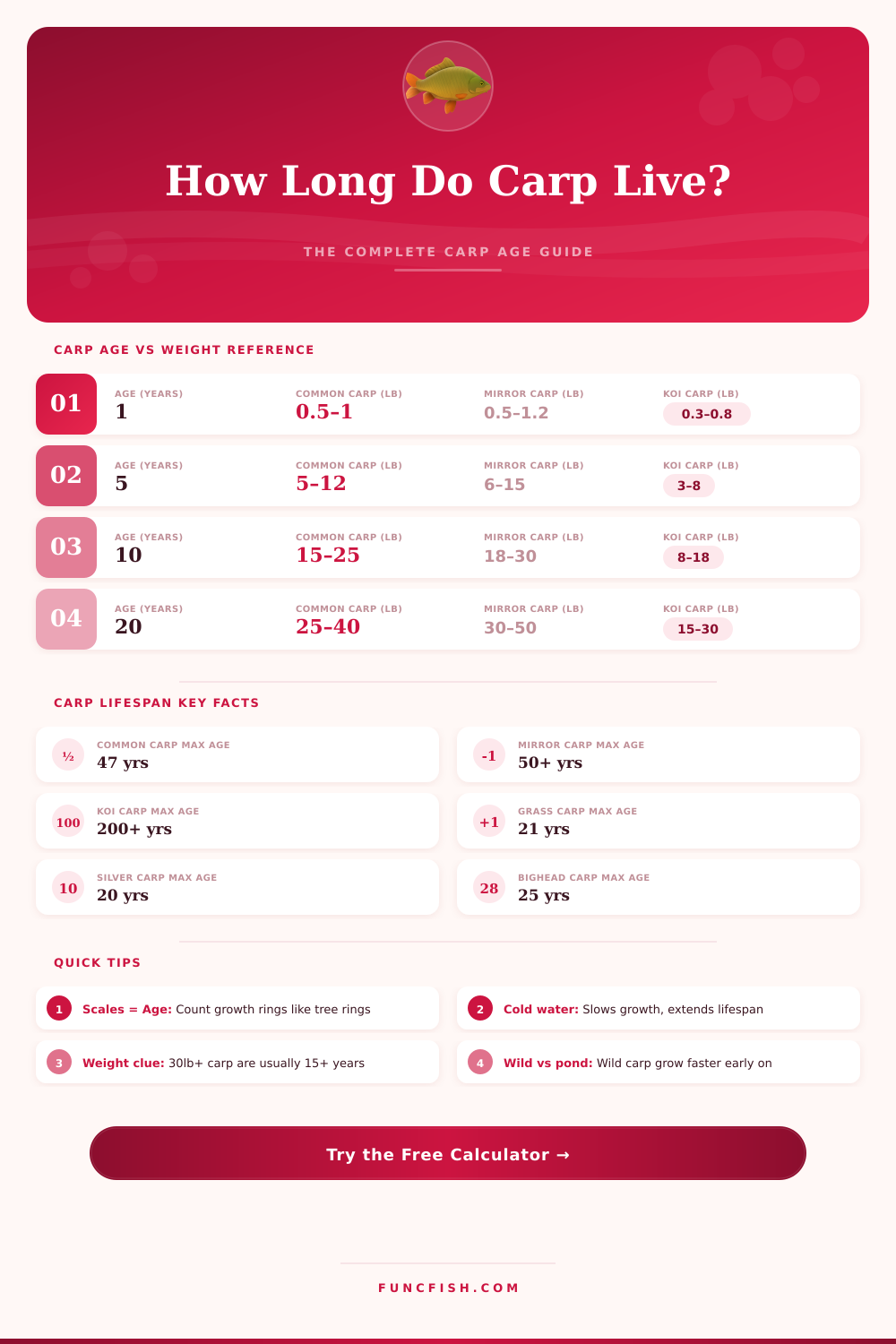
| Age (Years) | Common Carp (lb / kg) | Mirror Carp (lb / kg) | Koi Carp (lb / kg) | Grass Carp (lb / kg) |
|---|---|---|---|---|
| 1 | 0.5–1 / 0.2–0.5 | 0.5–1.2 / 0.2–0.5 | 0.3–0.8 / 0.1–0.4 | 0.5–1.5 / 0.2–0.7 |
| 3 | 3–8 / 1.4–3.6 | 4–9 / 1.8–4.1 | 2–5 / 0.9–2.3 | 4–10 / 1.8–4.5 |
| 5 | 6–14 / 2.7–6.4 | 7–16 / 3.2–7.3 | 3–9 / 1.4–4.1 | 10–20 / 4.5–9.1 |
| 8 | 12–22 / 5.4–10 | 14–26 / 6.4–11.8 | 6–14 / 2.7–6.4 | 18–30 / 8.2–13.6 |
| 10 | 16–28 / 7.3–12.7 | 18–33 / 8.2–15 | 8–18 / 3.6–8.2 | 22–38 / 10–17.2 |
| 15 | 22–38 / 10–17.2 | 25–45 / 11.3–20.4 | 12–24 / 5.4–10.9 | 28–45 / 12.7–20.4 |
| 20 | 28–45 / 12.7–20.4 | 33–55 / 15–25 | 16–32 / 7.3–14.5 | 35–55 / 15.9–25 |
| 30+ | 35–55 / 15.9–25 | 40–65 / 18.1–29.5 | 20–40 / 9.1–18.1 | — |
| Life Stage | Age Range | Typical Weight | Annual Growth Rate | Notes |
|---|---|---|---|---|
| Fry / Fingerling | 0–1 yr | Under 0.5 lb (0.2 kg) | Very rapid | Highly temperature-dependent |
| Juvenile | 1–3 yrs | 0.5–5 lb (0.2–2.3 kg) | 3–5 lb/yr | Fast growth phase begins |
| Sub-Adult | 3–7 yrs | 5–18 lb (2.3–8.2 kg) | 2–5 lb/yr | Sexually mature at 3–5 yrs |
| Adult | 7–15 yrs | 18–35 lb (8.2–15.9 kg) | 1–3 lb/yr | Growth slows significantly |
| Mature Adult | 15–25 yrs | 30–50 lb (13.6–22.7 kg) | 0.5–2 lb/yr | Prime specimen fish |
| Senior | 25+ yrs | 40–65 lb (18–29.5 kg) | Under 1 lb/yr | Growth nearly halted |
| Temp Range | °C Range | °F Range | Growth Multiplier | Lifespan Impact |
|---|---|---|---|---|
| Cold | 0–10°C | 32–50°F | 0.6x (slow) | +15–25% longer life |
| Cool | 10–15°C | 50–59°F | 0.8x | +5–15% longer life |
| Temperate | 15–20°C | 59–68°F | 1.0x (baseline) | Baseline lifespan |
| Warm | 20–26°C | 68–79°F | 1.3x (fast) | –10–20% shorter life |
| Hot | 26+°C | 79+°F | 0.7x (stress) | –20–30% shorter life |
Carp can live for different lengths of times depending on the type of carp that is being kept and the environment in which the carp lives. Many people adds carp to the ponds in they backyard for there appearance or for the ability to fish for these fish. However, the lifespan of a carp is dependent upon a variety of different factors.
For instance, different types of carp has different lifespans, but the water quality and the volume of the pond that contains the carp can change the lifespan of those fish if they isnt maintained correctly. Carp come in a variety of different types. For instance, people can locate common carp in both backyard ponds as well as in the rivers in which they lives in the wild.
How Long Do Carp Live and What Affects Their Lives
Common carp can live between 15 and 20 years, and typically reach the age of senior carp between 10 and 14 years of age. Another type of carp is mirror carp, which can live to be between 25 year of age when they live in spacious lakes and do not experience physical injury to there fins. Additionally, koi carp can live between 40 years of age when you provide them with the properly ornamental care; koi carp requires clean water and gentle winters to live to such an age.
Grass carp tend to live for shorter periods than the other types of carp discussed. Grass carp live between 10 and 15 years of age, and thrive in temperatures that are warm to the touch, but experience shorter lifespans if other fish in the pond keep them in crowded environment. In addition to the type of carp that is kept in the pond, there are a variety of factors that can impact the lifespan of those fish.
For instance, the quality of the water within the pond is one of the primary factor that determines the lifespan of the carp. The dissolved oxygen that exists in the water must be maintained at a certain level; if the levels of dissolved oxygen drop below 6 mg of dissolved oxygen per liter of water, the carp will experience a decrease in their lifespan. If the water contains high level of dissolved oxygen, the carp experience less stress, while lower levels of dissolved oxygen results in stress for the carp, which reduces their lifespan.
The second primary factor related to the lifespan of carp is the temperature of the water in the pond. Carp require water temperature to remain between 16 and 24 Celsius. Water temperatures that rise to 28 Celsius or higher will lead to the carp struggling to breathe at the surface of the water, leading to shortening of their lifespan.
A third factor that impacts the lifespan of carp is the stocking density of the pond. High stocking densities in the pond lead to competition for food by the fish, which reduce the lifespan of the carp. The volume of the pond in which the carp live is another factor that impacts the lifespan of the carp.
If the pond is small and contains only 1000 liters of water, the carp will live in a relatively cramped environment compared to a pond of 5000 liters or more. Additionally, you should fit the pond with a biofilter to ensure the water is clean and that the waste of the carp is prevented from negatively impacting its health. The diet provided to the carp also has an impact upon their lifespan.
A diet of carp pellets provide the carp with the nutrients that they require for growth. The age of the carp and their health history also has an impact upon the lifespan of the carp. For instance, carp that contain a history of parasite or injuries to there mouths may have a shorter lifespan than fish without those health issue.
Additionally, the genetic makeup of the carp can have an impact upon the lifespan of that carp; carp with specific genetic line are bred to contain greater endurance than carp of other breeds. Finally, care of the carp during the winter months can have an impact upon their lifespan; providing the carp with shelters during the winter months insulates them against the cold weather and prevents them from passing away due to exposure to the cold. In order to provide for a long-lived population of carp in your pond, there are a variety of mistake that you should avoid.
For instance, you should avoid overfeeding the carp; overfeeding the carp leads to the water becoming cloudy, and results in the carp becoming bloat. Secondly, you should never skip the filters that are located in the pond; if you skip the filters in the water, the pond will experience spikes in ammonia, which is harmful to the carp. Finally, avoid handling the carp too frequently with nets; handling the carp too often will lead to stress for the carp, which is dangerous for the senescent life stage of the carp.
In order to manage your carp in the pond, you should perform periodic check to ensure the length of the carp relative to its age. Additionally, you can use water testing kits to determine the amount of dissolved oxygen in the pond. Furthermore, you can check the stocking density of the pond against the size of the pond itself.
Should you increase either the amount of dissolved oxygen or add a biofilter to the pond, the lifespan of the carp can be projected to increase. Finally, if sufficient care is given to the carp to maintain the water in the pond to be as clean as possible, and if sufficient space is provided for the carp to live in there natural rhythm, the carp will live for more longer periods of time.