
When selecting the size of a fishing reel for a fishing task, you must select the specific size of the fishing reel for the specific task. If the fishing reel are too small for the type of fish you are fishing for, then the fishing reel will not have enough line capacity to hold the fish, and the fish will pull all of the lines off of the fishing reel. However, if the fishing reel is too large for the type of fish you are targeting, then you will find the fishing reel is too heavy to effective use when fishing.
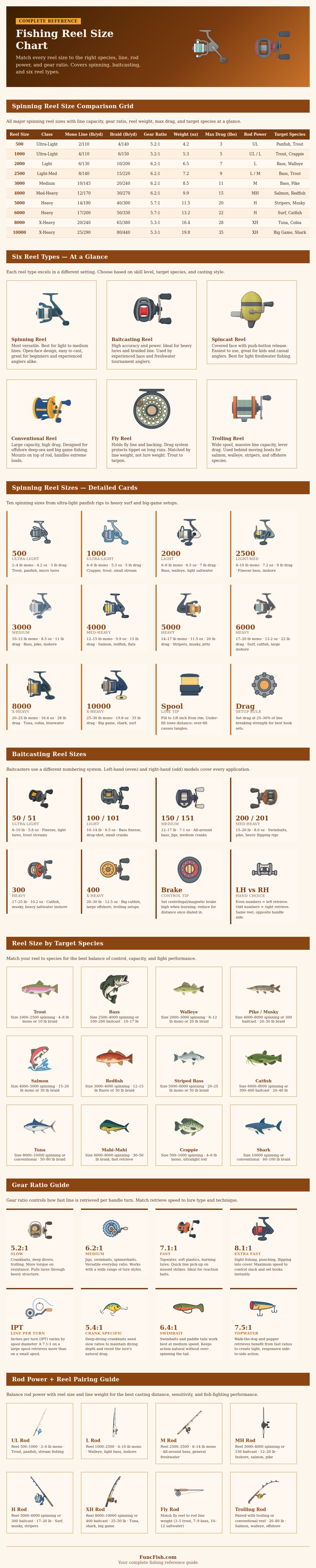
You must select a fishing reel based off the types of fish you are targeting and the type of fishing environment in which you are fishing. Spinning fishing reels use a series of number to indicate the size of the spinning fishing reel. The sizes of spinning fishing reels can range from 500 to 10000.
How to Pick the Right Fishing Reel
Spin casting reels with smaller numbers indicate that the fishing reel will be lightweight and have a high line capacity for small fish and light fishing lines. However, larger numbers for spinning fishing reels indicates that the fishing reel will have a more higher line capacity and a stronger drag system to handle the larger fish and heavier fishing lines. Therefore, the type of fish and the weight of the fishing line will dictate the size of the spinning fishing reel you use.
If you are fishing for trout in a stream, you will want to use a small spinning reel that allows you to feel the bites from the smaller fish. However, if you are fishing in an ocean surf for large fish, you will want to use a larger spinning fishing reel that can handle the heavy mono line required for surf fishing. Baitcasting fishing reels use a different system to determine the size of the fishing reel.
Additionally, baitcasting fishing reels is typically used for heavier fishing lines and lures. Baitcasting fishing reels are power tools that allow for better control over the line being cast from the fishing reel. Adjusting the brakes on the baitcasting reel provides this control.
If you set the brakes on the baitcasting reel too loosely, the line will form bird’s nests. However, if the fishing line on a baitcasting reel is correctly adjust, you will have better control over the fish. Most beginners use baitcasting reels because they can handle heavier lines, but many experienced anglers will use baitcasting fishing reels for better control over the line when fishing.
The species of fish that you are targeting will dictate the size of the fishing reel that you use. For example, if you are targeting species like pike, you will need a larger fishing reel that has enough line capacity for 30-pound braided line. However, if you are targeting redfish species, you will need a fishing reel that is in the mid range for fishing lines and capacity.
You will need a reel that can handle sandy areas and flats for fish. A common mistake when fishing with fishing reels is to use a small fishing reel for large fish species. Using a small fishing reel for large fish will result in the fish pull the line from the reel because the line isnt designed to handle the fish.
The line capacity on the fishing reel is a necessary feature when fishing for large species of fish. Another factor that will influence the type of fishing reel that you use is the gear ratio. Gear ratios on fishing reels control how much line is cast from the reel with each turn of the handle.
Slow gear ratios, such as 5:1, are typically used for fishing with crankbaits, as the slow gear ratio will help maintain the crankbait’s depth in the water. Fast gear ratios, such as 7:1 or higher, are used when fishing with topwater lures. With these fast gear ratios, the reel will cast the line quick to make the lure move on the water’s surface.
Additionally, the larger the fishing reel, the more line will be pulled with each turn of the reel. This is because the larger reels has a larger circumference on the line spool. You must also consider the power of the fishing rod that will be used with the fishing reel.
The power of the fishing rod and the power of the fishing reel must be balanced. For instance, an ultralight fishing rod should be paired with a tiny fishing reel. Otherwise, the fishing rod will be tip heavy.
Additionally, a medium-heavy fishing rod should be paired with a reel in the mid-range. This type of fishing rod have the power to fight species like pike and salmon. Using a heavy fishing rod with a featherweight fishing reel will make it difficult to fight large fish.
Using a light fishing rod with a heavy fishing reel will also cause difficulty in fishing. Finally, you must ensure that you correctly set the drag on your fishing reel. This will allow the fish to set their hooks on the fishing line without the line snapping due to the strength of the fish.
You should of checked the gear ratio too. It’s important to recieve the right gear for the job. You’ll want to avoid mistakes that makes fishing difficult.
If you want to be successful, you must understand how the equipment works. Selecting the right reel is more important then you might think. Dont forget to check the reel’s condition.
A moddern reel is much better than an old one. Youve gotta make sure the drag is set perfectley. Its actualy alot easier once you practice.