
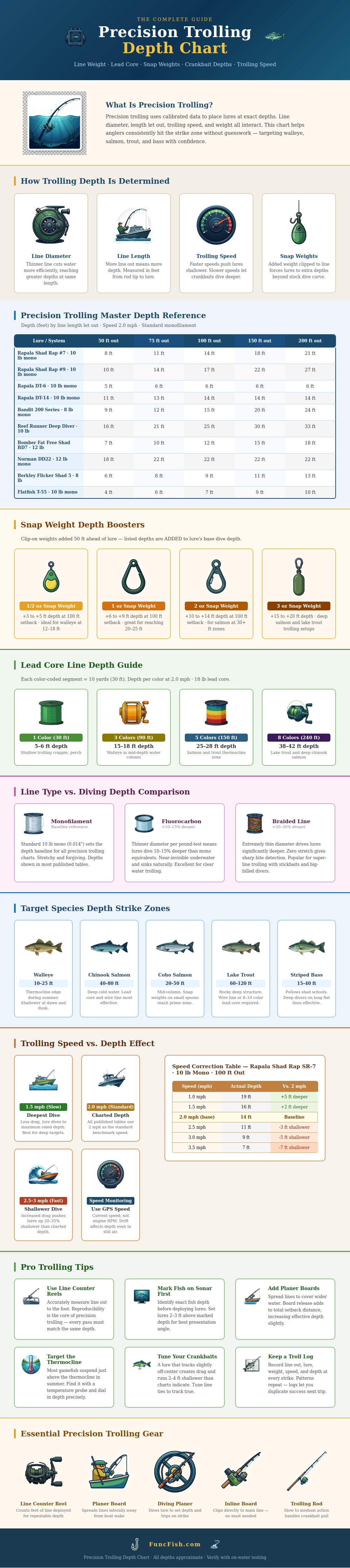
Precision trolling involve using specific variable to control the depth of a lure. There are several different variables that affect the depth of a lure while precision trolling, including the diameter of the line that is used, the length of the line that is let out, the trolling speed, and the weight that are added to the lure. Each of these variables will affect the depth at which the lure travels through the water.
By understanding each of these variables and how they impact the depth of the lure, angler can move from guessing the location of the lure to having a plan for the location of the lure. The depth of the lure isnt just dependent upon the amount of line that is let out in the water. For instance, the diameter of the line will have an impact upon the depth of the lure.
What Affects How Deep a Lure Goes
Lines with a thinner diameter will experience less resistance when moving through the water than lines with a thicker diameter, allowing the lure to travel to a deeper portion of the water. The length of the line that is added to the lure will also impact the depth of the lure. Each foot of line that is added to the lure will add to the weight and drag that the lure experience while moving through the water.
Trolling speed will also have an impact upon the depth of the lure. As the trolling speed increases, the depth of the lure will decrease. Faster speeds will lift the lure higher in the water while slower trolling speeds will allow the bill of the lure to dig into the water, allowing the lure to go to a deeper portion of the water.
Lastly, the weight that are added to the lure will also impact the depth at which it travels through the water. Weights like snap weights will force the lure to travel to a deeper portion of the water. Lead core lines are one type of line that can make precision trolling easier for angler.
Lead core lines are lines with color segments that indicate the length of the line. Therefore, if anglers know that the depth of a particular color segment of lead core line is known at a specific trolling speed, then that portion of the line can be used to fish either shallow or deep water. Additionally, if anglers use only one color of lead core line, it can be used to fish in shallow waters.
If anglers use many segments of lead core line, however, they can use it to fish deep waters. Using lead core line allows anglers to adjust the depth at which their lure travels through the water without having to measure the amount of line that is let out. The type of line that is used will also change the depth of the lure.
For instance, fluorocarbon lines slightly sink in the water, as well as have a smaller diameter for their strength. For these reason, fluorocarbon lines allow the lure to travel to a deeper portion of the water than monofilament lines. Braided lines also allow the lure to go to a very deep portion of the water because braided lines are thin in size and do not stretch when the weight of the lure is pulling on the line.
However, because the line is thin and does not stretch, anglers may notice a change in how the fish feel when biting on the line. For this reason, some anglers may prefer monofilament lines. The type of fish that is being targeted will dictate the level of precision that must be performed when precision trolling.
For instance, walleye live in the thermocline during the summer month, so precision trolling must be performed to ensure that the lure is in the proper depth in which the walleye live. Salmon and lake trout live in deep water. Therefore, anglers must add long lines of lead core line or heavy snap weights to the lure to allow for it to reach those deep waters to target salmon and lake trout.
Striped bass live in bait schools that move in accordance with the tide and the light in the water. Therefore, the depth of the striped bass can change. In order to successfully target striped bass, the angler must know the type of fish that is being targeted to adjust the trolling speed, amount of weight to the lure, and the amount of line to be let out.
Trolling speed is a variable that many anglers dont think about when precision trolling, but trolling speed has a great deal of importance in determining the depth at which the lure travels in the water. If the trolling speed increases, the depth at which the lure travels in the water will decrease. Small increase in trolling speed will lift the lure several feet above the depth at which it was traveling before the trolling speed was increased.
A trolling speed is best measured with a GPS signal to ensure that the trolling speed is accurate, as the engines current rpm may not reflect the actual speed that the fishing boat is traveling. There are a few different tools that can be used to enhance precision trolling. Line counter reels can eliminate the need to measure the amount of line that is let out when precision trolling.
Sonar technology can help anglers to understand the depth of the target fishing spot before putting a fishing rod into the water. Planer boards can help to even out the spread of the fishing lines so that they dont become tangled, and the planer boards will also add a small amount of setback to the lines that will deepen the path of the lure. Additionally, anglers can use a log to record the result of their precision trolling efforts.
The log can keep records of the trolling speed that was used and how many feet of line was let out to get the best results when trolling for specific fish species. Using such a log will allow anglers to repeat those successful trolling effort in the future. Precision trolling is a technique that will be most helpful to anglers who are dealing with changing fishing condition.
Fishing conditions change when thermoclines break or when bait schools of fish rise or fall in the water. Anglers who follow a precision trolling strategy will find that there specific setup may not work when conditions change. By understanding the relationship between each of the variables in precision trolling, though, anglers will be able to make only one change to their trolling setup.
Making only one change to the trolling setup will allow anglers to get the lure back to the fish that are being targeted.