
The ice on an Minnesota lake in January has a specific type of quiet. The ice creaks and the ice pops under your boots like an old house settling. The wind howls across the snow that blanket the lake bed like polished marble.
For people who love to ice fish, this time of year is when the fishing is the best of the year. There is no boat traffic on the lakes. There are no pesky bug to worry about.
The fish have gathered in specific spots around the lakes since the leaves have fallen from the tree. However, there are a few small decisions to make that will determine if a person ends up with a limit of fat crappie or a long day wondering why the ice fishing didnt turn out as well as they had hoped. If the decisions are made correctly, the ice fishing will likely go as smoothly as possible.
There are a few tips for angler that will separate those who spend their weekends on the frozen lakes from those who always seem to have enough fish to fill their baskets. These tips will be provided to illustrate the details that matter when one finally leaves their truck and sets foot on the ice. The first of the many decisions that must be made is to ensure the safety of the ice.
Essential Tips For Successful Minnesota Ice Fishing
1. Ensuring Ice Safety
In the early months of winter, clear black ice forms on the lakes first. This type of ice is the strongest and often safe at a thickness of four inch for a single person. In the middle of winter, most Minnesota lakes will have twelve to eighteen inches of ice.
Twelve to eighteen inches of ice is enough to drive a truck on if one avoids the pressure ridge. However, the angler should inspect the color of the ice on the lake’s surface. Ice that is white or cloudy contains air bubbles that weaken the structure of the ice to half the strength of clear ice.
Test hole should be drilled every fifty yards when ice fishing for the first time in new waters. These five minutes of extra work will save the angler from an unplanned swim in the local fishing lake. Once on solid ice, the location that is chosen for ice fishing is the most important decision.
2. Choosing the Right Fishing Location
Walleyes and saugers love to hang out on the edges of deep mud flats near river channel. Crappies and bluegills like to congregate over the deepest holes in the lake. Crappies and bluegills live between eight and fifteen feet down in a lake that is forty feet deep.
Various maps are available that show the different depths in a lake. These maps can be viewed on a smartphone. During the first thirty minutes of ice fishing, a grid can be drilled until the right depth is located.
Most fish will stick to lake structure or be located on the breakline where the lake bed changes from mud to gravel. If the angler misses that line by ten feet, the fish will likely be found in a different lake. An angler’s electronics can make or break an ice fishing trip.
3. Using Electronics and Flasher Units
A flasher unit will show how far the jig is from the lake bed and if the fish are interested in the jig. The zoom should be set so that the bottom six feet of the lake are visible on the screen. If the jig is interested in the fish, the angler can adjust the jig in two-inch increments until the fish commit.
Many anglers will switch to a color camera once they have discovered where the fish are. Watching a crappie take a gulp of a small jig is half the fun. The color screen on a color camera is addictive.
However, it should be used after the flasher unit finds the fish. The added weight and battery drain makes it better used as a viewing tool after the ice fishing efforts. One of the most important decision is the type of jig to use.
4. Selecting the Best Jigs and Lines
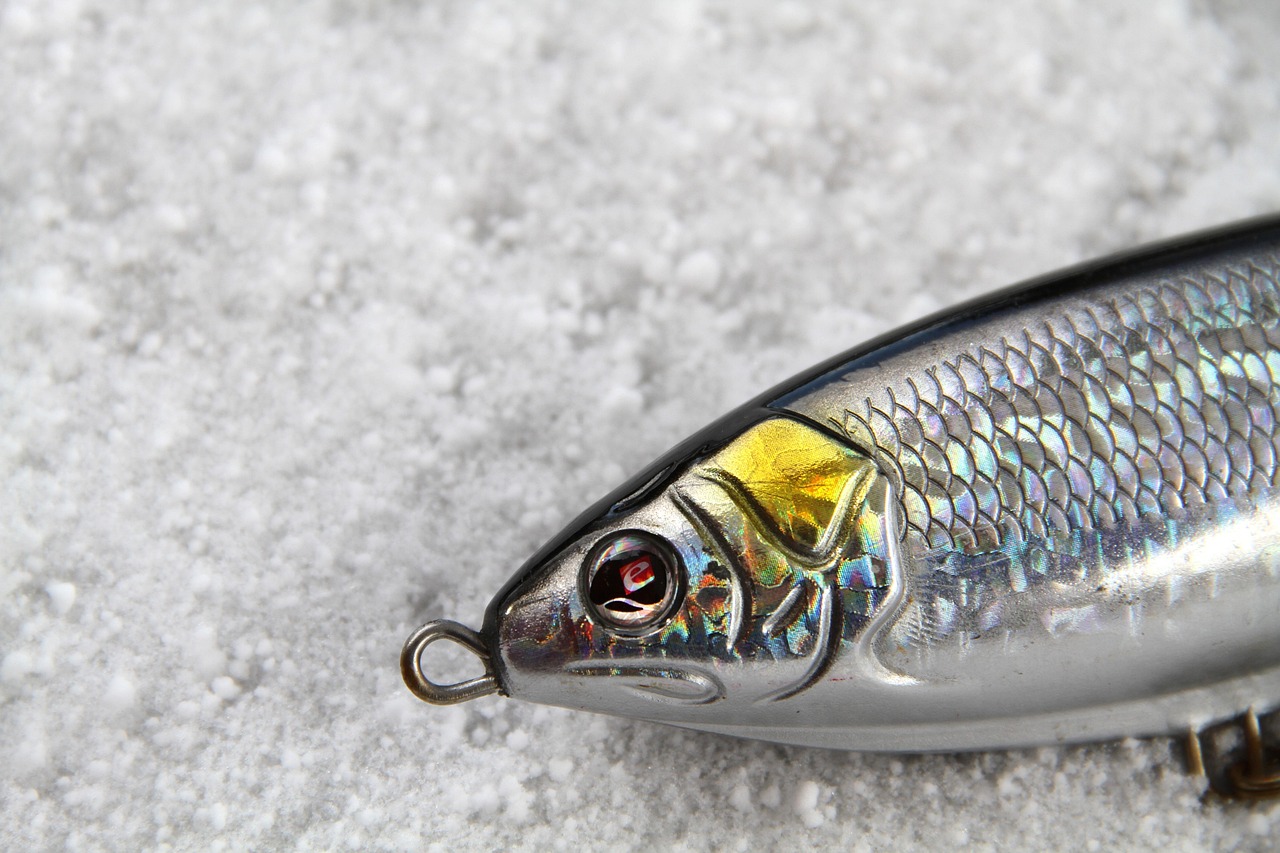
For beginners, there are a few types of jigs that will work best. A Northland Bro Bug or a Custom Jig and Spins Rattlin’ Fly in sizes four to eight will work best for most fish. The leader should be two pounds test fluorocarbon.
Monofilament lines will become stiff when the water temperature drops to thirty-three degrees. Tipping the jig with a wax worm, eurolarva or minnow tail will help to entice the crappies. However, the bait should be kept moving while on the fishing line.
However, it should not be moved in a frantic fashion when on the fishing line. A gentle movement will allow the fish to believe that this is the same bait that they have been eating all winter. Aggressive movements work for perch but crappies will be more interested in being seduced by the bait.
5. Selecting the Right Fishing Rod
An angler can have the best gear in the world, but if they use the wrong type of fishing rod, they will have a hard time catching fish. For ice fishing, a stiff musky rod is not the best option. A stiff musky rod will rip the bait out of the mouth of a crappie.
Instead, the best ice fishing rods are between twenty-four and thirty inches and have a sensitive tip. These fishing rods have a slow action so that the angler can see the bend in the fishing rod before the fish feels the resistance. If the angler drops the fishing tip six inches into the lake, the fishing line will remain slack so that the fish can turn with the bait on the hook.
A smooth motion will set the hook into the soft tissue around the crappie’s mouth. This small detail will double the catch rate of crappies. The clothing an angler chooses will determine how long they will stay on the ice.
6. Proper Cold Weather Clothing
Thin layers of merino wool or synthetic clothing will allow the body to stay dry and warm against the skin. A thick fleece layer and a windproof insulated jacket with insulated bibs will ensure that the angler remains dry and warm in minus thirty-five degree weather. However, the make-or-break fashion item is a pair of boots.
Insulated pac boots with removable liners will keep the feet warm even at minus twenty degrees. However, these boots will only warm the feet if the boots remain dry. Sweat is the enemy of warmth.
If an angler starts to walk across the frozen lake in their fishing gear, they will overheat their body and there socks will get wet. This will result in their body freezing while they sit in one spot to ice fish. To avoid this problem, the angler should dress to be slightly cool while on the lake.
Once they find the spot where the fish are, the angler can add a layer to their clothing. When the weather changes, so should an angler’s shelter on the ice. On days when the weather is bluebirds and there is no wind, many anglers will skip the shelter.
7. Choosing an Ice Shelter
They can use a simple windbreak or walk across the ice on a bucket. However, on howling winds or temperatures below zero, use a shelter that flips over on the ice with good ventilation. Leave one window cracked in case a small heater is needed.
The interior of the shelter should be dark so that the ice holes will show up like televisions on the ice. Do not allow light to enter the shelter because this will make it difficult for the angler to view the screen on their fishing camera when the fish are biting. Using the proper bait is a form of art on its own.
8. Using Proper Bait
Wax worms should be kept in a cooler with an ice pack so that they stay dormant until they are needed. Minnows need a bubbler in the bucket or they will die by noon. The bait should be changed every twenty minutes on the clock, even if there is no fishing activity.
When the bait is fresh and wriggling, the crappies cannot ignore the scent. By twenty minutes, the bait will be tired of the smell of their own fish food and will ignore the lure. An angler must pay attention to the clock and the barometer to succeed in ice fishing.
The best bite on the frozen lake happens at sunrise and during the last hour of daylight. A drop in the barometric pressure will cause the fish to eat more aggressively in the middle of the day. If the fish seem less interested in the bait, it is time to move to where the fish were an hour ago.
They have likely moved fifty yards to the next fishing spot. Successful ice anglers adjust their ice fishing spot constantly. This way, they will have success in their efforts.
An angler should respect the lake and the regulations put in place by Minnesota. There are slot limits on walleyes and inland trout waters exist for a reason. One should only take the fish that one will eat.
The rest of the fish should be released back through the same hole they were caught in. A fish that is returned through the same hole has a good chance of surviving the ice fishing trip. It is also courteous to refill the holes with ice chips to allow the snowmobiles to use the lakes later.
Taking a few minutes to do this will ensure that others will continue to enjoy the quiet of the frozen lake. When the sun begins to drop behind the tree line and the sky takes on a pink hue, the angler will understand why they love ice fishing so much. The cold, the silence and the satisfaction of figuring out how to ice fishing effectively is a feeling that many anglers will treasure.
Once done ice fishing, it is time to pack up the gear. Place the fish in a bucket of snow so they do not spoil while still on the ice. It is time to begin the long walk to the truck.
Tomorrow the ice will still be there and be waiting for the angler to return to the frozen lake in the winter season.