
Many anglers think that the sport of fly fishing is best enjoyed with trout population in highland streams. Others imagine the scene of bonefish taking the bait presented with care on tropical flats. Few consider the possibility of fly fishing for catfish.
Yet catfish populations do appreciate the addition of artificial flies to there diet. Furthermore, when anglers pursue catfish specifically instead of merely hoping to land an accidental catch with their flies, the aggression that these fish display when targeted can be quite impressive. Fly fishing for catfish is a more challenging pursuit than that experienced when pursuing trout species.
Nonetheless, there is several lessons that can be learned that will allow anglers to increase their chances of success when they pursue catfish with artificial flies. These lessons will begin with the easiest techniques, and end with those that separate dedicated catfish anglers from the general fishing population. The first lesson that should be taught is how to properly select the appropriate rod and line weights to use while pursuing catfish with fly lines.
Essential Tips for Fly Fishing for Catfish
1. Select Appropriate Rod and Line Weights
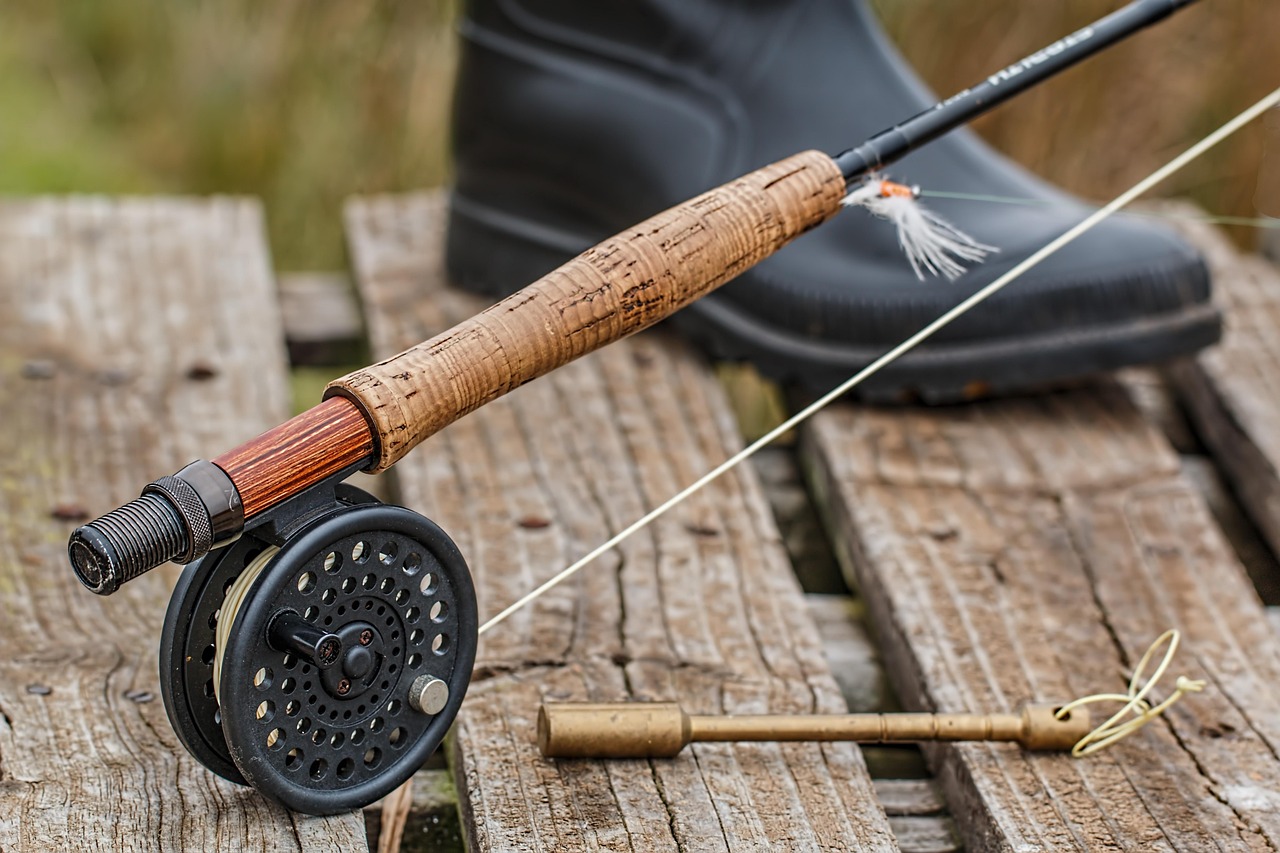
For common channel catfish species, an eight-weight fly rod will do the trick. However, if targeting the larger blue or flathead species, a ten- or twelve-weight rod will provide better success. Additionally, a heavier line allows for the casting of bulky flies such as spoons, and will help anglors to fight against the elements such as strong wind, as well as to free the fish from snag points in the riverbed.
2. Choose the Right Line Type
For shallow water locations, use a floating line. For those deeper than four feet, a sinking-tip line will provide better success.
3. Identify Prime Catfish Locations
Location is another important factor in the success of catfish anglers.
Catfish are drawn to locations such as outside river bends, creek mouths, and the areas beneath dam wings where the water velocities differs from the remainder of the river. In lakes, look for submerged trees and banks composed of rocks that have eroded over time. Additionally, baitfish are often found in these locations.
Furthermore, catfish prefer to feed in areas shallower than two feet of water between dusk and dawn. To approach these locations requires anglors to wade into the water from the downstream direction to avoid startling the fish with there approach.
4. Match the Hatch with Baitfish Patterns
Matching the hatch for catfish may sound ridiculous to some anglors.
Yet many catfish will strike at baitfish patterns that emulate the food items that populate their diets. For instance, crayfish patterns in orange and brown can draw attacks from catfish during spring and summer months. During shad spawning seasons, white baitfish patterns will entice the fish due to the similarity of the baitfish to the dying baitfish that wash downstream.
During the night, flathead species are attracted to mouse patterns due to there tendency to ambush rodents that fall into the water. Instead of focusing on making the most visually-pleasing baitfish, anglors should focus on creating a silhouette in the low light that catfish utilize to find food.
5. Use Slow and Erratic Retrieves
Fly retrieves for catfish should be slow and erratic.
Unlike when fishing for bass species, catfish does not require the continual stripping of the baitfish pattern. A pull of the fishing line of approximately one foot in length followed by a longer pause will often result in a successful catfish strike. Catfish does not exhibit chasing behaviors for prey fish.
Instead, they exhibit ambush behaviors when ambushing fish that appear to be injured or become disoriented while swimming in there designated waters. Many fish are missed with catfish because of too rapid a retrieve pattern. Patience is the name of the game when using flies to fish for catfish.
6. Master the Proper Hook Set
Hook sets when fishing for catfish should include a brief pause after the catfish takes the baitfish. Catfish will often take the baitfish and open there mouths for one to two second before they completely commit to the baitfish. A count of two will allow the angler to sweep there fishing rod laterally across the water instead of vertically.
This lateral sweep will allow the fly to find purchase in the catfish bony mouth, and it will also allow the angler to avoid removing the baitfish from the mouth of the fish prior to the catfish feeding strike.
7. Prepare the Correct Leader

Leaders for fly fishing for catfish require a certain amount of preparation. Use a twenty-pound fluorocarbon line from the fly if the targeted catfish species weigh less than ten pounds.
For larger catfish or snag points in the riverbed, add a six-inch section of thirty- or forty-pound monofilament line to the leader. The heavier butti-end of the line will help absorb the shakes of the catfish powerful head movements that may otherwise fray the lighter fluorocarbon line. Anglers should avoid long leaders for fishing catfish.
Leaders of four to six feet allow for the better movement of bulky flies without the need for excessive leader movement. Additionally, anglors will remain in better contact with the fishing flies. Lastly, the leader must be constructed in a way that allows for the catfish to be pulled from areas of snag points in the riverbed.
8. Time Your Trip with Tides and Light
The time of day and the tide will have a significant impact on the success of anglors who pursue catfish. Where the fishing locations are rivers, the best times to fish for catfish are the two hours preceding sunrise, as well as the two hours following sunset. In tidal areas, the incoming tide will bring baitfish and crabs into shallow waters.
The catfish will pursue these food sources into the shallows. When the tide begins to drop, the catfish will move back into deeper waters. Therefore, anglors should plan there fishing trips according to these tide movements.
9. Land and Handle the Fish Safely
Ultimately, the process of land the catfish will be somewhat chaotic. A large net will be required to land the fish. Catfish have a tendency to roll and thrash when being removed from the water.
A twenty-pound catfish that becomes agitated will easily wrap the fishing line around a snag point in the riverbed. To avoid this issue, anglors should apply side pressure to the fish to move them towards the shallow waters. Once the fish is within the net, the angler should wet there hands prior to handling the catfish.
Catfish excrete a protective slime layer that will rub off the anglers skin while handling the fish. A skill that will develop with experience is the ability to read the waters for catfish. Seams in the water where the fast-moving river sections meet slow-moving areas are locations where catfish will congregate due to the drift of food.
Additionally, these areas may exhibit disturbances at night while the catfish move to feed. Any boil or swirl of any significant size (approximately the size of a dinner plate) indicates that a catfish has just taken something from the water surface. Additionally, with experience, anglors will be able to differentiate the movements of a carp from those of a catfish.
Such differences can be spotted with experience. The selection of the proper flies will ensure that anglors have success when fishing for catfish. Some of the best flies to fish for these species include a weighted crayfish pattern with “dumbbell” eyes, a rabbit-strip leech pattern in black and purple, a flashy baitfish pattern in white, and a deer-hair mouse pattern.
These are the best patterns for attracting catfish. Use flies of varying sizes and weights to avoid having to change flies when encountering different water depths. The real secret is not in having a variety of different flies, but in being able to fish the select few that you have prepared with confidence.
10. Practice Responsible Conservation
Conservation in the fishing of catfish is essential for the survival of these species. Catfish populations grow slowly. Some species is under increasing threat in certain rivers.
Anglers should only keep the catfish that they plan to eat. Additionally, handle the fish with wet hands or gloves to avoid removing the protective slime layer that the fish naturaly secrete. Finally, release the large breeder catfish species quickly.
A healthy population of these species will allow others to enjoy the sport of catfish fishing as well. The next time that an anglor feels the thump of a catfish that has taken the bait in the shallow waters, they should remember that the fight began long before the angler tied the baitfish to the line. The fight began between the catfish and the water in which they live.
Take these lessons to the next river that you visit. Find a spot that features structure within the river currents. Cast a crayfish pattern onto a sinking line into the waterbed.
The first big catfish that you encounter will inhale the baitfish. At this point, you will understand why more and more anglors are turning to the sport of fishing for whiskered catfish with artificial flies. While fly fishing for catfish will never replace the sport of fly fishing for trout, it does add to the sport an entirely new chapter to enjoy.