Bait Elastic Wraps Calculator
Estimate the number of bait elastic wraps, elastic length, turn spacing, compression, and cast hold for soft sea baits, worm cocktails, crab, mussel, and fish strips.
📌Bait wrap presets
⚙Bait elastic inputs
Bait elastic wrap result
Calculation breakdown
🧵Elastic grade data
📊Bait texture reference
| Bait type | Typical wrap density | Compression limit | Good elastic grade | Calculator effect |
|---|---|---|---|---|
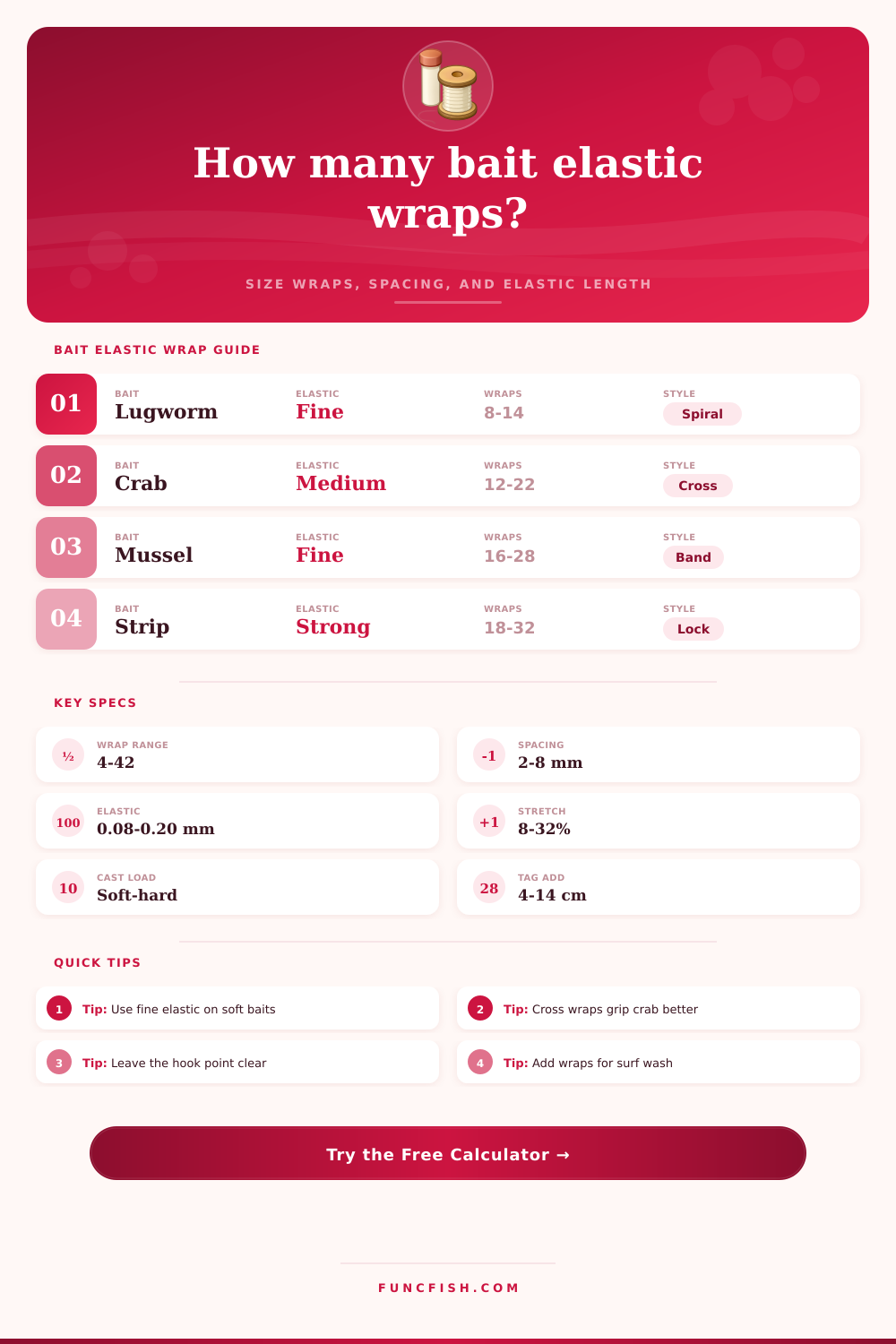
| Lugworm or black lug | 1.4-2.2 wraps per cm | Medium | Fine to medium | Moderate hold demand and low slip factor. |
| Ragworm or king rag | 1.2-2.0 wraps per cm | Medium-high | Fine | Lower density to keep bait movement natural. |
| Peeler crab section | 1.8-3.0 wraps per cm | Medium | Medium | Extra lock wraps for legs, shell, and soft meat. |
| Crab cart | 2.4-3.8 wraps per cm | Low | Ultra-fine to fine | High wrap count but lower compression per turn. |
| Mussel, clam, shellfish | 2.2-4.0 wraps per cm | Low | Ultra-fine | Requires many gentle wraps to cradle soft bait. |
| Squid strip | 1.4-2.4 wraps per cm | High | Medium | Grip comes from surface friction and cross wraps. |
| Mackerel or fish strip | 1.6-2.8 wraps per cm | High | Strong | Allows stronger tension for oily strip baits. |
| Sandeel or launce | 1.5-2.5 wraps per cm | Medium | Fine to medium | Long body needs even spacing and tail support. |
🎣Wrap style comparison
Open spiral
Light holdBest when bait is firm and a natural profile matters more than maximum casting security.
Close spiral
All-roundEven turns along the bait give predictable spacing and enough grip for most shore casts.
Cross-hatch
High gripOpposing spiral passes lock crab, squid, and fish strip baits without relying only on tension.
Mesh cradle
Soft baitMore wraps at lower pressure support mussel, clam, and cart without cutting the bait.
📏Hook and bait sizing table
| Hook size | Typical bait length | Bait diameter | Point clearance | Wrap note |
|---|---|---|---|---|
| Size 4 to 2 | 25-55 mm | 5-12 mm | 3-6 mm | Use fine elastic and fewer lock turns. |
| Size 1 to 1/0 | 45-85 mm | 8-16 mm | 5-9 mm | General beach, pier, and estuary bait size. |
| Size 2/0 to 3/0 | 65-110 mm | 12-22 mm | 8-13 mm | Add end bands on worm and sandeel baits. |
| Size 4/0 to 5/0 | 85-140 mm | 16-30 mm | 12-18 mm | Cross-hatch helps crab and strip baits hold. |
| Size 6/0 | 110-170 mm | 20-38 mm | 15-24 mm | Use strong thread but avoid hiding the point. |
🌊Scenario pressure table
| Scenario | Pressure multiplier | Best wrap style | Elastic choice | Reason |
|---|---|---|---|---|
| Pier or short lob | 0.86x | Open spiral | Fine | Little casting shock, so presentation can stay loose. |
| Estuary tide | 1.00x | Close spiral | Fine to medium | Steady tow needs even support along the bait. |
| Surf beach | 1.22x | Cross-hatch | Medium | Wash and backwash work bait loose between casts. |
| Distance casting | 1.34x | Half-hitch lock | Medium to strong | Acceleration and clipped rigs demand stronger hold. |
| Rough ground | 1.42x | Cross-hatch | Strong | Tide, kelp, and rocks pull on the bait package. |
| Boat bait | 0.94x | Banded ends | Fine to medium | Less cast load but bait may spin or flutter. |
💡Calculation notes
Keep pressure matched to bait: soft shellfish and cart normally need more wraps at lighter tension, while squid and fish strips can take fewer stronger turns.
Check the hook point after wrapping: if the elastic pulls bait over the gape, shorten the wrap zone or move to a wider hook before casting.
Formula notes: wrap count combines bait coverage density, holding demand, bait slip, cast pressure, water movement, and elastic grip per turn. Elastic length is estimated from a helical path around the bait plus tag allowance.
Bait dissapears in the surf: Shore fishermen get frustrated when their pricey baits wash away from them just seconds after bringing one up onto shore. They throw the bait out and let it sink, then they start reeling it in and feel it being pulled away, but there is no fish at the end of line. The water has pulled the bait off. Elastic wrap will either ensure dinner, or have you trudging home in a wet outfit.
Bait prep is something most guys do intuitively (based off past experience) or by rote (they’ve always done it that way). With the calculator they has exact directions, no more guessing.
How to Wrap Your Bait Correctly
Many folks think that the tighter they can cinch their elastic wrapping down, the better the bait will stay on. Wrong. You’re going to crush the flesh of your bait if you do this. This is true especially with something as tender as fresh mussels or soft crab cartilage. If you do that, the bait won’t move naturaly in the water. Predatory fish aren’t dumb. They don’t go for dead bait.
What we are looking for is a tight yet secure package that holds the bait together through the stress of the cast and tide and then sets hook without slipping or coming loose. You need just enough friction to keep the bait there, but not enough compression to mess up the bait. That’s what distinguishes an experienced angler from an inexperienced one.
Think about a big chunk of peeler crab for some serious surf fishing compared to a tight lugworm wriggle for pier work. For the lug, you want something fairly small like fine elastic with an open spiral wrap to secure it. This will snug up worm while keeping its shape more or less cylindrical. With a chunk of crab leg, you’re dealing with a shape that’s not quite round, a lot of sharp edges, and softer meat that tends to ooze away if not secured properly. Medium-grade elastic and multiple cross-hatch patterns is the ticket to holding things together.
The calculator takes this into account by looking at your bait size and texture. It figures that certain baits requires more grip than others, especially during a hard overhead cast where you can’t afford any slippage. You can use anything from fine elastic to really stout elastic. You can use ultra fine elastic on a heavy fish strip. It’s out of sight so why not? It’ll break when your long distance cast accelerates it. You can use strong cotton thread on a delicate clam shell. And it’ll slice through the soft tissue and make a mess that will turn fish off different than draw them in.
The chart on the page does a great job of matching thickness of material to type of bait. This isn’t a case where you’re simply choosing a rubber band; this is a mechanical system built to hold up to certain forces.
Another important factor that is often overlooked is hook point exposure. No matter how well you learn to wrap your hook, if the point is covered by your stretchy stuff you’ll miss out on some bites. It will tell you how long to wrap so you have adequate space between tip of the hook and the gape so there’s no danger of your hook being buried into the side of the bait before penetrating the fish. That’s a big deal for hook-up ratio.
Wrapping hooks well is all about respecting the biology of the bait as much as it is physics of casting. The right way isn’t just making the bait look pretty from the bank. It’s about protecting the texture and movement of the flesh so it stays attractive once it hits the water. Once you realize how the materials, their strength, spacing, and tension work together, the bait stays hooked up better. You won’t lose them to the tide anymore. You catch fish.
Preparation matters. A good hookup is the single best thing to keep your creel full. You should of used elastic more often.