
A ripple is formed that’s too big to be caused by whatever fish made it. You look at your reflection, which tell you the fish must be huge. Then you try to make math work out in your head but your brain doesn’t think like a carp grows in a straight line.
They has bursts of rapid growth followed by periods of stagnation followed by another burst of growth. Knowing this helps you from getting frustrated. And if you’re just trying to figure out the ecosystem around where you live or maybe trying to get a hold of a ten-pounder, it help there too.
How Carp Grow
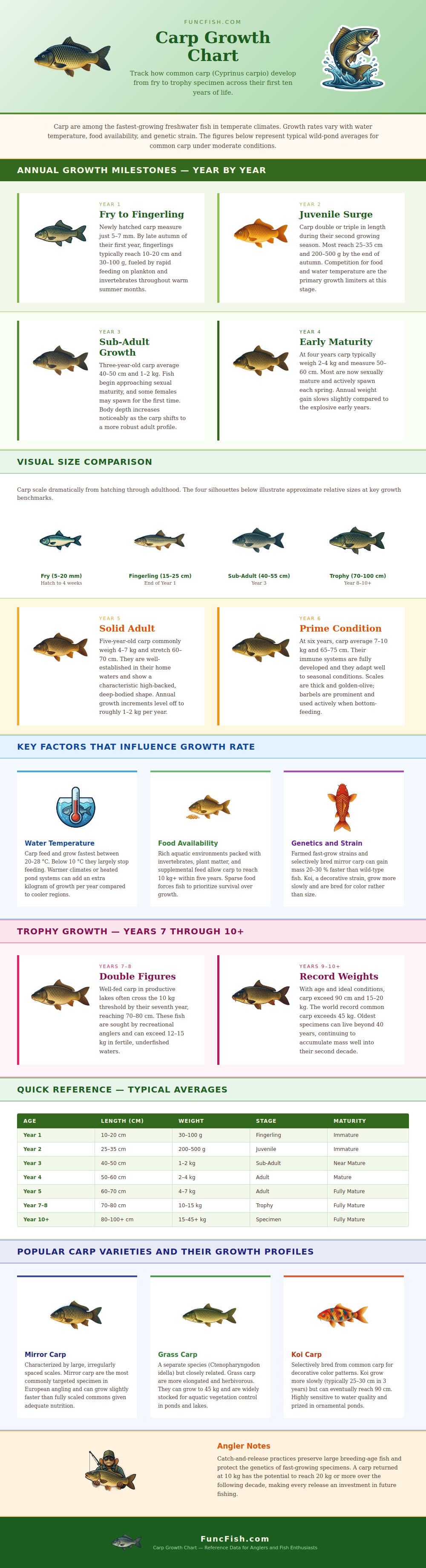
The chart outlines timeframe by marking which years certain events happen and how important those first few year are for size and survival. Get the fish off to a good start and they’ll be fine in the long run.
Carp fry are really little things, but in just a single summer they grow into something you can begin to identify as fingerling. How fast they do this hinges on two factors: water temperature and food supply. Warm weather combined with plenty of plankton mean these little guys aren’t going to stop eating and will turn all that energy into size.
At the end of their first year, you’ve got some little toughies who make it past their most dangerous time. That quick jump from millimeter to centimeter (see chart) is a race, a biological sprint, that establish their base for future growth. Miss this window with poor conditions and you might not be able to catch up with the fishs.
In the second and third years, it change gears again. Growth isn’t just survival but addition of substance. It’s time to start shaping up into what we know as that particular species. Deepening their bodies and filling out muscle tissue, they now gets big, real big. Real fast. Feeding on bottom feeders and invertebrates, they’ll double or triple in size this year.
As you’ll see, they’ll transition away from open water and move back toward sheltered margins full of food. And that shift? That’s called development. Getting strong. Smarter. Preparing for adulthood.
Somewhere between their fourth and fifth year most will reach sexual maturity, another element to consider when measuring growth. Sudden, energy previously used for body size shifts towards reproduction. But does it slow them down? Considerably so, you might suppose, but in favorable waters, they still pile on weight at a steady rate.
The infographic notes how annual gains level off compared than those explosive early years, but the absolute increase remains impressive. By the time he’s five, your carp has put on many kilos and deserves some respect on the end of his fishing line.” No longer are these fish explorers of the aquatic world. They have a defined diet, a defined territory, and is now established residents.
Genetics, food and temperature are three reasons why fish differ from one another. If temperatures stays warm, the metabolism stays elevated which give them more time to feed. Plenty of natural foods make the carp less likely to exert energy by looking for food. Then there’s breeding, Wild Commons don’t grow as quickly as faster growing farm strains or mirrors if all else is equal. Here you can see in the illustration that each strain reaches trophy size at a different rate. So age isn’t everything; size is partly due to opportunity too.
Many anglers aim to catch their first double figure carp, which as shown on the chart typicaly occurs between years 7-10. So they should of live that long.
Beyond double figures the fish move into a whole new league. Ten kilo plus are tough old things. They are wary and stronger than an ox. They have lived long enough to escape nets, hooks and other predators to develop into genuine trophy fish.
They don’t get caught often, but releasing them ensures that genetic potential remains for the next season. To release a big one is to bet on the chance of bigger ones in time. You’re backing the cycle. That’s why we need to protect it. Think about the long road that every ripple represents.