🐟 Catfish Lifespan Calculator
Estimate catfish age, growth stage, maturity & lifespan remaining based on length, weight & species
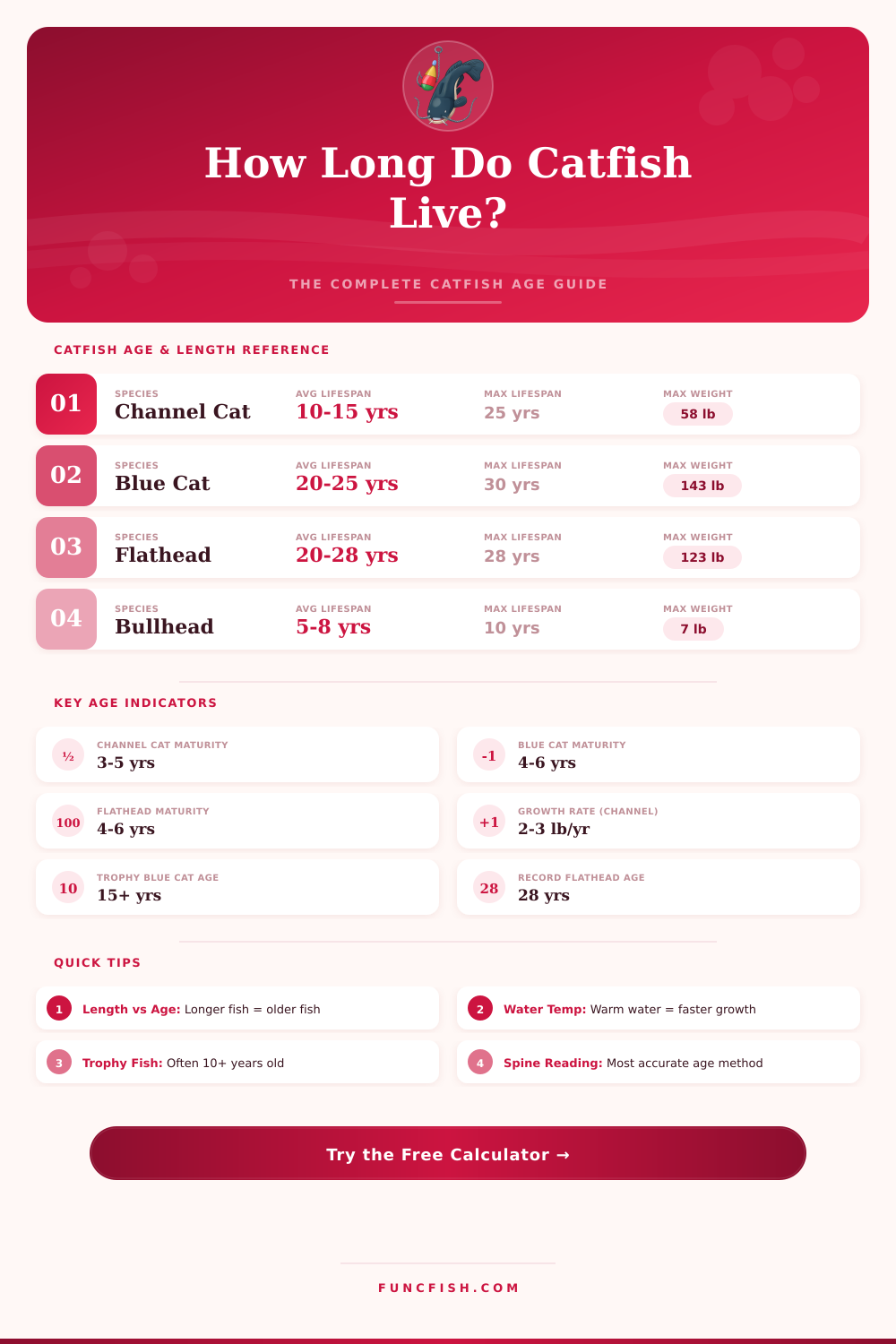
| Species | Avg Lifespan | Max Lifespan | Maturity Age | Max Length | Max Weight |
|---|---|---|---|---|---|
| Channel Catfish | 10–15 yrs | 25 yrs | 3–5 yrs | 52 in (132 cm) | 58 lb (26 kg) |
| Blue Catfish | 20–25 yrs | 30 yrs | 4–6 yrs | 65 in (165 cm) | 143 lb (65 kg) |
| Flathead Catfish | 20–28 yrs | 28 yrs | 4–6 yrs | 61 in (155 cm) | 123 lb (56 kg) |
| Bullhead (Brown) | 5–8 yrs | 10 yrs | 2–3 yrs | 21 in (53 cm) | 7 lb (3.2 kg) |
| White Catfish | 8–12 yrs | 14 yrs | 2–4 yrs | 24 in (61 cm) | 17 lb (7.7 kg) |
| Wels Catfish | 30–50 yrs | 80 yrs | 3–7 yrs | 130 in (330 cm) | 661 lb (300 kg) |
| Age (yrs) | Length (in) | Length (cm) | Approx Weight |
|---|---|---|---|
| 1 | 5–7 | 13–18 | 0.1–0.2 lb |
| 2 | 8–11 | 20–28 | 0.3–0.6 lb |
| 3 | 12–14 | 30–36 | 0.7–1.2 lb |
| 5 | 16–18 | 41–46 | 1.5–2.5 lb |
| 7 | 20–23 | 51–58 | 3–5 lb |
| 10 | 24–28 | 61–71 | 6–10 lb |
| 15 | 30–36 | 76–91 | 12–20 lb |
| Age (yrs) | Length (in) | Length (cm) | Approx Weight |
|---|---|---|---|
| 1 | 6–9 | 15–23 | 0.2–0.4 lb |
| 3 | 14–17 | 36–43 | 1–2 lb |
| 5 | 18–22 | 46–56 | 3–6 lb |
| 8 | 25–30 | 64–76 | 8–15 lb |
| 12 | 33–40 | 84–102 | 20–35 lb |
| 18 | 42–50 | 107–127 | 50–80 lb |
| 25+ | 52–65 | 132–165 | 100+ lb |
| Life Stage | Age Range | Growth Rate | Behavior | Recommended Gear |
|---|---|---|---|---|
| Fry / Fingerling | 0–1 yr | Rapid, 1–5 in/mo | Schools near cover | Light 4–6 lb line |
| Juvenile | 1–3 yrs | 2–4 in/yr | Actively feeding | Medium 8–12 lb line |
| Sub-adult | 3–5 yrs | 1.5–3 in/yr | Territorial, solitary | Medium 12–20 lb line |
| Adult | 5–12 yrs | 1–2 in/yr | Prime feeding, spawns | Heavy 20–40 lb line |
| Mature / Trophy | 12–20 yrs | 0.5–1 in/yr | Deep water, nocturnal | Heavy 50–80 lb line |
| Old Growth | 20+ yrs | Minimal | Slow, highly localized | Heavy 80+ lb line |
The lifespan of an channel catfish depend on many different factors. The species of the catfish and the environment in which the catfish live determine the lifespan of a channel catfish. Different species of catfish has different lifespans in the wild.
For example, channel catfish can lives between eight and fourteen years, while flathead catfish can live for up to twenty-five years in there lifetime. Therefore, a person must knows the species of the catfish to know the lifespan of that catfish. Another factor that can impacts the lifespan of a catfish is the water temperature in the water tank.
How to Help a Channel Catfish Live Longer
You must monitor the water temperature rather than the air temperature in the tank. Most catfish species prefers water temperatures of around twenty-four degrees Celsius. At this water temperature, the metabolism of the catfish stay even and steady.
However, if the water temperature go above thirty degrees Celsius, the metabolism of the catfish get stressed out, which can lead to a shorter lifespan of the catfish. The third factor that can impact the lifespan of a catfish is the level of dissolve oxygen in the water. A low level of dissolved oxygen in the water can stress out the catfish.
If the level of dissolved oxygen drop below four point five milligrams per liter, the gills of the catfish have to work hard to extract the necessary amount of oxygen from the water. This can lead to a shorter lifespan for the catfish. A person can manage the amount of dissolved oxygen in the water by keeping the numbers of catfish in the tank low.
The less number of catfish in the tank, the more amount of oxygen each catfish can have access to. Therefore, keeping the number of catfish low will lead to an increased lifespan of the catfish. The fourth factor that can impact the lifespan of a catfish is the feeding habit of the owner.
If a person choose to feed the catfish once a day, it will even grow to its full size and will not produce as much excess waste as when it is overfed. Overfeeding the catfish can lead to the decaying of the excess food in the tank, which will lead to a shorter lifespan of the catfish due to low dissolved oxygen level. Underfeeding the catfish will also lead to a shorter lifespan for the same reason; the catfish will become deficient in nutritional reserve, which can shorten its lifespan.
The fifth and final factor that impact the lifespan of a catfish is the physical handling of the catfish. A person should always handle the catfish with wet hand and quick movement. The use of rough net or the physical handling of the catfish too often can damage the protective slime coat that cover the catfish.
A damaged slime coat can allow for infections to enter the body of the catfish. Therefore, the development of diseases in the body of the fish will negatively impact a lifespan of the catfish. Finally, environmental factor have an impact on the lifespan of the catfish.
A person can provide shelter in the tank so that the catfish do not have to fight the stress of encountering its predator. In the winter months, a tank of catfish should remain insulated so that the fish is protected from the cold water. If the water is left to remain stable in the winter months, the catfish will be healthy and have a betterer chance of developing a long lifespan.
By managing the dissolved oxygen, the water temperature, feeding, and handling habit of the catfish, a person can increase the lifespan of their pet catfish species.