Downrigger Cable Angle Calculator
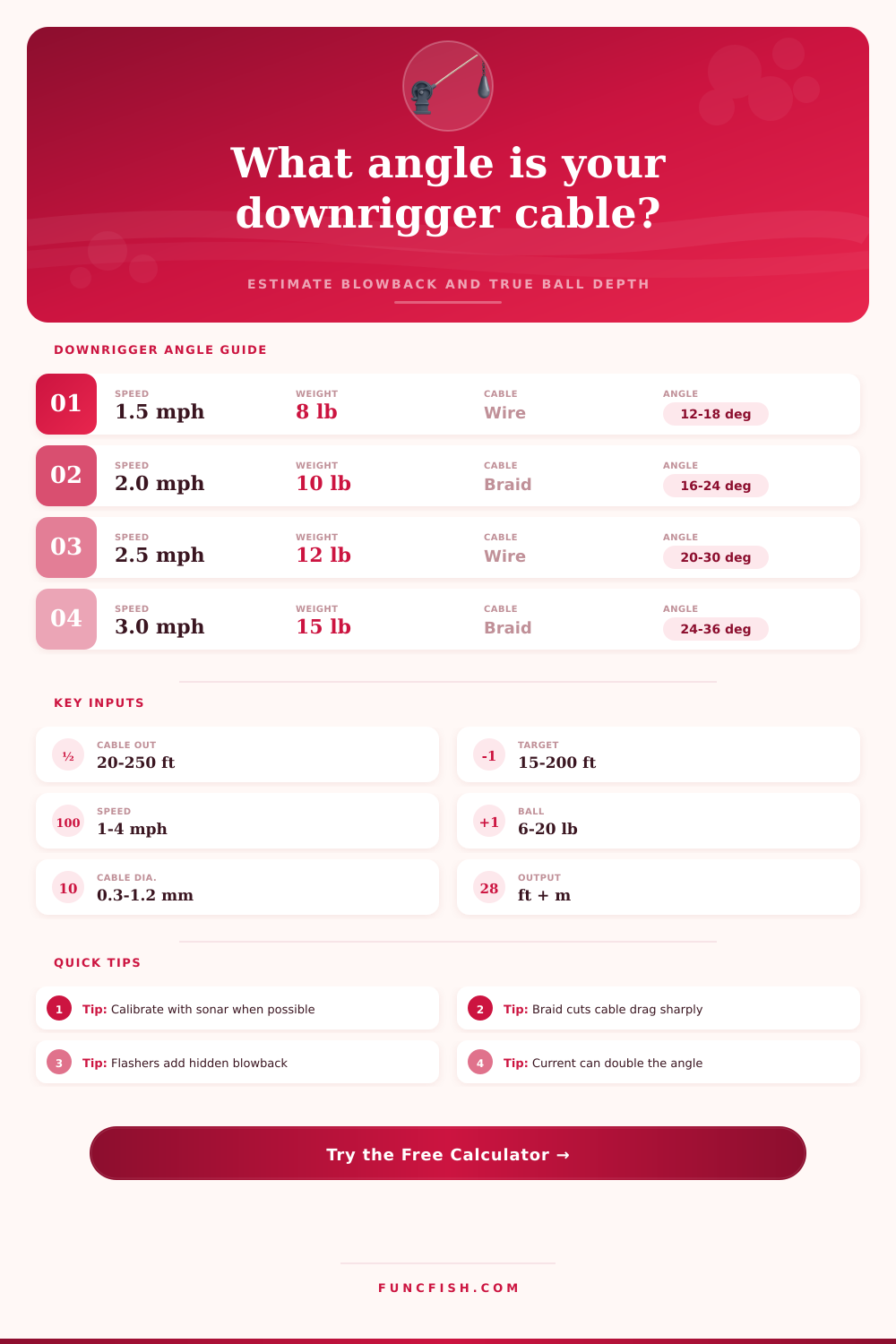
Estimate cable angle, ball depth, blowback, and target cable out by combining trolling speed, current, cable drag, ball shape, weight, and attractor load.
📌Scenario presets
⚙Downrigger and trolling inputs
The model estimates steady blowback from drag and submerged weight. It is a rigging estimate, not a replacement for sonar, a downspeed probe, or known depth marks.
Downrigger depth and blowback forecast
Cable angle is measured from vertical. Higher angle means more cable is behind the boat and less of it is working straight down.
Full calculation breakdown
📋Cable and weight reference cards
150 lb Stainless
200 lb Braid
Torpedo Weight
Round Ball
📏Downrigger reference tables
| Angle from vertical | Depth from 100 ft cable | Blowback from 100 ft cable | Rigging read |
|---|---|---|---|
| 10 deg | 98 ft / 29.9 m | 17 ft / 5.2 m | Very efficient |
| 20 deg | 94 ft / 28.6 m | 34 ft / 10.4 m | Normal trolling angle |
| 30 deg | 87 ft / 26.4 m | 50 ft / 15.2 m | Noticeable blowback |
| 40 deg | 77 ft / 23.4 m | 64 ft / 19.6 m | Heavy blowback |
| 50 deg | 64 ft / 19.6 m | 77 ft / 23.4 m | Recheck speed or weight |
| Setup | Typical speed | Common weight | Angle target |
|---|---|---|---|
| Kokanee dodger | 1.2-1.8 mph | 6-10 lb / 2.7-4.5 kg | 10-22 deg |
| Great Lakes salmon | 2.0-2.8 mph | 10-15 lb / 4.5-6.8 kg | 18-32 deg |
| Lake trout deep | 1.5-2.2 mph | 12-16 lb / 5.4-7.3 kg | 15-28 deg |
| Saltwater tide troll | 2.2-3.2 mph | 12-20 lb / 5.4-9.1 kg | 22-38 deg |
| Clean spoon pass | 2.0-3.0 mph | 8-12 lb / 3.6-5.4 kg | 16-30 deg |
| Change | Angle effect | Depth effect | Best use |
|---|---|---|---|
| Add 2 lb weight | Lower angle | More true depth | Deep passes |
| Switch to braid | Lower cable drag | Less blowback | Quiet deep water |
| Add 11 inch flasher | Higher angle | Less true depth | Salmon attraction |
| Increase speed 0.5 mph | Much higher drag | Shallower ball | Triggering bites |
| Cross current | Side angle | Track offset | Tide or reservoir flow |
💡Practical calibration notes
If sonar shows the ball ten feet shallower than the calculator, use the depth calibration selector or add that difference to your next target cable-out number.
A clean spoon may track close to the ball, while an 11 inch flasher, meat rig, or stacked release can add enough drag to make the lure run higher.
Hydrodynamic estimates change with cable vibration, wave surge, turns, temperature layers, exact ball shape, and boat speed at depth. Treat the result as a starting mark and refine it with your electronics.
Downrigger fishing work because the downrigger ball will pull the lure to a specific depth. However, the boat movement create a fight between the downrigger cable and the water. This fight creates an angle that change the depth of the lure.
When the boat and the lure create a steep angle of the downrigger cable, the downrigger ball will not reach the depths that the angler intend for the lure to travel to the fishing zone. This is experienced often by anglers when they mark a fish at ninety feet but the downrigger ball only reaches seventy feet. The water pushing sideways on the downrigger cable and downrigger weight create the angle between the boat and the downrigger ball.
How the downrigger angle changes lure depth
Both these objects have a certain thickness and frontal area that expose them to the sideways push of the water. Additionally, other downrigger fishing aid like flashers or dodgers add more pull on the downrigger fishing rig. The current also plays a big part in creating this angle between the boat and the downrigger ball.
A cross current will create an additional sideways blowback on the downrigger fishing rig that may not match the boat speed on the GPS boat navigation system. This additional sideways blowback of the water will cause the downrigger ball to travel to a shallower depth then the angler intend. The type of downrigger cable on the downrigger fishing rig and the weights used will also impact the size of the angle created between the boat and the downrigger ball.
Braided line has a smaller diameter than the stainless steel downrigger cable. Additionally, the torpedo or finned weights used on downrigger fishing rigs will slip through the water more efficient than round balls used on downrigger fishing rigs. The attractors used on downrigger fishing rigs may have an opposite impact on the angle created.
Using a flasher of large diameter will create more pull on the downrigger fishing rig that lift the downrigger fishing rig and makes the depth to which the downrigger ball travels shallower. The calculator found on the website allow an angler to input various parameters for their downrigger fishing rig. The boat speed, current, cable type, weight shape and attractor load can be programmed into the calculator to determine the angle created between the boat and the downrigger ball.
Additionally, the angler can also program the depth of the ball, the horizontal blowback and the length of the downrigger cable required for the angler to reach the desired fishing zone into the calculator. These outputs will allow the angler to have a starting point for their downrigger fishing rig to fish closer to the strike zone for the fish. For instance, if the angle created between the boat and the downrigger ball is thirty-five degrees or more the downrigger fishing rig is traveling to a shallower depth than intended by the angler.
In such a case, the angler can adjust the downrigger fishing rig by adding weight, reducing the boat speed or switching to braided line for the downrigger fishing rig. However, there are other variables in the fishing environment that cannot be accounted for in the calculator. For instance, the surge created by the waves will lift the downrigger ball and cause it to drop to the water.
Additionally, when the boat makes a turn the downrigger cable will become slack and the angle between the downrigger ball and the boat will change. The layers of water of different temperature may change the density of the water and impact the buoyancy of the downrigger fishing rig. As a result of these unaccounted variable, the angler will use the angle calculated by the calculator as a starting point for their downrigger fishing rig.
The angler will perform the calculation and use the sonar or the probe on the downrigger fishing rig to determine the angle of the downrigger ball in the water. Should the downrigger ball sit ten feet higher than the calculation displayed on the calculator the angler will note that difference so that when they perform the downrigger fishing drop again they can account for that difference. Another way for an angler to improve their downrigger fishing experience is by keeping a log of the different setup that work for them when they fish.
Each angler can use a notepad to record the boat speed, the weight used for the downrigger fishing rig, the type of cable used and the size of the flashers used on the downrigger fishing rig. Additionally, the angler can also log the angle calculated by the calculator and the actual depth of the downrigger fishing rig. By keeping such a log over numerous fishing trip the angler may be able to spot a pattern in what works best for their downrigger fishing rig.
For instance, the angler might note that their downrigger fishing rig requires fifteen extra feet of downrigger cable when they use an eight-inch flasher when the boat is traveling at two point five miles per hour. These adjustments will allow the angler to keep the downrigger fishing rig in the strike zone for a longer period of time. Overall, the angle created between the boat and the downrigger ball is useful information for the downrigger fishing rig.
By understanding why this angle is created an angler can manipulate the downrigger fishing rig to achieve this angle. By being able to control this angle the angler can ensure that the downrigger fishing rig will remain at the depth where the fish are locate.