🐟 Fish Steak Yield Calculator
Calculate usable steak meat from whole fish weight by species, cut type & processing method
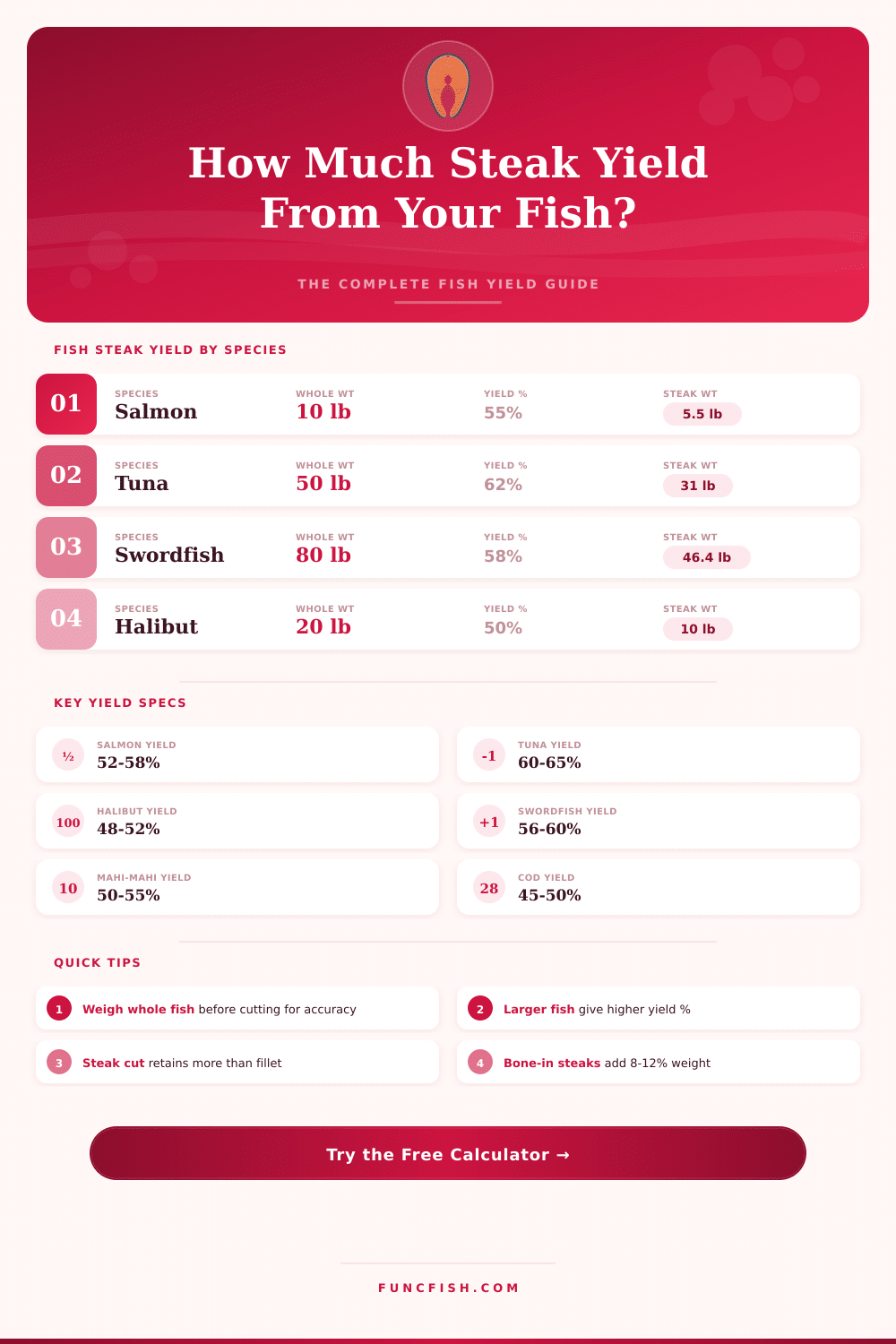
| Species | Avg Whole Weight | Bone-In Steak Yield | Boneless Yield | Portion Yield | Ideal Thickness |
|---|---|---|---|---|---|
| Atlantic Salmon | 8–15 lb (3.6–6.8 kg) | 55–58% | 48–52% | 40–44% | 1.0–1.5 in |
| Yellowfin Tuna | 40–100 lb (18–45 kg) | 62–65% | 55–60% | 48–54% | 1.5–2.0 in |
| Swordfish | 60–200 lb (27–90 kg) | 56–60% | 50–55% | 42–48% | 1.0–2.0 in |
| Pacific Halibut | 15–100 lb (6.8–45 kg) | 48–52% | 42–46% | 36–40% | 1.0–1.5 in |
| Mahi-Mahi | 5–30 lb (2.3–13.6 kg) | 50–55% | 44–49% | 38–43% | 0.75–1.25 in |
| Atlantic Cod | 3–20 lb (1.4–9 kg) | 45–50% | 38–43% | 32–38% | 1.0–1.5 in |
| Striped Bass | 5–30 lb (2.3–13.6 kg) | 49–53% | 43–47% | 36–41% | 1.0–1.5 in |
| Grouper | 5–50 lb (2.3–22.7 kg) | 47–52% | 41–46% | 35–40% | 1.0–1.5 in |
| Starting Form | To Steak | Approx. Factor | Example (10 lb) |
|---|---|---|---|
| Whole / Round | Bone-In Steak | 0.50–0.62 | 5.0–6.2 lb |
| Dressed (H&O) | Bone-In Steak | 0.68–0.78 | 6.8–7.8 lb |
| H&G (Head & Gutted) | Bone-In Steak | 0.75–0.85 | 7.5–8.5 lb |
| Skin-On Fillet | Boneless Portion | 0.80–0.90 | 8.0–9.0 lb |
| Serving Context | Oz/Person | g/Person | Steaks/lb |
|---|---|---|---|
| Light Appetizer | 3–4 oz | 85–113 g | 4.0 |
| Standard Dinner | 5–6 oz | 142–170 g | 2.5–3.0 |
| Hearty Meal | 7–8 oz | 198–227 g | 2.0 |
| Restaurant Portion | 8–10 oz | 227–283 g | 1.6–2.0 |
| Cut Type | Yield vs Whole Fish | Cooking Weight Loss | Edible Portion | Best Species |
|---|---|---|---|---|
| Bone-In Steak | 50–62% | 20–25% | 38–48% of whole | Salmon, Tuna, Swordfish |
| Boneless Steak | 42–55% | 18–22% | 33–43% of whole | Halibut, Cod, Grouper |
| Portioned Steak | 36–48% | 15–20% | 28–38% of whole | Any large species |
| Collar Steak | 8–15% | 20–28% | 6–11% of whole | Yellowtail, Salmon |
The amount of fish steak that you receive is important especially if you buy whole fish and cut it yourself. No all species give the same; two-pound salmon does not deliver as much as two-pound trout and some lose more because of bones and guts. The usable meat depends much on the species and the cut
For most fish, especially small ones like tilapia, cod and sole, you use fillets when you want boneless bits. Big species with firm flesh, for instance salmon, tuna, swordfish and mahi-mahi, work for steaks, because they stay together after cutting. From small to medium fish you receive more usable meat by using fillets, because bones go with the spine.
How much edible fish you get from a whole fish
Steaks are more easily divided equally from big fish.
From Atlantic cod you receive 42% to 44% usable weight for skinless boneless fillets in non-spawning season. While spawning it sinks to close to 38%, even to 30%. Gutted Atlantic salmon without head give around 65% after filleting and skinning.
If you remove more deeply the brown fat, the amount falls to around 60%.
Salmon gives mostly two thirds of meat. At other fishes it usually is around 50%. Prime fish delivers 73% to 76% of skin-on fillets, according to how you cut.
The skill of the cutter affects both quality and amount. For instance, grouper gave 71.5% yield: 50% fillets, 21.5% usable chips and 28.5% unusable body.
Cooking alters everything. You eat lot of flesh beside bones and head, so that the edible amount arrives to 70% to 90% for many species, when you eat whole fish. Good filleting and mechanical removal of residues also helps.
Swordfish you occasionally call the steak of the sea. Tuna and shark also work for such steaks, although shark requires extra preparation. Properly cooked, the meat easily flakes off bones, but here are slim bones, that does not inhibit.
Slim steaks cook more evenly. The real cost of fish come from the real yield; you pay for whole weight, but receive only the usable parts for count real price.
For instance, 20-pound wild striped bass with 33% fillet yield give around 6.6 pounds of fillets. If it costs 5 dollars for pound whole, the fillet will exit to around 21 dollars forpound.