Fly Line Weight AFTMA Converter
Convert measured first-30-foot fly line weight between grains, grams, and AFTMA number, then check rod length, fly size, line type, casting style, and tolerance fit.
📌Named AFTMA presets
⚙AFTMA converter inputs
AFTMA conversion results
Conversion breakdown
🎣AFTMA rod and fly grid
Small Water
Trout Standard
Bass Streamer
Salt and Pike
📘AFTMA reference tables
| AFTMA weight | First 30 ft grains | Approx grams | Standard tolerance |
|---|---|---|---|
| 1 wt | 60 gr | 3.89 g | 54 to 66 gr |
| 2 wt | 80 gr | 5.18 g | 74 to 86 gr |
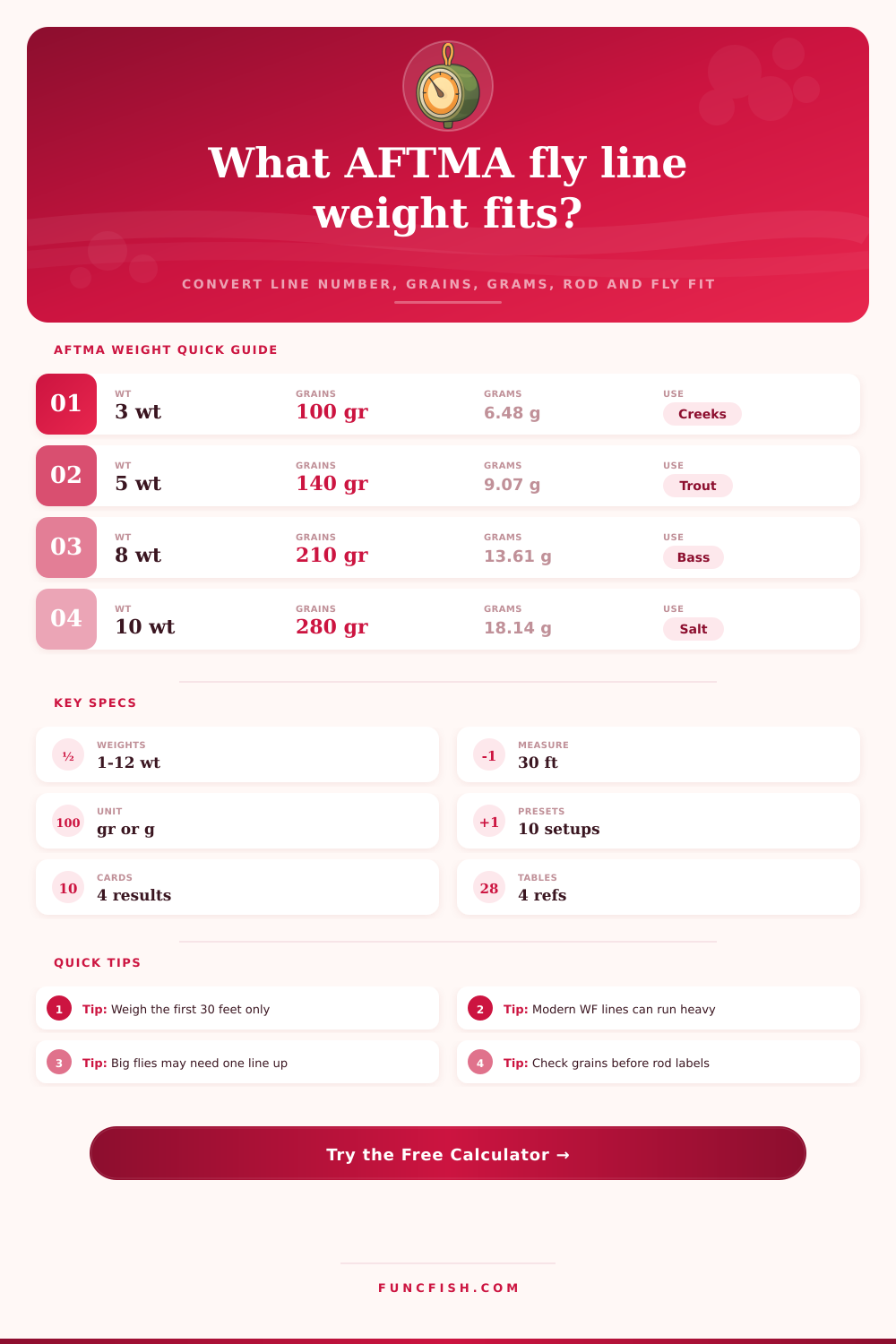
| 3 wt | 100 gr | 6.48 g | 94 to 106 gr |
| 4 wt | 120 gr | 7.78 g | 114 to 126 gr |
| 5 wt | 140 gr | 9.07 g | 134 to 146 gr |
| 6 wt | 160 gr | 10.37 g | 152 to 168 gr |
| 7 wt | 185 gr | 11.99 g | 177 to 193 gr |
| 8 wt | 210 gr | 13.61 g | 202 to 218 gr |
| 9 wt | 240 gr | 15.55 g | 230 to 250 gr |
| 10 wt | 280 gr | 18.14 g | 270 to 290 gr |
| 11 wt | 330 gr | 21.38 g | 318 to 342 gr |
| 12 wt | 380 gr | 24.62 g | 368 to 392 gr |
| AFTMA band | Rod length fit | Fly size fit | Typical fishing role |
|---|---|---|---|
| 1 to 3 wt | 5.5 to 8.5 ft / 1.7 to 2.6 m | #16 to #28 | Small creeks, bluegill, fine tippets |
| 4 to 5 wt | 8 to 9.5 ft / 2.4 to 2.9 m | #10 to #22 | Most dry fly and light nymph trout work |
| 6 to 7 wt | 9 to 10 ft / 2.7 to 3.0 m | #6 to #16 | Indicators, wind, streamers, stillwater |
| 8 to 9 wt | 8.5 to 10 ft / 2.6 to 3.0 m | #2 to #10 | Bass bugs, pike, redfish, heavier wind |
| 10 to 12 wt | 9 to 11 ft / 2.7 to 3.4 m | 2/0 to #6 | Saltwater, musky, heavy streamers |
| Line type | Measured meaning | Practical adjustment | Best caution |
|---|---|---|---|
| WF floating | First 30 ft is the AFTMA reference | Neutral baseline | Some modern WF tapers run half size heavy |
| Double taper | Stable 30 ft weight and long belly | Slightly lower practical load | Do not overline delicate rods too far |
| Nymph line | Often front-loaded for quick turnover | Accept a mild overweight reading | Match to indicator mass and rod recovery |
| Streamer taper | Compact head concentrates grain weight | Power window can be useful | Check rod load at short distance |
| Sink tip | Tip density can inflate the first 30 ft | Read with fly and sink mass together | Pickup feel matters as much as label |
| Spey head | Not a single-hand AFTMA comparison | Use as a grain reference only | Follow spey head grain charts separately |
| Tolerance mode | Window width | Use when | Interpretation |
|---|---|---|---|
| Standard | Published AFTMA tolerance | Checking line label accuracy | Best for formal line-weight conversion |
| Strict | Half of standard tolerance | Comparing two similar lines | Flags small manufacturing or weighing drift |
| Half-size | About half way to next class | Fishing feel matters more than label | Useful for modern plus-size trout tapers |
| Power taper | Standard high side plus 10 percent | Big flies and compact heads | May be right for fast rods and short casts |
| Wide modern | One practical class either way | Diagnosing rod and fly fit | Not a formal AFTMA pass or fail |
💡AFTMA measurement tips
Scale tip: Weigh only the first 30 feet of line after the level tip. Backing, leader, and running line beyond 30 feet should stay out of the measurement.
Rod tip: If the line is heavy by AFTMA but casts well with a bulky fly or roll cast, treat the result as a practical setup note, not an automatic mismatch.
The weight of the line is one of the most important factor to consider when selecting the proper fishing line for your needs. The weight of the fishing line will determine how the line load the fishing rod. The weight of the fishing line will affect the fishing line’s casting process and the fishing line’s casting loop.
While many person look at the weight number printed on the fishing line box, that number isnt the actual weight of the fishing line. The actual weight of the fishing line might not match the weight printed on the fishing line box due to the manufacturing process of the fishing line. Furthermore, the actual weight of the fishing line will interact with the length of the fishing rod, the size of the fish in the water, and the fishing style you use when you are fishing.
How to Pick the Right Fishing Line Weight
The first thirty foot of the fishing line measures the weight of the fishing line. The first thirty feet of the fishing line is referred to as the head of the fishing line. Only the first thirty feet of the fishing line should be measured because it is the section of the fishing line that load the fishing rod.
The remainder of the fishing line, which includes the sections that are referred to as the running line and the backing, dont load the fishing rod. If the head of the fishing line is too heavy for the fishing rod, the fishing rod will feel overloaded when you are landing the fish. Conversely, if the head of the fishing line is too light for the fishing rod, the fishing rod will not properly load when fishing.
The length of the fishing rod will also impact the interaction between the fishing line and the fishing rod. Fishing rods with shorter lengths will recover more quick and typically can handle a fishing line that is slightly heavier then the weight indicated on the fishing rod label. Fishing rods with longer lengths have a different action when you cast fishing lines, so they require lighter weights of fishing lines to avoid feeling sluggish when the line is being cast into the water.
Due to the way fishing rods of different lengths interact with the water when the line is being cast, the length of the fishing rod should also inform the decision of what weight of fishing line to purchase. The same weight of fishing line will feel different on a fishing rod that is seven foot in length compared to a fishing rod that is eleven foot in length. The type of fish you are hoping to catch will have an impact on the weight of the fishing line you should use.
If you are catching smaller fish, such as a size-twenty midge, a lighter fishing line is required to avoid creating too much drag on the fish as it is being caught. If the fish you are targeting are much larger, such as heavy streamers, the fishing line will need to be of a greater weight to handle the fish and to stop the momentum of the fish when it is being landd. While you can adjust the weight of the fishing line to match the type of fish you are using, the weight of the fishing line can also be adjusted to match your casting style.
For instance, if your casting style is more distance-oriented, such as the double haul casting method, a fishing line with more weight in its head is best. However, if you use a casting style that is more delicate, a fishing line with less weight in its head will be required. Although it is possible to determine the relationship between the actual weight of the fishing line and your fishing equipment using a calculator, you will need to input the grain weight of the fishing line into the calculator.
Additionally, you should also enter the length of your fishing rod and the size of the fish you will be catching into the calculator. This calculator will show the relationship between the measured weight of your fishing line to the labeled weight of the fishing line. By knowing the grain weight of your fishing line, you can make a better decision about whether the fishing line you purchased is the correct choice for your fishing rod and the type of fish that you will encounter.
By understanding the grain weight of your fishing line, there is no longer guesswork involved in purchasing the best fishing line for your fishing rod.