
Hook size is one of the critical component of tying a fly. The size of the hook will determine how the fly will function within the water. Hook size determine whether the fly will float, sink, or swim.
Additionally, hook size will determine if the hook can hold a fish. If the hook is too short for the thread wrap, the thread wraps may cause the fly to unravelling. Therefore, hook size is a necessary component of the fly tying process.
Hook Size and Shape for Fly Tying
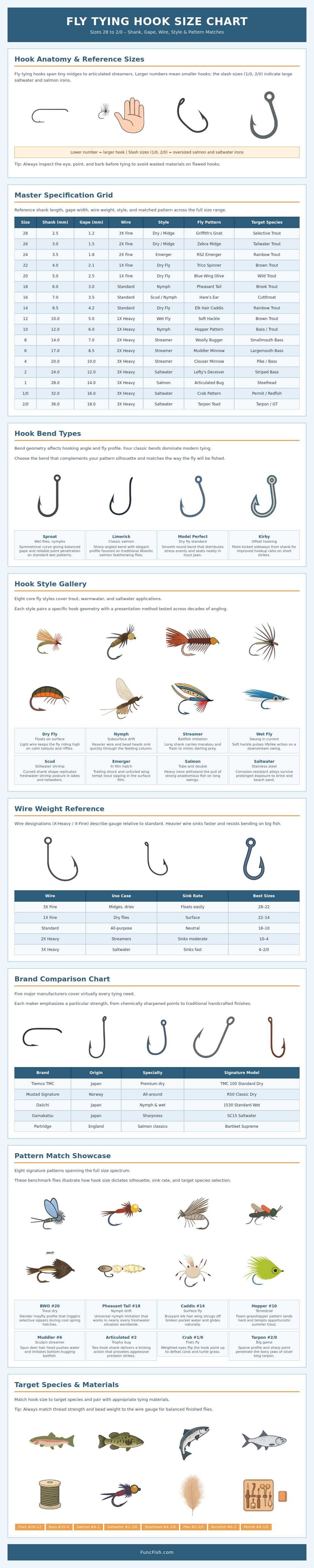
Hook size use a counterintuitive number system for tying flies. Higher numbers indicates smaller hooks. For example, a size 28 hook is a very small hook and is often used for tying midge pattern.
A size 14 hook is a larger hook and is often used for dry flies. Additionally, there are slash sizes, such as 1/0 or 2/0. These sizes of hooks are very large and are used for large fish, such as salmon or saltwater fish.
However, because of the counterintuitive sizing of the hooks, many angler find this a confusing component of the process of tying flies. The geometry of the hook is another critical component of the process. The geometry of the hook must match the purpose of the fly.
For instance, sproat bend are used for applications that require the hook to penetrate the water and the fly, such as wet flies or nymphs. A Limerick hook is used for salmon flies due to its angle. Additionally, a moddern perfect hook is used for dry flies in choppy water.
A Kirby hook has an offset point on the hook and is used for applications that require the hook to catch the fly when there are short