
Kayak fishing in freshwater involve a person taking a kayak to a body of water, such as a pond, at the time of dawn. The person use a paddle to move the kayak and a fishing rod to catch fish, such as bass. Freshwater kayak fishing removes many element commonly found in other forms of fishing.
For instance, freshwater kayak fishing avoids the loud noise of outboard motors that is common in motorboats, and freshwater kayak fishing avoids the crowdedness of boat ramps that are common when many boaters is present. Freshwater kayak fishing allow a person to be alone with the water and the fish that live in the water. Furthermore, the proximity of the person to the water allow for a person to feel every nibble that the fish make against the kayak hull.
A person also gains an advantage in that they can learn to read the ripples in the water and find the fish in areas that are shallow or covered in weeds where other boats with larger wakes or propellers may not be able to go. Learning how to kayak fish for freshwater species can be difficult for new beginner to the sport. For instance, a person may struggle with the stability of the kayak when first learning to fish.
Furthermore, it is difficult for new kayakers to stand out of the kayak and catch any fish that may be within easy reach. Finally, a person may struggle with fishing technique while in a kayak. However, a person can overcome these challenges after becoming familiar with a few ideas about the sport.
The information that is provided below will help a person to avoid frustration while they are kayaking and will help a person to catch numerous fish without difficulty. A person should be knowledgeable of these ideas before they begin to paddle the kayak away from the shore. A person should first decide which type of kayak to use to fish for freshwater species.
Essential Tips for Freshwater Kayak Fishing
1. Selecting a Wide Kayak
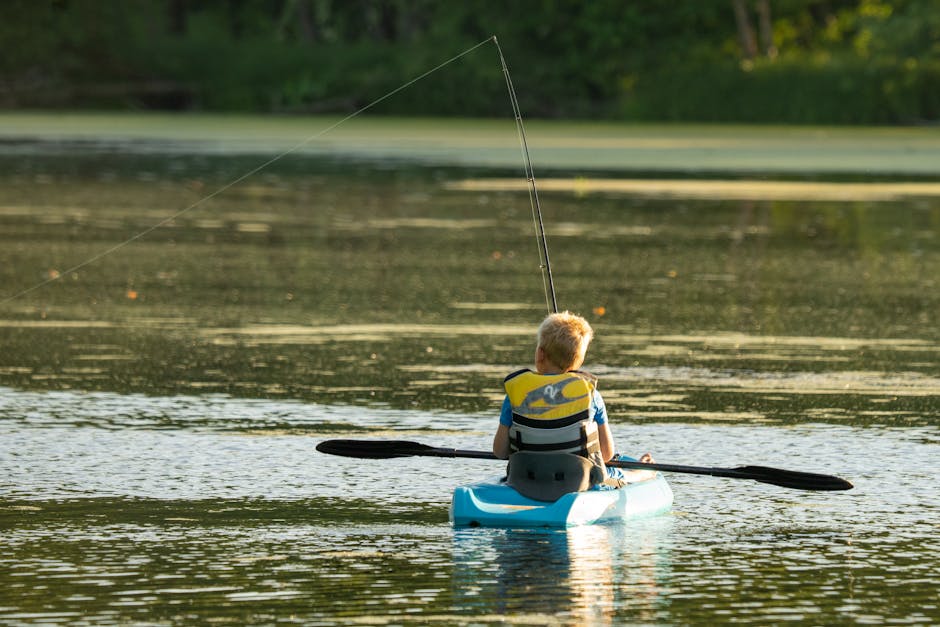
A kayak that is wide and approximately twelve feet in length is generally best for most types of fishing. A twelve-foot kayak is generally the best choice for fishing because it is forgiving of small mistake by the kayaker. Sleeker kayaks are used for longer distance on large bodies of water, but they can be more tippy than a twelve-foot kayak when one or both kayakers must lean out of the kayak to cast a fishing rod or fight with a fish that is being caught.
2. Sit on Top Kayaks
Sit-on-top kayaks are useful because a person can easily slide out of the kayak to remove a snagged lure without causing any difficulty. However, the disadvantages to a sit-on-top kayak is that a person is not as protected from the elements in the water as they would be in a enclosed kayak. A person should test the kayaks while loaded with all of their fishing gear prior to embarking on any long trips.
The kayak may feel very stable when empty, but the addition of fishing rods and other gear will change the stability of the kayak. A person should also choose the proper paddle for kayaking and fishing. One of the more important decision a person must make is the length of their paddle.
3. Choosing the Proper Paddle
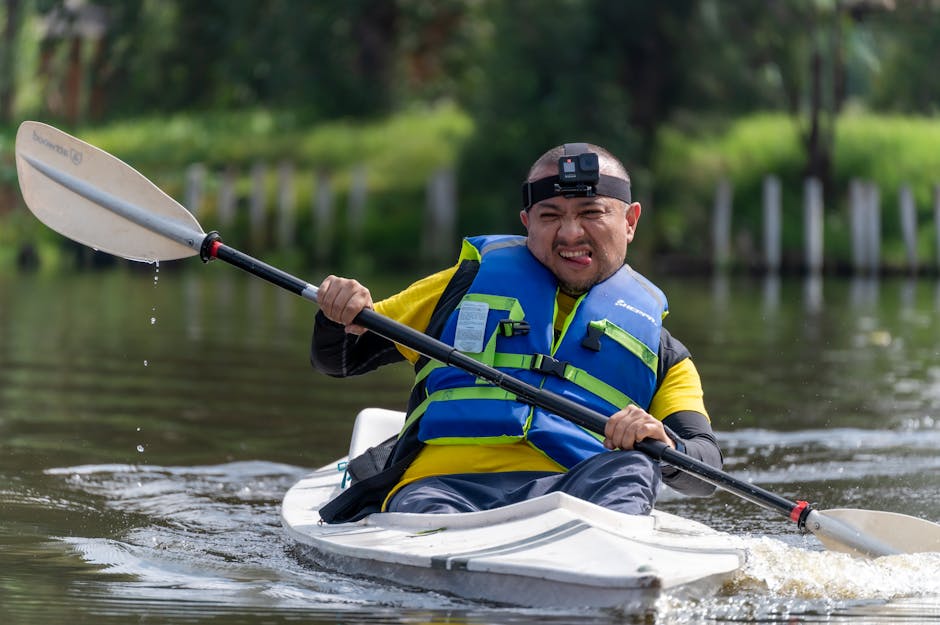
A paddle that is longer than 250 centimeters will allow a kayaker to push the kayak quiet and will allow them to stay steady when breezes push against the kayak. Shorter paddles may feel quicker to use, but a shorter paddle will require more stroke to move the kayak the same distance as a longer paddle. A person should also consider a paddle with a ferrule that allows the kayaker to adjust the angle of the paddle blade.
If a person sets the angle of the paddle tip such that it minimizes the resistance of the blade against the water during the return stroke of the paddle movement, then the kayaker can more easily fish near grassy shorelines where the paddler does not want to create strong wakes. A person should always keep a paddle leash to the kayak. If a person loses the kayak paddle, they will have lost the only means of movement of the kayak.
A person should rig the kayak to be used for fishing prior to entering the water. For instance, a rod holder can be mounted on the kayak behind the kayaker’s seat such that one fishing rod can be stored while another is in use. Many anglers also use a second rod holder mounted in the front of the kayak for those who wish to have better access to their second fishing rod.
A person can also use a simple milk crate to store the kayakers tackle boxes, pliers and a small net. Placing a short bungee cord across the kayak’s front deck will allow for the kayaker to better hold their pliers or line clippers such that they do not fall into the water. These accessories will be of use to the kayaker when they are fishing for fish while moving the kayak over submerged stumps.
Another skill that a kayaker should learn is how to fish while standing out of the kayak. However, this skill should be learned after a person becomes proficient in fishing while while sitting in the kayak. Most kayaks are constructed with enough stability to allow a person to stand up without difficulty.
A person can stand to better see where the fish bed or fish are cruising. Furthermore, a person can stand to add more power to their casts when repositioning the kayak to a specific spot. However, if a person begins to feel that the kayak is beginning to roll, then the person should sit back into the kayak.
Otherwise, a person may fall into the water if they rush into this skill. If a person should fall into the water, their phone may be damaged and they may begin to lose confidence in their abilities to fish from a kayak. Thus, practicing standing out of a kayak is recommended to be learned while the kayak is in calm waters near the shoreline.
4. Using Anchors
Anchors can be useful for kayakers who wish to remain in one spot while fishing. For shallow waters, a stake-out pole can be used to keep a person’s kayak in one spot. The stake-out pole can be slid into the mud or sand on the shoreline and a person can clip the pole to their kayak.
For deeper waters, a folding grapple anchor with twenty feet of rope can be used. Such an anchor will allow a kayak to become stuck on a submerged point in the water. However, the anchor must be learned to be deployed quietly in the water.
Thus, a person should slowly drop the anchor to the ground in the area rather than simply throwing the anchor over the side. A person must pay close attention to how they sit in the kayak. For example, a person should ensure that their weight is centered on the kayak.
A person should also avoid lunging towards items that may have fallen out of the kayak while fishing. A person should never point the tip of their fishing rod directly at their own body while they are hooking a fish. The fish may be strong and be able to unbalance a person quick.
Thus, many kayakers will keep one foot braced against a foot peg on the kayak hull at all times while fishing. One foot against the hull allows for better leverage when a person is trying to counterbalance a strong fish. A person should use certain fishing tackle while remaining within the kayak.
For instance, shorter fishing rods will be easier for a person to use while remaining within the kayak. A rod between six and seven feet is a good length. Furthermore, a medium power spinning combo rod will allow for a person to cast further with less effort.
A medium power spinning combo with ten pound braid and a two foot fluorocarbon leader will work in most situations for freshwater fish. Braid will allow better sensitivity when reading the water while remaining within the kayak. Furthermore, braid has zero stretch which is beneficial for setting a hook with a fish while remaining within the kayak.
Fluorocarbon will allow for abrasion resistance between the line and the structures in the water so that fish dont sense the presence of the fishing line and begin to move away from the spot where the person is fishing. Because a person is only a few inches above the water while kayaking, a person is able to read the water in ways that taller boats are not able to read. For instance, a person can more easily read the movement of baitfish or movement of an object on the bottom of the body of water.
A person should take advantage of this proximity to the water. For instance, a person should paddle in a direction that is parallel to the edge of the weeds instead of directly over the weed lines. Furthermore, a person should stop paddling their kayak while still some distance from where they wish to fish so that the momentum of the kayak will allow for the best cast to the fishing spot.
Because fish can sense the pressure waves that are created from kayaks that are paddling, a person should use this knowledge to their advantage. Furthermore, fish can sense the pressure waves from boat motors while fishing from a kayak. Thus, a person should remain as stealthy as possible, but must avoid losing this crucial advantage.
A person must also pay close attention to the way they sit and move within their kayak while fishing. For instance, a person should always ensure that their weight is centered within the kayak. A person should never make sudden lunges for items that may have fallen out of the kayak.
Furthermore, a person should never point the tip of their fishing rod directly at their own body while they are hooking a fish. A strong fish may cause a person to unbalance while hooking the fish. To avoid this situation, many fishing kayakers will keep one foot braced against a foot peg on the hull at all times.
Placing a person’s foot against a foot peg will provide better leverage to counterbalance the force of a strong fish. In addition, a person should use shorter fishing rods between six and seven feet in length. Such rods are easier for a person to use while they are sitting within the kayak.
A medium power spinning combo will allow for a person to cast further with less effort. Furthermore, a ten pound braid fishing line will allow a person to feel the bites of the fish while they are within the kayak. Braid allows for zero stretch which will allow for better hook sets when a person is not able to stand up to fight with the fish.
Furthermore, a two foot fluorocarbon leader will allow for more abrasion resistance between the line and the underwater structures in the water. This will allow the fish to not avoid the spot where a person is fishing due to the sensation of the fishing line. A person should pay close attention to the way that the body of water looks from the height of a fishing kayak.
Because a person is only a few inches above the water, a person is able to view the surface movements of baitfish or the positioning of an object on the bottom of the water. A person can use such knowledge of the body of water by adjusting the position of the kayak. For instance, a person can adjust the angle at which the kayak is being paddled so that the kayak is moving in a way that allows a person to view the edge of a weed line while paddling in a parallel direction with the weed line.
Furthermore, a person can use their knowledge of the body of water by stopping paddling the kayak while still some distance from where they wish to fish. The momentum of the kayak will allow them to reach their spot with less effort. However, a person should avoid casting into spots where they can sense the movement of fish.
This will allow for them to avoid boring holes into the water from which they must fish. Additionally, a person should avoid paddling directly over areas where fish are common. By remaining stealthy in their movements when fishing while kayaking, a person is able to avoid startling the fish while fishing.
5. Personal Flotation Devices
A person should bring a quality personal flotation device and wear it at all times while kayaking and fishing. This is especially important if the fishery is located in a remote area, or if the individual is going to the body of water at the time of dawn when no other individuals are on the water. If an individual should fall into the water while they are hooking a fish, or if they should hit a log in the water while using the kayak to fish, their personal flotation device will aid them in an emergency situation.
Some personal flotation devices are made for anglers, and many of these devices have high armholes to allow for the angler to effectively cast their line. Additionally, they have pockets where the angler can store their tools. The best personal flotation devices will dry quickly in the water, allowing the kayaker to avoid sitting in wet fabric all day while they are fishing.
6. Safety and Preparation
However, a person should also respect the limitations of their kayak. For instance, a person should check the weather before launching into the water. Strong winds can make it difficult to return to the beach or bank where they launched the kayak.
A person should also ensure that someone knows where they are going to and when they will return. Furthermore, a person should bring a small dry bag with items in it that may be helpful in the event of an emergency while kayaking. Such items may include a spare phone battery, first aid supplies, and enough water and snacks to last for a long trip.
While these items may seem unnecessary to bring while kayaking, they are important to those who wish to continue to fish on the body of water in the event that the fish stop biting or the wind begins to pick up while they are still required to paddle for a distance of two miles. The water looks different when viewed from a kayak. The water feels closer to the individual while kayaking and it feels more personal.
Thus, after a person has mastered each of these skills and skills systems, a person will begin to notice patterns in the water. A person will remember which stumps tend to yield the best fish and which areas of the body of water are best avoided by the kayaker. Thus, a person will develop a level of confidence in their ability to fish while kayaking.
Such confidence will transform the sport of freshwater fishing while kayaking into more than just a hobby, but a continuous conversation between person and fish.