Inchiku Jig Weight Calculator
Estimate an inchiku head weight that keeps the lure near bottom by combining depth, current, drift, braid diameter, leader drag, skirt bulk, target line angle, and presentation style.
📌Inchiku presets
⚙Jig weight inputs
Inchiku weight estimate
Calculation breakdown
📊Inchiku head reference
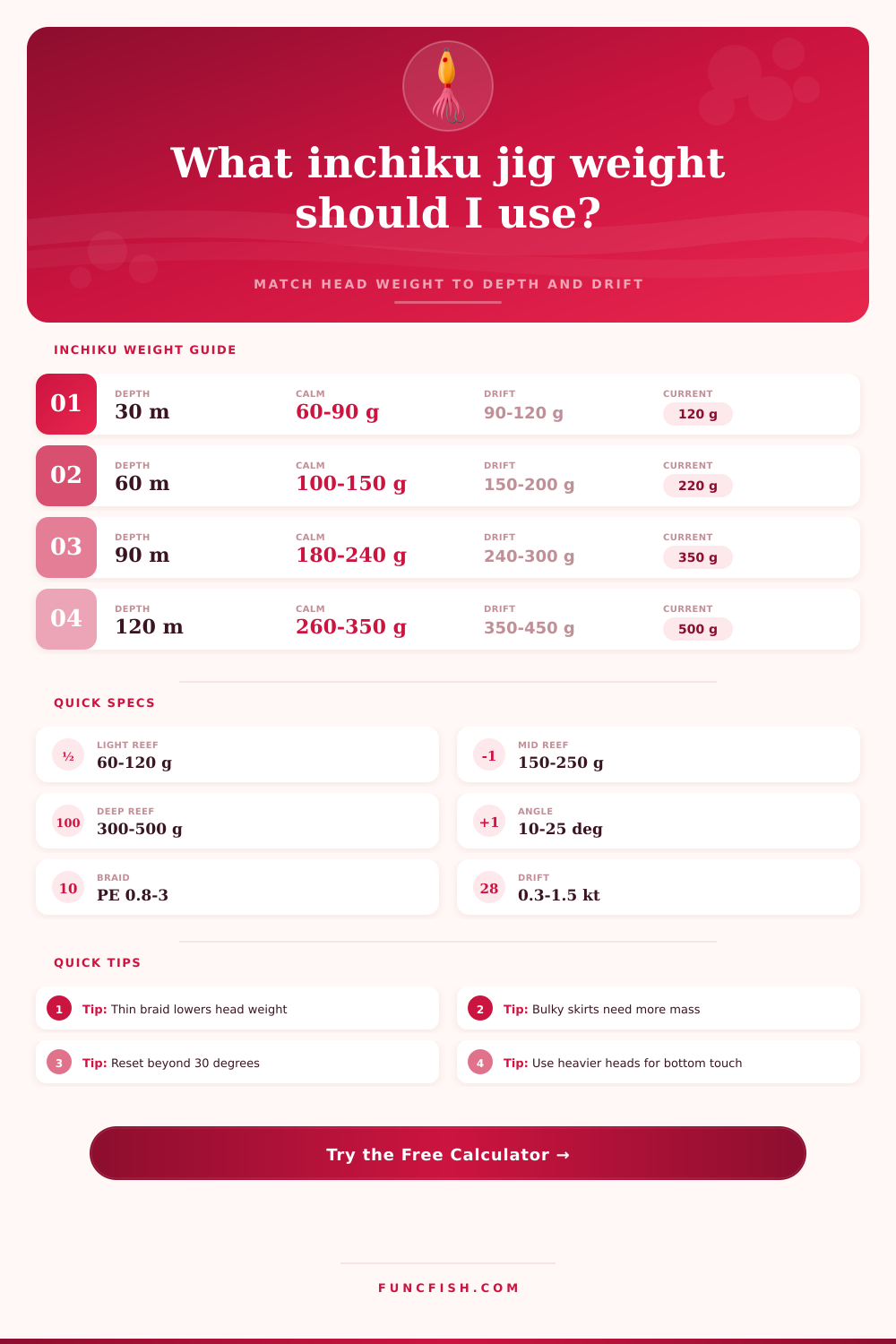
📐Weight bands by depth and drift
| Depth band | Light drift | Normal drift | Strong drift | Line class |
|---|---|---|---|---|
| 50-100 ft / 15-30 m | 50-80 g | 80-120 g | 120-160 g | PE 0.8-1.5 |
| 100-165 ft / 30-50 m | 80-130 g | 130-180 g | 180-240 g | PE 1.0-2.0 |
| 165-260 ft / 50-80 m | 150-220 g | 220-300 g | 300-380 g | PE 1.5-3.0 |
| 260-360 ft / 80-110 m | 240-320 g | 320-420 g | 420-520 g | PE 2.0-4.0 |
| 360-500 ft / 110-150 m | 340-460 g | 460-580 g | 580-700 g | PE 3.0-4.0 |
| Target fish | Typical depth | Preferred head range | Target angle | Setup note |
|---|---|---|---|---|
| Snapper or sea bream | 60-260 ft / 18-80 m | 80-250 g | 15-25° | Thin braid and natural fall |
| Grouper or reef bass | 100-330 ft / 30-100 m | 150-400 g | 10-20° | Heavier for structure control |
| Cod or wreck fish | 120-420 ft / 36-128 m | 200-500 g | 15-25° | Long leaders add drag |
| Amberjack or yellowtail | 150-500 ft / 45-150 m | 200-600 g | 15-25° | Fast reset helps verticality |
| Kayak inshore mixed reef | 30-160 ft / 9-49 m | 60-180 g | 20-30° | Drift control often matters most |
| Braid / line | Approx diameter | Drag effect | Best inchiku range | When to change |
|---|---|---|---|---|
| PE 0.8 | 0.148 mm | Very low | 45-160 g | Use for finesse and shallow reef |
| PE 1.0 | 0.165 mm | Low | 60-200 g | Good light jigging baseline |
| PE 1.5 | 0.205 mm | Moderate | 90-300 g | All-round slow jigging braid |
| PE 2.0 | 0.235 mm | Moderate plus | 120-400 g | Reef fish and heavier leaders |
| PE 3.0 | 0.285 mm | High | 180-550 g | Upsize heads in current |
| Mono or fluoro main | 0.45-0.52 mm | Very high | Heavy only | Switch to braid for vertical work |
✅Practical inchiku checks
An inchiku can still get bites with some scope, but bottom feedback fades quickly once the line angle pushes past about 25 to 30 degrees.
Thinner braid, a shorter leader, or a slimmer skirt can drop the required head weight without making the lure fall too aggressively.
If the lure must tap rock or ledge every lift cycle, choose the heavier side of the recommendation even when the calculated angle looks fishable.
Large down-drift offset means the inchiku is no longer above the mark shown on sonar, even if the lure still feels heavy enough.
The trick with Inchiku jigging is understanding balance between gravity and drag. You see, you lower your lure down forty meters of blue water. Feel it fall on your rod tip, then the current grabs it. Pushes it sideways. So now your line angles out. And you’re not fishing ledge structure where snapper or grouper live. Now you’re fishing open water over their heads. That disconnect is frustrating for people who think they can slow pitch every other day but struggle in this kind of situation.
Why? It is usualy not because they have trouble getting a rhythm on the retrieve. But because weight class of the jig head isn’t matching up well with hydrodynamic forces at work. This page has a calculator that determines realistic head weights for keeping your lure up right based off factors like line drag, boat drift, current speed, and depth.
How to Choose the Right Jig Weight
Most guys think about how heavy the jig feel in their hands to judge its weight. That isn’t what they should of being thinking about. They need to think about direction of tension in the water column. Too much tilt and you aren’t making bottom contact or getting good tactile feedback. So tool helps find a sweet spot to get lure close to structure without digging into the rocks on each drop.
The amount of weight depend on far more than just depth. Strong rip currents require much less weight then a hundred feet of flat calm water. And the secret variable no one ever talks about is drag caused by your main line. Braid resists sideways motion less and sinks lower. For example, switching from PE 3.0 to PE 1.5 will reduce necessary head weight almost in half when fishing in heavy drift. And you can adjust both braid diameter and leader thickness on the calculator so it includes those variables as well.
It even considers type of skirt you use. Long octopuses help, while bulky silicone skirts adds a lot of surface area. That surface area catches water like a parachute. If you want the jig to remain on its vertical axis, then you’ll need more weight to compensate for that lift force. You’ll get an estimate of the drift offset as well as recommended weight range on output.
That offset figure is key to where you position boat. If it indicates an offset of three meters, you’ll need to be positioned three meters up-current from target area. This is the only way you’ll have any hope of knowing what’s going on by looking at your sonar mark. A lot of guys will sit right atop school of baits and wonder why they’re not getting bit, while the lure is way back in current shadow.
You can also adjust your drift speed which helps as well. When you slow down, you naturaly reduce the speed of the water around line, which straightens it out on its own. With the tool, you can play with those factors and see what happens when you use different weight or have a longer leader vs a short one, how much does final angle change?
Finally, remember that different jigs has different fall rates, and this triggers fish reactions differently. Heavier jigs will sink faster and spook finicky fish such as yellowtail snapper in clear water. Lighter jigs flutter more attractively but fail to touch down when fished in strong currents. Balance is the key. You need enough weight to stay vertical while keeping sensitivity to allow for slight bite detection at rod tip.
When you think the calculated jig size is too big for your desired target species, make light reductions to drag before increasing jig sizes. Shorten your leader, reduce braid thickness, cut excess bulk from the skirt etc… Many times you’ll be able to avoid an oversized head that’s cumbersome during retrieve. All in all, key is keeping bottom contact. If you’re missing that connection, then it’s just a matter of getting angle right. Too shallow an angle and bait loses its connection to the bottom. Too shallow and you lose ability to feel reef through the line.
Applying a methodical system to choosing weights takes the guess work out of the pre-fishing part and allows you to concentrate more on presentation and rhythm once you get out there. Begin with suggested weight, measure your drift offset and go from there. Let the math deal with the physics and let you deal with the fish.