
Your heart starts racing, your arms burning and you set the hook into a northern pike buried in weeds. Instead of just sitting back with patience, you’re dealing with controlled chaos of this type of fishing. After wrestling long, green fish up onto net, chances are you’d like to know how big that sucker realy was. Chances are most angler don’t lug a commercial scale around their boat just for weighing one single predator.
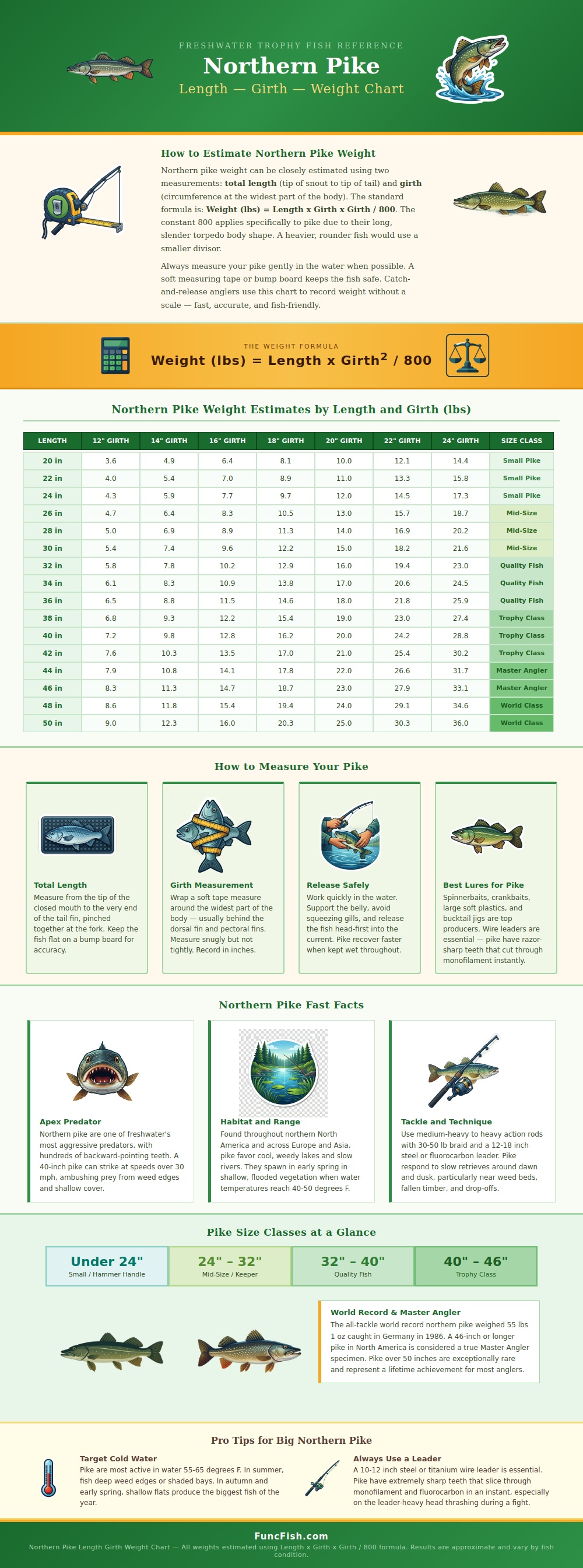
So that’s when the length and girth chart comes into play; it converts two easy-to-measure values into an accurate estimation of weight. No more guesswork and no more dropping your wet fish as you try to push those digital buttons. Table’s math is based off its total length times its girth, or circumference. Around its widest portion, typically immediately after the dorsal fin. Then divide that result by eight hundred for weight in pounds. It may take time to find a scale, but hand-math is quicker then anything else. Having a copy handy makes it instant.
How to Measure a Northern Pike
The chart defines the estimations well enough that you can simply glance at it while keeping fish wet. That’s key because pike are sensitive fish. They fight hard and wear themselves out fast. Each second exposed to air robs them of precious energy they need to be released; therefore, measuring them quickly allow for a quick release back into their environment.
The table is one thing, but knowing how to use it properly to get correct measurements is equally critical. To find length, don’t measure from the tail fork all the way to the nose, instead pin down the tail fins and extend the measuring device until it reach the end of the longest ray on the fin. For girth, wrap the tape snugly around fattest portion of the belly. Apply firm pressure to ensure accuracy, yet keep it loose enough so that it does not squash the fish’s body. Measuring too lose will result in much more conservative weight estimates than what actualy exists.
A lot of folks think close is good enough, but being exact with the measurement gives confidence in the results. Accurate numbers can saves your credibility when you’re logging a trophy catch for a club record or claiming a personal best. It also organizes your view of fish. A 22″ pike with a 14″ girth may look substantial in your hand but actualy weighs just under six pounds and is considered small. But a 34″ one with an 18″ girth bumps up to the quality class, weighing close to 13 pounds. Knowing these categories allows you to have reasonable expectations of the fish on the water you’re fishing.
Catching a 40-inch pike is something special and happens rarely in most northern lakes. It won’t happen unless certain conditions are present. It takes persistence, specifically targeting deep weed edges during low light times where these ambush predators wait to prey on baitfish. Big hooks, beefy tackle, and a wire leader aren’t negotiable. They prevents fish from slicing through your line like hot butter. Keeping your main line intact is a must if you want to land those big guns.
Adrenaline makes your mind fuzzy; this is why we have a detailed chart. If you don’t jot down the fish size right away, you’re going to forget what girth it was three years from now. With the chart, you can take a picture, mark off the size class and refer back to it without worrying about it when it comes time to weigh. It connects dots between catching the fish and measuring your success. You can use it to track everything from achieving Master Angler status to knowing if your kid caught an impressive pike. Measuring your success in a consistent way eliminates any discussion.
So next time you catch one of those toothy predators. Don’t just admire it and release it with no information. Take out that old tape measure, note the length, girth and look up weight. It takes thirty seconds and leaves you with something more than just memories from your day on the water. The excitement is in the fight. But the numbers are what give you story to share after.