Fishing Reel Gear Ratio to IPT Calculator
Estimate true line pickup from gear ratio, spool diameter, line fill, reel type, arbor, spool width, line diameter, handle cadence, and retrieve load.
📌Named reel presets
⚙Gear ratio and spool inputs
Reel retrieve estimate
True line pickup will appear here after calculation.
Calculation breakdown
🎣Reel type comparison grid
Spinning
Baitcaster
Conventional
Trolling
📊Reference tables
| Reel class | Typical ratio | Full spool diameter | Common true IPT range |
|---|---|---|---|
| 100 to 150 baitcaster | 6.3:1 to 8.5:1 | 31 to 36 mm / 1.22 to 1.42 in | 24 to 35 in / 61 to 89 cm |
| 2500 spinning | 5.0:1 to 6.2:1 | 42 to 48 mm / 1.65 to 1.89 in | 28 to 38 in / 71 to 97 cm |
| 5000 surf spinning | 5.3:1 to 6.2:1 | 58 to 68 mm / 2.28 to 2.68 in | 38 to 48 in / 97 to 122 cm |
| Saltwater conventional | 4.2:1 to 6.4:1 | 54 to 72 mm / 2.13 to 2.83 in | 30 to 50 in / 76 to 127 cm |
| Line fill | Diameter used | Retrieve effect | Best use |
|---|---|---|---|
| 98% | Near full spool | Fastest IPT, less rim margin | Long casts with controlled line |
| 94% | Normal working fill | Balanced speed and control | Most bass, walleye, inshore reels |
| 88% | Lower line stack | Noticeably slower pickup | Skipping, heavy braid, surf wind |
| 80% | Deep on spool | Large IPT loss | Temporary use or backing check |
| Load profile | Built-in loss | Why it changes IPT | Example |
|---|---|---|---|
| Free spin | 0% | No lure pull or line belly | Bench handle test |
| Normal lure | 3% | Light stretch and rod angle | Jig, worm, small swimbait |
| Blade or crankbait | 7% | Water resistance loads the line | Spinnerbait, crankbait |
| Fish pressure | 12% | Drag, stretch, and rod bend absorb pickup | Close-quarters fight |
| Formula step | Calculation | Units | Meaning |
|---|---|---|---|
| Line-stack diameter | Arbor + fill x spool depth | mm or in | Current wrap diameter |
| Raw IPT | Gear ratio x circumference | in/turn | No-slip pickup |
| True IPT | Raw IPT x efficiency | in/turn | Load-adjusted pickup |
| Time | Target line / pickup rate | seconds | Retrieve duration |
💡IPT calculation tips
Measure the loaded spool. Published IPT is usually measured near a full spool. A half-empty spool can make a fast reel feel much slower because every wrap is smaller.
Use load-adjusted pickup. Crankbaits, current, fish pressure, slack, and rod bend all reduce the line that actually moves toward the reel even though the spool RPM stays mechanical.
Inches per turn, or IPT, is a measurement of the amount of fishing lines that is retrieved with each turn of the handle of the reels. The gear ratio of the fishing reel indicate the number of times that the spool of the reel will rotate compared to the number of times that the handle of the reel is turned. However, gear ratio does not indicate the actual distance of the line that is retrieved.
The distance of the line that is retrieved are related to the diameter of the spool of the reel. The amount of line that remains on the spool (the fill percentage of the reel), the thickness of the line that is being use for fishing, and the load of the line affect the diameter of the spool. Thus, understanding how the inches per turn of a reel work is important to understanding how to best utilize the reel for certain fishing techniques.
Inches Per Turn and What Affects It
The amount of fishing line that is on the spool of the reel is referred to as the fill percentage of the reel. The percentage of the line that remains on the spool will impact the diameter of the spool. With the spool filled with line, the diameter will be the largest.
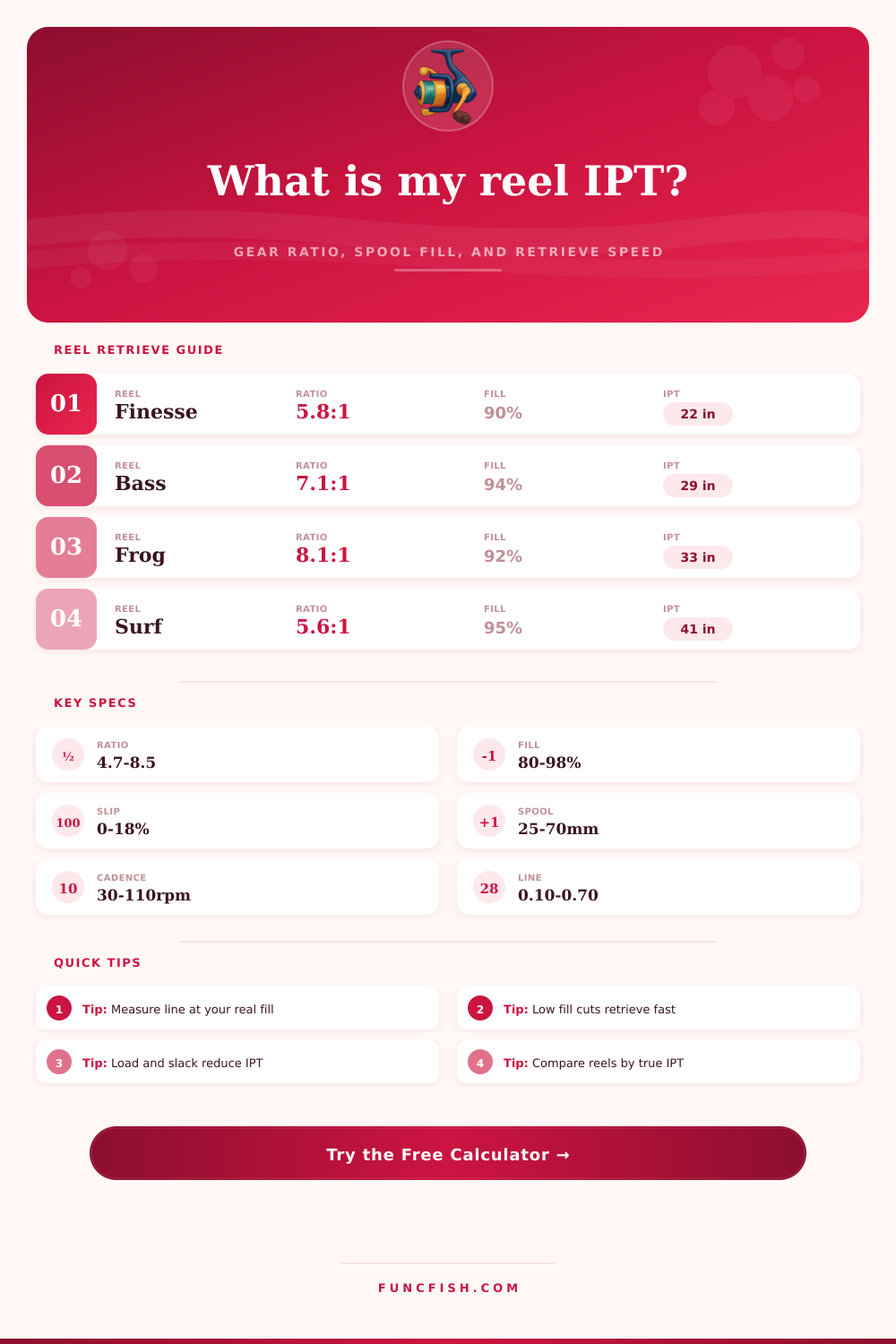
As the amount of line on the spool is reduced, the diameter of the spool will also be reduced. Thus, a baitcasting reel with an 8.1 to 1 gear ratio may quickly retrieve a large amount of line when the fishing reel is filled with line. However, if the same baitcasting reel is 80 percent full of line, it will retrieve less than that line with each turn of the handle of the reel.
The reason for this is that the line that is being cast have a tendency to stack in a diameter around the spool; the more line that is added to the spool, the more larger of a diameter is created for the spool. Thus, individuals often add “backing” to their fishing reel to ensure that the line remains as close to the outer diameter of the spool as possible to increase the diameter of the spool and ensure that the line moves at a rapid rate. The thickness of the fishing line that is being use also affects the diameter of the spool of the fishing reel.
Thicker fishing lines will contribute to the increase in the diameter of the spool at a faster rate than lines of smaller diameter. Lines of heavy diameter will reach a relatively large diameter of the spool with fewer wraps of fishing line than lines of thin diameter. Thus, if an individual is using heavy braid for their fishing line, the diameter of the spool will quickly increase.
In contrast, if that same individual is using thin fluorocarbon fishing line, the diameter of the spool will increase at a slow rate. Thus, the inches per turn will change according to the different types of fishing line that is used. The load of the fishing line may also have an effect upon the actual distance of the fishing line that is retrieved toward the angler.
Fishing reels are often calculated in how many inches of line per turn that they will theoretically retrieve. However, in the real world, when there is a load on the fishing line (whether from a lure, current, or fish), the actual speed of that fishing line will be less than the theoretical inches per turn of that fishing reel. Certain fishing techniques require different amounts of inches per turn than others.
For instance, fishing for frogs in thick vegetation may require a high amount of inches per turn so that the line can quickly move the bait through the vegetation. In contrast, jigging for walleye may require a lower inches per turn so that the angler is able to feel the movement of the fishing lure. Finally, surf casting fishing techniques may place more importance on the casting and the capacity of the fishing reel than the inches per turn of the fishing line.
It is a common mistake for individuals to believe that the gear ratio of fishing reels is a figure of the speed with which fishing lines will move. The gear ratio is a measurement of the relationship between the number of times the gears of the reel turn in comparison to the number of times that the handle is turned. Additionally, the rate of the spool to which the line is cast may rapidly increase, but the amount of line that is actually cast may differ from that theoretical rate.
Thus, by calculating the inches per turn of fishing reels, anglers are able to understand the way in which that fishing reel will perform in actual fishing scenarios. Inches per turn, or IPT, is a measurement of the amount of fishing lines that is retrieved with each turn of the handle of the reels. The gear ratio of the fishing reel indicate the number of times that the spool of the reel will rotate compared to the number of times that the handle of the reel is turned.
However, gear ratio does not indicate the actual distance of the line that is retrieved. The distance of the line that is retrieved are related to the diameter of the spool of the reel. The amount of line that remains on the spool (the fill percentage of the reel), the thickness of the line that is being use for fishing, and the load of the line affect the diameter of the spool.
Thus, understanding how the inches per turn of a reel work is important to understanding how to best utilize the reel for certain fishing techniques. The amount of fishing line that is on the spool of the reel is referred to as the fill percentage of the reel. The percentage of the line that remains on the spool will impact the diameter of the spool.
With the spool filled with line, the diameter will be the largest. As the amount of line on the spool is reduced, the diameter of the spool will also be reduced. Thus, a baitcasting reel with an 8.1 to 1 gear ratio may quickly retrieve a large amount of line when the fishing reel is filled with line.
However, if the same baitcasting reel is 80 percent full of line, it will retrieve less than that line with each turn of the handle of the reel. The reason for this is that the line that is being cast have a tendency to stack in a diameter around the spool; the more line that is added to the spool, the more larger of a diameter is created for the spool. Thus, individuals often add “backing” to their fishing reel to ensure that the line remains as close to the outer diameter of the spool as possible to increase the diameter of the spool and ensure that the line moves at a rapid rate.
The thickness of the fishing line that is being use also affects the diameter of the spool of the fishing reel. Thicker fishing lines will contribute to the increase in the diameter of the spool at a faster rate than lines of smaller diameter. Lines of heavy diameter will reach a relatively large diameter of the spool with fewer wraps of fishing line than lines of thin diameter.
Thus, if an individual is using heavy braid for their fishing line, the diameter of the spool will quickly increase. In contrast, if that same individual is using thin fluorocarbon fishing line, the diameter of the spool will increase at a slow rate. Thus, the inches per turn will change according to the different types of fishing line that is used.
The load of the fishing line may also have an effect upon the actual distance of the fishing line that is retrieved toward the angler. Fishing reels are often calculated in how many inches of line per turn that they will theoretically retrieve. However, in the real world, when there is a load on the fishing line (whether from a lure, current, or fish), the actual speed of that fishing line will be less than the theoretical inches per turn of that fishing reel.
Certain fishing techniques require different amounts of inches per turn than others. For instance, fishing for frogs in thick vegetation may require a high amount of inches per turn so that the line can quickly move the bait through the vegetation. In contrast, jigging for walleye may require a lower inches per turn so that the angler is able to feel the movement of the fishing lure.
Finally, surf casting fishing techniques may place more importance on the casting and the capacity of the fishing reel than the inches per turn of the fishing line. It is a common mistake for individuals to believe that the gear ratio of fishing reels is a figure of the speed with which fishing lines will move. The gear ratio is a measurement of the relationship between the number of times the gears of the reel turn in comparison to the number of times that the handle is turned.
Additionally, the rate of the spool to which the line is cast may rapidly increase, but the amount of line that is actually cast may differ from that theoretical rate. Thus, by calculating the inches per turn of fishing reels, anglers are able to understand the way in which that fishing reel will perform in actual fishing scenarios. Inches per turn, or IPT, is a measurement of the amount of fishing lines that is retrieved with each turn of the handle of the reels.
The gear ratio of the fishing reel indicate the number of times that the spool of the reel will rotate compared to the number of times that the handle of the reel is turned. However, gear ratio does not indicate the actual distance of the line that is retrieved. The distance of the line that is retrieved are related to the diameter of the spool of the reel.
The amount of line that remains on the spool (the fill percentage of the reel), the thickness of the line that is being use for fishing, and the load of the line affect the diameter of the spool. Thus, understanding how the inches per turn of a reel work is important to understanding how to best utilize the reel for certain fishing techniques. The amount of fishing line that is on the spool of the reel is referred to as the fill percentage of the reel.
The percentage of the line that remains on the spool will impact the diameter of the spool. With the spool filled with line, the diameter will be the largest. As the amount of line on the spool is reduced, the diameter of the spool will also be reduced.
Thus, a baitcasting reel with an 8.1 to 1 gear ratio may quickly retrieve a large amount of line when the fishing reel is filled with line. However, if the same baitcasting reel is 80 percent full of line, it will retrieve less than that line with each turn of the handle of the reel. The reason for this is that the line that is being cast have a tendency to stack in a diameter around the spool; the more line that is added to the spool, the more larger of a diameter is created for the spool.
Thus, individuals often add “backing” to their fishing reel to ensure that the line remains as close to the outer diameter of the spool as possible to increase the diameter of the spool and ensure that the line moves at a rapid rate. The thickness of the fishing line that is being use also affects the diameter of the spool of the fishing reel. Thicker fishing lines will contribute to the increase in the diameter of the spool at a faster rate than lines of smaller diameter.
Lines of heavy diameter will reach a relatively large diameter of the spool with fewer wraps of fishing line than lines of thin diameter. Thus, if an individual is using heavy braid for their fishing line, the diameter of the spool will quickly increase. In contrast, if that same individual is using thin fluorocarbon fishing line, the diameter of the spool will increase at a slow rate.
Thus, the inches per turn will change according to the different types of fishing line that is used. The load of the fishing line may also have an effect upon the actual distance of the fishing line that is retrieved toward the angler. Fishing reels are often calculated in how many inches of line per turn that they will theoretically retrieve.
However, in the real world, when there is a load on the fishing line (whether from a lure, current, or fish), the actual speed of that fishing line will be less than the theoretical inches per turn of that fishing reel. Certain fishing techniques require different amounts of inches per turn than others. For instance, fishing for frogs in thick vegetation may require a high amount of inches per turn so that the line can quickly move the bait through the vegetation.
In contrast, jigging for walleye may require a lower inches per turn so that the angler is able to feel the movement of the fishing lure. Finally, surf casting fishing techniques may place more importance on the casting and the capacity of the fishing reel than the inches per turn of the fishing line. It is a common mistake for individuals to believe that the gear ratio of fishing reels is a figure of the speed with which fishing lines will move.
The gear ratio is a measurement of the relationship between the number of times the gears of the reel turn in comparison to the number of times that the handle is turned. Additionally, the rate of the spool to which the line is cast may rapidly increase, but the amount of line that is actually cast may differ from that theoretical rate. Thus, by calculating the inches per turn of fishing reels, anglers are able to understand the way in which that fishing reel will perform in actual fishing scenarios.
Inches per turn, or IPT, is a measurement of the amount of fishing lines that is retrieved with each turn of the handle of the reels. The gear ratio of the fishing reel indicate the number of times that the spool of the reel will rotate compared to the number of times that the handle of the reel is turned. However, gear ratio does not indicate the actual distance of the line that is retrieved.
The distance of the line that is retrieved are related to the diameter of the spool of the reel. The amount of line that remains on the spool (the fill percentage of the reel), the thickness of the line that is being use for fishing, and the load of the line affect the diameter of the spool. Thus, understanding how the inches per turn of a reel work is important to understanding how to best utilize the reel for certain fishing techniques.
The amount of fishing line that is on the spool of the reel is referred to as the fill percentage of the reel. The percentage of the line that remains on the spool will impact the diameter of the spool. With the spool filled with line, the diameter will be the largest.
As the amount of line on the spool is reduced, the diameter of the spool will also be reduced. Thus, a baitcasting reel with an 8.1 to 1 gear ratio may quickly retrieve a large amount of line when the fishing reel is filled with line. However, if the same baitcasting reel is 80 percent full of line, it will retrieve less than that line with each turn of the handle of the reel.
The reason for this is that the line that is being cast have a tendency to stack in a diameter around the spool; the more line that is added to the spool, the more larger of a diameter is created for the spool. Thus, individuals often add “backing” to their fishing reel to ensure that the line remains as close to the outer diameter of the spool as possible to increase the diameter of the spool and ensure that the line moves at a rapid rate. The thickness of the fishing line that is being use also affects the diameter of the spool of the fishing reel.
Thicker fishing lines will contribute to the increase in the diameter of the spool at a faster rate than lines of smaller diameter. Lines of heavy diameter will reach a relatively large diameter of the spool with fewer wraps of fishing line than lines of thin diameter. Thus, if an individual is using heavy braid for their fishing line, the diameter of the spool will quickly increase.
In contrast, if that same individual is using thin fluorocarbon fishing line, the diameter of the spool will increase at a slow rate. Thus, the inches per turn will change according to the different types of fishing line that is used. The load of the fishing line may also have an effect upon the actual distance of the fishing line that is retrieved toward the angler.
Fishing reels are often calculated in how many inches of line per turn that they will theoretically retrieve. However, in the real world, when there is a load on the fishing line (whether from a lure, current, or fish), the actual speed of that fishing line will be less than the theoretical inches per turn of that fishing reel. Certain fishing techniques require different amounts of inches per turn than others.
For instance, fishing for frogs in thick vegetation may require a high amount of inches per turn so that the line can quickly move the bait through the vegetation. In contrast, jigging for walleye may require a lower inches per turn so that the angler is able to feel the movement of the fishing lure. Finally, surf casting fishing techniques may place more importance on the casting and the capacity of the fishing reel than the inches per turn of the fishing line.
It is a common mistake for individuals to believe that the gear ratio of fishing reels is a figure of the speed with which fishing lines will move. The gear ratio is a measurement of the relationship between the number of times the gears of the reel turn in comparison to the number of times that the handle is turned. Additionally, the rate of the spool to which the line is cast may rapidly increase, but the amount of line that is actually cast may differ from that theoretical rate.
Thus, by calculating the inches per turn of fishing reels, anglers are able to understand the way in which that fishing reel will perform in actual fishing scenarios. Inches per turn, or IPT, is a measurement of the amount of fishing lines that is retrieved with each turn of the handle of the reels. The gear ratio of the fishing reel indicate the number of times that the spool of the reel will rotate compared to the number of times that the handle of the reel is turned.
However, gear ratio does not indicate the actual distance of the line that is retrieved. The distance of the line that is retrieved are related to the diameter of the spool of the reel. The amount of line that remains on the spool (the fill percentage of the reel), the thickness of the line that is being use for fishing, and the load of the line affect the diameter of the spool.
Thus, understanding how the inches per turn of a reel work is important to understanding how to best utilize the reel for certain fishing techniques. The amount of fishing line that is on the spool of the reel is referred to as the fill percentage of the reel. The percentage of the line that remains on the spool will impact the diameter of the spool.
With the spool filled with line, the diameter will be the largest. As the amount of line on the spool is reduced, the diameter of the spool will also be reduced. Thus, a baitcasting reel with an 8.1 to 1 gear ratio may quickly retrieve a large amount of line when the fishing reel is filled with line.
However, if the same baitcasting reel is 80 percent full of line, it will retrieve less than that line with each turn of the handle of the reel. The reason for this is that the line that is being cast have a tendency to stack in a diameter around the spool; the more line that is added to the spool, the more larger of a diameter is created for the spool. Thus, individuals often add “backing” to their fishing reel to ensure that the line remains as close to the outer diameter of the spool as possible to increase the diameter of the spool and ensure that the line moves at a rapid rate.
The thickness of the fishing line that is being use also affects the diameter of the spool of the fishing reel. Thicker fishing lines will contribute to the increase in the diameter of the spool at a faster rate than lines of smaller diameter. Lines of heavy diameter will reach a relatively large diameter of the spool with fewer wraps of fishing line than lines of thin diameter.
Thus, if an individual is using heavy braid for their fishing line, the diameter of the spool will quickly increase. In contrast, if that same individual is using thin fluorocarbon fishing line, the diameter of the spool will increase at a slow rate. Thus, the inches per turn will change according to the different types of fishing line that is used.
The load of the fishing line may also have an effect upon the actual distance of the fishing line that is retrieved toward the angler. Fishing reels are often calculated in how many inches of line per turn that they will theoretically retrieve. However, in the real world, when there is a load on the fishing line (whether from a lure, current, or fish), the actual speed of that fishing line will be less than the theoretical inches per turn of that fishing reel.
Certain fishing techniques require different amounts of inches per turn than others. For instance, fishing for frogs in thick vegetation may require a high amount of inches per turn so that the line can quickly move the bait through the vegetation. In contrast, jigging for walleye may require a lower inches per turn so that the angler is able to feel the movement of the fishing lure.
Finally, surf casting fishing techniques may place more importance on the casting and the capacity of the fishing reel than the inches per turn of the fishing line. It is a common mistake for individuals to believe that the gear ratio of fishing reels is a figure of the speed with which fishing lines will move. The gear ratio is a measurement of the relationship between the number of times the gears of the reel turn in comparison to the number of times that the handle is turned.
Additionally, the rate of the spool to which the line is cast may rapidly increase, but the amount of line that is actually cast may differ from that theoretical rate. Thus, by calculating the inches per turn of fishing reels, anglers are able to understand the way in which that fishing reel will perform in actual fishing scenarios. Inches per turn, or IPT, is a measurement of the amount of fishing lines that is retrieved with each turn of the handle of the reels.
The gear ratio of the fishing reel indicate the number of times that the spool of the reel will rotate compared to the number of times that the handle of the reel is turned. However, gear ratio does not indicate the actual distance of the line that is retrieved. The distance of the line that is retrieved are related to the diameter of the spool of the reel.
The amount of line that remains on the spool (the fill percentage of the reel), the thickness of the line that is being use for fishing, and the load of the line affect the diameter of the spool. Thus, understanding how the inches per turn of a reel work is important to understanding how to best utilize the reel for certain fishing techniques. The amount of fishing line that is on the spool of the reel is referred to as the fill percentage of the reel.
The percentage of the line that remains on the spool will impact the diameter of the spool. With the spool filled with line, the diameter will be the largest. As the amount of line on the spool is reduced, the diameter of the spool will also be reduced.
Thus, a baitcasting reel with an 8.1 to 1 gear ratio may quickly retrieve a large amount of line when the fishing reel is filled with line. However, if the same baitcasting reel is 80 percent full of line, it will retrieve less than that line with each turn of the handle of the reel. The reason for this is that the line that is being cast have a tendency to stack in a diameter around the spool; the more line that is added to the spool, the more larger of a diameter is created for the spool.
Thus, individuals often add “backing” to their fishing reel to ensure that the line remains as close to the outer diameter of the spool as possible to increase the diameter of the spool and ensure that the line moves at a rapid rate. The thickness of the fishing line that is being use also affects the diameter of the spool of the fishing reel. Thicker fishing lines will contribute to the increase in the diameter of the spool at a faster rate than lines of smaller diameter.
Lines of heavy diameter will reach a relatively large diameter of the spool with fewer wraps of fishing line than lines of thin diameter. Thus, if an individual is using heavy braid for their fishing line, the diameter of the spool will quickly increase. In contrast, if that same individual is using thin fluorocarbon fishing line, the diameter of the spool will increase at a slow rate.
Thus, the inches per turn will change according to the different types of fishing line that is used. The load of the fishing line may also have an effect upon the actual distance of the fishing line that is retrieved toward the angler. Fishing reels are often calculated in how many inches of line per turn that they will theoretically retrieve.
However, in the real world, when there is a load on the fishing line (whether from a lure, current, or fish), the actual speed of that fishing line will be less than the theoretical inches per turn of that fishing reel. Certain fishing techniques require different amounts of inches per turn than others. For instance, fishing for frogs in thick vegetation may require a high amount of inches per turn so that the line can quickly move the bait through the vegetation.
In contrast, jigging for walleye may require a lower inches per turn so that the angler is able to feel the movement of the fishing lure. Finally, surf casting fishing techniques may place more importance on the casting and the capacity of the fishing reel than the inches per turn of the fishing line. It is a common mistake for individuals to believe that the gear ratio of fishing reels is a figure of the speed with which fishing lines will move.
The gear ratio is a measurement of the relationship between the number of times the gears of the reel turn in comparison to the number of times that the handle is turned. Additionally, the rate of the spool to which the line is cast may rapidly increase, but the amount of line that is actually cast may differ from that theoretical rate. Thus, by calculating the inches per turn of fishing reels, anglers are able to understand the way in which that fishing reel will perform in actual fishing scenarios.
Inches per turn, or IPT, is a measurement of the amount of fishing lines that is retrieved with each turn of the handle of the reels. The gear ratio of the fishing reel indicate the number of times that the spool of the reel will rotate compared to the number of times that the handle of the reel is turned. However, gear ratio does not indicate the actual distance of the line that is retrieved.
The distance of the line that is retrieved are related to the diameter of the spool of the reel. The amount of line that remains on the spool (the fill percentage of the reel), the thickness of the line that is being use for fishing, and the load of the line affect the diameter of the spool. Thus, understanding how the inches per turn of a reel work is important to understanding how to best utilize the reel for certain fishing techniques.
The amount of fishing line that is on the spool of the reel is referred to as the fill percentage of the reel. The percentage of the line that remains on the spool will impact the diameter of the spool. With the spool filled with line, the diameter will be the largest.
As the amount of line on the spool is reduced, the diameter of the spool will also be reduced. Thus, a baitcasting reel with an 8.1 to 1 gear ratio may quickly retrieve a large amount of line when the fishing reel is filled with line. However, if the same baitcasting reel is 80 percent full of line, it will retrieve less than that line with each turn of the handle of the reel.
The reason for this is that the line that is being cast have a tendency to stack in a diameter around the spool; the more line that is added to the spool, the more larger of a diameter is created for the spool. Thus, individuals often add “backing” to their fishing reel to ensure that the line remains as close to the outer diameter of the spool as possible to increase the diameter of the spool and ensure that the line moves at a rapid rate. The thickness of the fishing line that is being use also affects the diameter of the spool of the fishing reel.
Thicker fishing lines will contribute to the increase in the diameter of the spool at a faster rate than lines of smaller diameter. Lines of heavy diameter will reach a relatively large diameter of the spool with fewer wraps of fishing line than lines of thin diameter. Thus, if an individual is using heavy braid for their fishing line, the diameter of the spool will quickly increase.
In contrast, if that same individual is using thin fluorocarbon fishing line, the diameter of the spool will increase at a slow rate. Thus, the inches per turn will change according to the different types of fishing line that is used. The load of the fishing line may also have an effect upon the actual distance of the fishing line that is retrieved toward the angler.
Fishing reels are often calculated in how many inches of line per turn that they will theoretically retrieve. However, in the real world, when there is a load on the fishing line (whether from a lure, current, or fish), the actual speed of that fishing line will be less than the theoretical inches per turn of that fishing reel. Certain fishing techniques require different amounts of inches per turn than others.
For instance, fishing for frogs in thick vegetation may require a high amount of inches per turn so that the line can quickly move the bait through the vegetation. In contrast, jigging for walleye may require a lower inches per turn so that the angler is able to feel the movement of the fishing lure. Finally, surf casting fishing techniques may place more importance on the casting and the capacity of the fishing reel than the inches per turn of the fishing line.
It is a common mistake for individuals to believe that the gear ratio of fishing reels is a figure of the speed with which fishing lines will move. The gear ratio is a measurement of the relationship between the number of times the gears of the reel turn in comparison to the number of times that the handle is turned. Additionally, the rate of the spool to which the line is cast may rapidly increase, but the amount of line that is actually cast may differ from that theoretical rate.
Thus, by calculating the inches per turn of fishing reels, anglers are able to understand the way in which that fishing reel will perform in actual fishing scenarios. Inches per turn, or IPT, is a measurement of the amount of fishing lines that is retrieved with each turn of the handle of the reels. The gear ratio of the fishing reel indicate the number of times that the spool of the reel will rotate compared to the number of times that the handle of the reel is turned.
However, gear ratio does not indicate the actual distance of the line that is retrieved. The distance of the line that is retrieved are related to the diameter of the spool of the reel. The amount of line that remains on the spool (the fill percentage of the reel), the thickness of the line that is being use for fishing, and the load of the line affect the diameter of the spool.
Thus, understanding how the inches per turn of a reel work is important to understanding how to best utilize the reel for certain fishing techniques. The amount of fishing line that is on the spool of the reel is referred to as the fill percentage of the reel. The percentage of the line that remains on the spool will impact the diameter of the spool.
With the spool filled with line, the diameter will be the largest. As the amount of line on the spool is reduced, the diameter of the spool will also be reduced. Thus, a baitcasting reel with an 8.1 to 1 gear ratio may quickly retrieve a large amount of line when the fishing reel is filled with line.
However, if the same baitcasting reel is 80 percent full of line, it will retrieve less than that line with each turn of the handle of the reel. The reason for this is that the line that is being cast have a tendency to stack in a diameter around the spool; the more line that is added to the spool, the more larger of a diameter is created for the spool. Thus, individuals often add “backing” to their fishing reel to ensure that the line remains as close to the outer diameter of the spool as possible to increase the diameter of the spool and ensure that the line moves at a rapid rate.
The thickness of the fishing line that is being use also affects the diameter of the spool of the fishing reel. Thicker fishing lines will contribute to the increase in the diameter of the spool at a faster rate than lines of smaller diameter. Lines of heavy diameter will reach a relatively large diameter of the spool with fewer wraps of fishing line than lines of thin diameter.
Thus, if an individual is using heavy braid for their fishing line, the diameter of the spool will quickly increase. In contrast, if that same individual is using thin fluorocarbon fishing line, the diameter of the spool will increase at a slow rate. Thus, the inches per turn will change according to the different types of fishing line that is used.
The load of the fishing line may also have an effect upon the actual distance of the fishing line that is retrieved toward the angler. Fishing reels are often calculated in how many inches of line per turn that they will theoretically retrieve. However, in the real world, when there is a load on the fishing line (whether from a lure, current, or fish), the actual speed of that fishing line will be less than the theoretical inches per turn of that fishing reel.
Certain fishing techniques require different amounts of inches per turn than others. For instance, fishing for frogs in thick vegetation may require a high amount of inches per turn so that the line can quickly move the bait through the vegetation. In contrast, jigging for walleye may require a lower inches per turn so that the angler is able to feel the movement of the fishing lure.
Finally, surf casting fishing techniques may place more importance on the casting and the capacity of the fishing reel than the inches per turn of the fishing line. It is a common mistake for individuals to believe that the gear ratio of fishing reels is a figure of the speed with which fishing lines will move. The gear ratio is a measurement of the relationship between the number of times the gears of the reel turn in comparison to the number of times that the handle is turned.
Additionally, the rate of the spool to which the line is cast may rapidly increase, but the amount of line that is actually cast may differ from that theoretical rate. Thus, by calculating the inches per turn of fishing reels, anglers are able to understand the way in which that fishing reel will perform in actual fishing scenarios. Inches per turn, or IPT, is a measurement of the amount of fishing lines that is retrieved with each turn of the handle of the reels.
The gear ratio of the fishing reel indicate the number of times that the spool of the reel will rotate compared to the number of times that the handle of the reel is turned. However, gear ratio does not indicate the actual distance of the line that is retrieved. The distance of the line that is retrieved are related to the diameter of the spool of the reel.
The amount of line that remains on the spool (the fill percentage of the reel), the thickness of the line that is being use for fishing, and the load of the line affect the diameter of the spool. Thus, understanding how the inches per turn of a reel work is important to understanding how to best utilize the reel for certain fishing techniques. The amount of fishing line that is on the spool of the reel is referred to as the fill percentage of the reel.
The percentage of the line that remains on the spool will impact the diameter of the spool. With the spool filled with line, the diameter will be the largest. As the amount of line on the spool is reduced, the diameter of the spool will also be reduced.
Thus, a baitcasting reel with an 8.1 to 1 gear ratio may quickly retrieve a large amount of line when the fishing reel is filled with line. However, if the same baitcasting reel is 80 percent full of line, it will retrieve less than that line with each turn of the handle of the reel. The reason for this is that the line that is being cast have a tendency to stack in a diameter around the spool; the more line that is added to the spool, the more larger of a diameter is created for the spool.
Thus, individuals often add “backing” to their fishing reel to ensure that the line remains as close to the outer diameter of the spool as possible to increase the diameter of the spool and ensure that the line moves at a rapid rate. The thickness of the fishing line that is being use also affects the diameter of the spool of the fishing reel. Thicker fishing lines will contribute to the increase in the diameter of the spool at a faster rate than lines of smaller diameter.
Lines of heavy diameter will reach a relatively large diameter of the spool with fewer wraps of fishing line than lines of thin diameter. Thus, if an individual is using heavy braid for their fishing line, the diameter of the spool will quickly increase. In contrast, if that same individual is using thin fluorocarbon fishing line, the diameter of the spool will increase at a slow rate.
Thus, the inches per turn will change according to the different types of fishing line that is used. The load of the fishing line may also have an effect upon the actual distance of the fishing line that is retrieved toward the angler. Fishing reels are often calculated in how many inches of line per turn that they will theoretically retrieve.
However, in the real world, when there is a load on the fishing line (whether from a lure, current, or fish), the actual speed of that fishing line will be less than the theoretical inches per turn of that fishing reel. Certain fishing techniques require different amounts of inches per turn than others. For instance, fishing for frogs in thick vegetation may require a high amount of inches per turn so that the line can quickly move the bait through the vegetation.
In contrast, jigging for walleye may require a lower inches per turn so that the angler is able to feel the movement of the fishing lure. Finally, surf casting fishing techniques may place more importance on the casting and the capacity of the fishing reel than the inches per turn of the fishing line. It is a common mistake for individuals to believe that the gear ratio of fishing reels is a figure of the speed with which fishing lines will move.
The gear ratio is a measurement of the relationship between the number of times the gears of the reel turn in comparison to the number of times that the handle is turned. Additionally, the rate of the spool to which the line is cast may rapidly increase, but the amount of line that is actually cast may differ from that theoretical rate. Thus, by calculating the inches per turn of fishing reels, anglers are able to understand the way in which that fishing reel will perform in actual fishing scenarios.
Inches per turn, or IPT, is a measurement of the amount of fishing lines that is retrieved with each turn of the handle of the reels. The gear ratio of the fishing reel indicate the number of times that the spool of the reel will rotate compared to the number of times that the handle of the reel is turned. However, gear ratio does not indicate the actual distance of the line that is retrieved.
The distance of the line that is retrieved are related to the diameter of the spool of the reel. The amount of line that remains on the spool (the fill percentage of the reel), the thickness of the line that is being use for fishing, and the load of the line affect the diameter of the spool. Thus, understanding how the inches per turn of a reel work is important to understanding how to best utilize the reel for certain fishing techniques.
The amount of fishing line that is on the spool of the reel is referred to as the fill percentage of the reel. The percentage of the line that remains on the spool will impact the diameter of the spool. With the spool filled with line, the diameter will be the largest.
As the amount of line on the spool is reduced, the diameter of the spool will also be reduced. Thus, a baitcasting reel with an 8.1 to 1 gear ratio may quickly retrieve a large amount of line when the fishing reel is filled with line. However, if the same baitcasting reel is 80 percent full of line, it will retrieve less than that line with each turn of the handle of the reel.
The reason for this is that the line that is being cast have a tendency to stack in a diameter around the spool; the more line that is added to the spool, the more larger of a diameter is created for the spool. Thus, individuals often add “backing” to their fishing reel to ensure that the line remains as close to the outer diameter of the spool as possible to increase the diameter of the spool and ensure that the line moves at a rapid rate. The thickness of the fishing line that is being use also affects the diameter of the spool of the fishing reel.
Thicker fishing lines will contribute to the increase in the diameter of the spool at a faster rate than lines of smaller diameter. Lines of heavy diameter will reach a relatively large diameter of the spool with fewer wraps of fishing line than lines of thin diameter. Thus, if an individual is using heavy braid for their fishing line, the diameter of the spool will quickly increase.
In contrast, if that same individual is using thin fluorocarbon fishing line, the diameter of the spool will increase at a slow rate. Thus, the inches per turn will change according to the different types of fishing line that is used. The load of the fishing line may also have an effect upon the actual distance of the fishing line that is retrieved toward the angler.
Fishing reels are often calculated in how many inches of line per turn that they will theoretically retrieve. However, in the real world, when there is a load on the fishing line (whether from a lure, current, or fish), the actual speed of that fishing line will be less than the theoretical inches per turn of that fishing reel. Certain fishing techniques require different amounts of inches per turn than others.
For instance, fishing for frogs in thick vegetation may require a high amount of inches per turn so that the line can quickly move the bait through the vegetation. In contrast, jigging for walleye may require a lower inches per turn so that the angler is able to feel the movement of the fishing lure. Finally, surf casting fishing techniques may place more importance on the casting and the capacity of the fishing reel than the inches per turn of the fishing line.
It is a common mistake for individuals to believe that the gear ratio of fishing reels is a figure of the speed with which fishing lines will move. The gear ratio is a measurement of the relationship between the number of times the gears of the reel turn in comparison to the number of times that the handle is turned. Additionally, the rate of the spool to which the line is cast may rapidly increase, but the amount of line that is actually cast may differ from that theoretical rate.
Thus, by calculating the inches per turn of fishing reels, anglers are able to understand the way in which that fishing reel will perform in actual fishing scenarios. Inches per turn, or IPT, is a measurement of the amount of fishing lines that is retrieved with each turn of the handle of the reels. The gear ratio of the fishing reel indicate the number of times that the spool of the reel will rotate compared to the number of times that the handle of the reel is turned.
However, gear ratio does not indicate the actual distance of the line that is retrieved. The distance of the line that is retrieved are related to the diameter of the spool of the reel. The amount of line that remains on the spool (the fill percentage of the reel), the thickness of the line that is being use for fishing, and the load of the line affect the diameter of the spool.
Thus, understanding how the inches per turn of a reel work is important to understanding how to best utilize the reel for certain fishing techniques. The amount of fishing line that is on the spool of the reel is referred to as the fill percentage of the reel. The percentage of the line that remains on the spool will impact the diameter of the spool.
With the spool filled with line, the diameter will be the largest. As the amount of line on the spool is reduced, the diameter of the spool will also be reduced. Thus, a baitcasting reel with an 8.1 to 1 gear ratio may quickly retrieve a large amount of line when the fishing reel is filled with line.
However, if the same baitcasting reel is 80 percent full of line, it will retrieve less than that line with each turn of the handle of the reel. The reason for this is that the line that is being cast have a tendency to stack in a diameter around the spool; the more line that is added to the spool, the more larger of a diameter is created for the spool. Thus, individuals often add “backing” to their fishing reel to ensure that the line remains as close to the outer diameter of the spool as possible to increase the diameter of the spool and ensure that the line moves at a rapid rate.
The thickness of the fishing line that is being use also affects the diameter of the spool of the fishing reel. Thicker fishing lines will contribute to the increase in the diameter of the spool at a faster rate than lines of smaller diameter. Lines of heavy diameter will reach a relatively large diameter of the spool with fewer wraps of fishing line than lines of thin diameter.
Thus, if an individual is using heavy braid for their fishing line, the diameter of the spool will quickly increase. In contrast, if that same individual is using thin fluorocarbon fishing line, the diameter of the spool will increase at a slow rate. Thus, the inches per turn will change according to the different types of fishing line that is used.
The load of the fishing line may also have an effect upon the actual distance of the fishing line that is retrieved toward the angler. Fishing reels are often calculated in how many inches of line per turn that they will theoretically retrieve. However, in the real world, when there is a load on the fishing line (whether from a lure, current, or fish), the actual speed of that fishing line will be less than the theoretical inches per turn of that fishing reel.
Certain fishing techniques require different amounts of inches per turn than others. For instance, fishing for frogs in thick vegetation may require a high amount of inches per turn so that the line can quickly move the bait through the vegetation. In contrast, jigging for walleye may require a lower inches per turn so that the angler is able to feel the movement of the fishing lure.
Finally, surf casting fishing techniques may place more importance on the casting and the capacity of the fishing reel than the inches per turn of the fishing line. It is a common mistake for individuals to believe that the gear ratio of fishing reels is a figure of the speed with which fishing lines will move. The gear ratio is a measurement of the relationship between the number of times the gears of the reel turn in comparison to the number of times that the handle is turned.
Additionally, the rate of the spool to which the line is cast may rapidly increase, but the amount of line that is actually cast may differ from that theoretical rate. Thus, by calculating the inches per turn of fishing reels, anglers are able to understand the way in which that fishing reel will perform in actual fishing scenarios. Inches per turn, or IPT, is a measurement of the amount of fishing lines that is retrieved with each turn of the handle of the reels.
The gear ratio of the fishing reel indicate the number of times that the spool of the reel will rotate compared to the number of times that the handle of the reel is turned. However, gear ratio does not indicate the actual distance of the line that is retrieved. The distance of the line that is retrieved are related to the diameter of the spool of the reel.
The amount of line that remains on the spool (the fill percentage of the reel), the thickness of the line that is being use for fishing, and the load of the line affect the diameter of the spool. Thus, understanding how the inches per turn of a reel work is important to understanding how to best utilize the reel for certain fishing techniques. The amount of fishing line that is on the spool of the reel is referred to as the fill percentage of the reel.
The percentage of the line that remains on the spool will impact the diameter of the spool. With the spool filled with line, the diameter will be the largest. As the amount of line on the spool is reduced, the diameter of the spool will also be reduced.
Thus, a baitcasting reel with an 8.1 to 1 gear ratio may quickly retrieve a large amount of line when the fishing reel is filled with line. However, if the same baitcasting reel is 80 percent full of line, it will retrieve less than that line with each turn of the handle of the reel. The reason for this is that the line that is being cast have a tendency to stack in a diameter around the spool; the more line that is added to the spool, the more larger of a diameter is created for the spool.
Thus, individuals often add “backing” to their fishing reel to ensure that the line remains as close to the outer diameter of the spool as possible to increase the diameter of the spool and ensure that the line moves at a rapid rate. The thickness of the fishing line that is being use also affects the diameter of the spool of the fishing reel. Thicker fishing lines will contribute to the increase in the diameter of the spool at a faster rate than lines of smaller diameter.
Lines of heavy diameter will reach a relatively large diameter of the spool with fewer wraps of fishing line than lines of thin diameter. Thus, if an individual is using heavy braid for their fishing line, the diameter of the spool will quickly increase. In contrast, if that same individual is using thin fluorocarbon fishing line, the diameter of the spool will increase at a slow rate.
Thus, the inches per turn will change according to the different types of fishing line that is used. The load of the fishing line may also have an effect upon the actual distance of the fishing line that is retrieved toward the angler. Fishing reels are often calculated in how many inches of line per turn that they will theoretically retrieve.
However, in the real world, when there is a load on the fishing line (whether from a lure, current, or fish), the actual speed of that fishing line will be less than the theoretical inches per turn of that fishing reel. Certain fishing techniques require different amounts of inches per turn than others. For instance, fishing for frogs in thick vegetation may require a high amount of inches per turn so that the line can quickly move the bait through the vegetation.
In contrast, jigging for walleye may require a lower inches per turn so that the angler is able to feel the movement of the fishing lure. Finally, surf casting fishing techniques may place more importance on the casting and the capacity of the fishing reel than the inches per turn of the fishing line. It is a common mistake for individuals to believe that the gear ratio of fishing reels is a figure of the speed with which fishing lines will move.
The gear ratio is a measurement of the relationship between the number of times the gears of the reel turn in comparison to the number of times that the handle is turned. Additionally, the rate of the spool to which the line is cast may rapidly increase, but the amount of line that is actually cast may differ from that theoretical rate. Thus, by calculating the inches per turn of fishing reels, anglers are able to understand the way in which that fishing reel will perform in actual fishing scenarios.
Inches per turn, or IPT, is a measurement of the amount of fishing lines that is retrieved with each turn of the handle of the reels. The gear ratio of the fishing reel indicate the number of times that the spool of the reel will rotate compared to the number of times that the handle of the reel is turned. However, gear ratio does not indicate the actual distance of the line that is retrieved.
The distance of the line that is retrieved are related to the diameter of the spool of the reel. The amount of line that remains on the spool (the fill percentage of the reel), the thickness of the line that is being use for fishing, and the load of the line affect the diameter of the spool. Thus, understanding how the inches per turn of a reel work is important to understanding how to best utilize the reel for certain fishing techniques.
The amount of fishing line that is on the spool of the reel is referred to as the fill percentage of the reel. The percentage of the line that remains on the spool will impact the diameter of the spool. With the spool filled with line, the diameter will be the largest.
As the amount of line on the spool is reduced, the diameter of the spool will also be reduced. Thus, a baitcasting reel with an 8.1 to 1 gear ratio may quickly retrieve a large amount of line when the fishing reel is filled with line. However, if the same baitcasting reel is 80 percent full of line, it will retrieve less than that line with each turn of the handle of the reel.
The reason for this is that the line that is being cast have a tendency to stack in a diameter around the spool; the more line that is added to the spool, the more larger of a diameter is created for the spool. Thus, individuals often add “backing” to their fishing reel to ensure that the line remains as close to the outer diameter of the spool as possible to increase the diameter of the spool and ensure that the line moves at a rapid rate. The thickness of the fishing line that is being use also affects the diameter of the spool of the fishing reel.
Thicker fishing lines will contribute to the increase in the diameter of the spool at a faster rate than lines of smaller diameter. Lines of heavy diameter will reach a relatively large diameter of the spool with fewer wraps of fishing line than lines of thin diameter. Thus, if an individual is using heavy braid for their fishing line, the diameter of the spool will quickly increase.
In contrast, if that same individual is using thin fluorocarbon fishing line, the diameter of the spool will increase at a slow rate. Thus, the inches per turn will change according to the different types of fishing line that is used. The load of the fishing line may also have an effect upon the actual distance of the fishing line that is retrieved toward the angler.
Fishing reels are often calculated in how many inches of line per turn that they will theoretically retrieve. However, in the real world, when there is a load on the fishing line (whether from a lure, current, or fish), the actual speed of that fishing line will be less than the theoretical inches per turn of that fishing reel. Certain fishing techniques require different amounts of inches per turn than others.
For instance, fishing for frogs in thick vegetation may require a high amount of inches per turn so that the line can quickly move the bait through the vegetation. In contrast, jigging for walleye may require a lower inches per turn so that the angler is able to feel the movement of the fishing lure. Finally, surf casting fishing techniques may place more importance on the casting and the capacity of the fishing reel than the inches per turn of the fishing line.
It is a common mistake for individuals to believe that the gear ratio of fishing reels is a figure of the speed with which fishing lines will move. The gear ratio is a measurement of the relationship between the number of times the gears of the reel turn in comparison to the number of times that the handle is turned. Additionally, the rate of the spool to which the line is cast may rapidly increase, but the amount of line that is actually cast may differ from that theoretical rate.
Thus, by calculating the inches per turn of fishing reels, anglers are able to understand the way in which that fishing reel will perform in actual fishing scenarios. Inches per turn, or IPT, is a measurement of the amount of fishing lines that is retrieved with each turn of the handle of the reels. The gear ratio of the fishing reel indicate the number of times that the spool of the reel will rotate compared to the number of times that the handle of the reel is turned.
However, gear ratio does not indicate the actual distance of the line that is retrieved. The distance of the line that is retrieved are related to the diameter of the spool of the reel. The amount of line that remains on the spool (the fill percentage of the reel), the thickness of the line that is being use for fishing, and the load of the line affect the diameter of the spool.
Thus, understanding how the inches per turn of a reel work is important to understanding how to best utilize the reel for certain fishing techniques. The amount of fishing line that is on the spool of the reel is referred to as the fill percentage of the reel. The percentage of the line that remains on the spool will impact the diameter of the spool.
With the spool filled with line, the diameter will be the largest. As the amount of line on the spool is reduced, the diameter of the spool will also be reduced. Thus, a baitcasting reel with an 8.1 to 1 gear ratio may quickly retrieve a large amount of line when the fishing reel is filled with line.
However, if the same baitcasting reel is 80 percent full of line, it will retrieve less than that line with each turn of the handle of the reel. The reason for this is that the line that is being cast have a tendency to stack in a diameter around the spool; the more line that is added to the spool, the more larger of a diameter is created for the spool. Thus, individuals often add “backing” to their fishing reel to ensure that the line remains as close to the outer diameter of the spool as possible to increase the diameter of the spool and ensure that the line moves at a rapid rate.
The thickness of the fishing line that is being use also affects the diameter of the spool of the fishing reel. Thicker fishing lines will contribute to the increase in the diameter of the spool at a faster rate than lines of smaller diameter. Lines of heavy diameter will reach a relatively large diameter of the spool with fewer wraps of fishing line than lines of thin diameter.
Thus, if an individual is using heavy braid for their fishing line, the diameter of the spool will quickly increase. In contrast, if that same individual is using thin fluorocarbon fishing line, the diameter of the spool will increase at a slow rate. Thus, the inches per turn will change according to the different types of fishing line that is used.
The load of the fishing line may also have an effect upon the actual distance of the fishing line that is retrieved toward the angler. Fishing reels are often calculated in how many inches of line per turn that they will theoretically retrieve. However, in the real world, when there is a load on the fishing line (whether from a lure, current, or fish), the actual speed of that fishing line will be less than the theoretical inches per turn of that fishing reel.
Certain fishing techniques require different amounts of inches per turn than others. For instance, fishing for frogs in thick vegetation may require a high amount of inches per turn so that the line can quickly move the bait through the vegetation. In contrast, jigging for walleye may require a lower inches per turn so that the angler is able to feel the movement of the fishing lure.
Finally, surf casting fishing techniques may place more importance on the casting and the capacity of the fishing reel than the inches per turn of the fishing line. It is a common mistake for individuals to believe that the gear ratio of fishing reels is a figure of the speed with which fishing lines will move. The gear ratio is a measurement of the relationship between the number of times the gears of the reel turn in comparison to the number of times that the handle is turned.
Additionally, the rate of the spool to which the line is cast may rapidly increase, but the amount of line that is actually cast may differ from that theoretical rate. Thus, by calculating the inches per turn of fishing reels, anglers are able to understand the way in which that fishing reel will perform in actual fishing scenarios. Inches per turn, or IPT, is a measurement of the amount of fishing lines that is retrieved with each turn of the handle of the reels.
The gear ratio of the fishing reel indicate the number of times that the spool of the reel will rotate compared to the number of times that the handle of the reel is turned. However, gear ratio does not indicate the actual distance of the line that is retrieved. The distance of the line that is retrieved are related to the diameter of the spool of the reel.
The amount of line that remains on the spool (the fill percentage of the reel), the thickness of the line that is being use for fishing, and the load of the line affect the diameter of the spool. Thus, understanding how the inches per turn of a reel work is important to understanding how to best utilize the reel for certain fishing techniques. The amount of fishing line that is on the spool of the reel is referred to as the fill percentage of the reel.
The percentage of the line that remains on the spool will impact the diameter of the spool. With the spool filled with line, the diameter will be the largest. As the amount of line on the spool is reduced, the diameter of the spool will also be reduced.
Thus, a baitcasting reel with an 8.1 to 1 gear ratio may quickly retrieve a large amount of line when the fishing reel is filled with line. However, if the same baitcasting reel is 80 percent full of line, it will retrieve less than that line with each turn of the handle of the reel. The reason for this is that the line that is being cast have a tendency to stack in a diameter around the spool; the more line that is added to the spool, the more larger of a diameter is created for the spool.
Thus, individuals often add “backing” to their fishing reel to ensure that the line remains as close to the outer diameter of the spool as possible to increase the diameter of the spool and ensure that the line moves at a rapid rate. The thickness of the fishing line that is being use also affects the diameter of the spool of the fishing reel. Thicker fishing lines will contribute to the increase in the diameter of the spool at a faster rate than lines of smaller diameter.
Lines of heavy diameter will reach a relatively large diameter of the spool with fewer wraps of fishing line than lines of thin diameter. Thus, if an individual is using heavy braid for their fishing line, the diameter of the spool will quickly increase. In contrast, if that same individual is using thin fluorocarbon fishing line, the diameter of the spool will increase at a slow rate.
Thus, the inches per turn will change according to the different types of fishing line that is used. The load of the fishing line may also have an effect upon the actual distance of the fishing line that is retrieved toward the angler. Fishing reels are often calculated in how many inches of line per turn that they will theoretically retrieve.
However, in the real world, when there is a load on the fishing line (whether from a lure, current, or fish), the actual speed of that fishing line will be less than the theoretical inches per turn of that fishing reel. Certain fishing techniques require different amounts of inches per turn than others. For instance, fishing for frogs in thick vegetation may require a high amount of inches per turn so that the line can quickly move the bait through the vegetation.
In contrast, jigging for walleye may require a lower inches per turn so that the angler is able to feel the movement of the fishing lure. Finally, surf casting fishing techniques may place more importance on the casting and the capacity of the fishing reel than the inches per turn of the fishing line. It is a common mistake for individuals to believe that the gear ratio of fishing reels is a figure of the speed with which fishing lines will move.
The gear ratio is a measurement of the relationship between the number of times the gears of the reel turn in comparison to the number of times that the handle is turned. Additionally, the rate of the spool to which the line is cast may rapidly increase, but the amount of line that is actually cast may differ from that theoretical rate. Thus, by calculating the inches per turn of fishing reels, anglers are able to understand the way in which that fishing reel will perform in actual fishing scenarios.
Inches per turn, or IPT, is a measurement of the amount of fishing lines that is retrieved with each turn of the handle of the reels. The gear ratio of the fishing reel indicate the number of times that the spool of the reel will rotate compared to the number of times that the handle of the reel is turned. However, gear ratio does not indicate the actual distance of the line that is retrieved.
The distance of the line that is retrieved are related to the diameter of the spool of the reel. The amount of line that remains on the spool (the fill percentage of the reel), the thickness of the line that is being use for fishing, and the load of the line affect the diameter of the spool. Thus, understanding how the inches per turn of a reel work is important to understanding how to best utilize the reel for certain fishing techniques.
The amount of fishing line that is on the spool of the reel is referred to as the fill percentage of the reel. The percentage of the line that remains on the spool will impact the diameter of the spool. With the spool filled with line, the diameter will be the largest.
As the amount of line on the spool is reduced, the diameter of the spool will also be reduced. Thus, a baitcasting reel with an 8.1 to 1 gear ratio may quickly retrieve a large amount of line when the fishing reel is filled with line. However, if the same baitcasting reel is 80 percent full of line, it will retrieve less than that line with each turn of the handle of the reel.
The reason for this is that the line that is being cast have a tendency to stack in a diameter around the spool; the more line that is added to the spool, the more larger of a diameter is created for the spool. Thus, individuals often add “backing” to their fishing reel to ensure that the line remains as close to the outer diameter of the spool as possible to increase the diameter of the spool and ensure that the line moves at a rapid rate. The thickness of the fishing line that is being use also affects the diameter of the spool of the fishing reel.
Thicker fishing lines will contribute to the increase in the diameter of the spool at a faster rate than lines of smaller diameter. Lines of heavy diameter will reach a relatively large diameter of the spool with fewer wraps of fishing line than lines of thin diameter. Thus, if an individual is using heavy braid for their fishing line, the diameter of the spool will quickly increase.
In contrast, if that same individual is using thin fluorocarbon fishing line, the diameter of the spool will increase at a slow rate. Thus, the inches per turn will change according to the different types of fishing line that is used. The load of the fishing line may also have an effect upon the actual distance of the fishing line that is retrieved toward the angler.
Fishing reels are often calculated in how many inches of line per turn that they will theoretically retrieve. However, in the real world, when there is a load on the fishing line (whether from a lure, current, or fish), the actual speed of that fishing line will be less than the theoretical inches per turn of that fishing reel. Certain fishing techniques require different amounts of inches per turn than others.
For instance, fishing for frogs in thick vegetation may require a high amount of inches per turn so that the line can quickly move the bait through the vegetation. In contrast, jigging for walleye may require a lower inches per turn so that the angler is able to feel the movement of the fishing lure. Finally, surf casting fishing techniques may place more importance on the casting and the capacity of the fishing reel than the inches per turn of the fishing line.
It is a common mistake for individuals to believe that the gear ratio of fishing reels is a figure of the speed with which fishing lines will move. The gear ratio is a measurement of the relationship between the number of times the gears of the reel turn in comparison to the number of times that the handle is turned. Additionally, the rate of the spool to which the line is cast may rapidly increase, but the amount of line that is actually cast may differ from that theoretical rate.
Thus, by calculating the inches per turn of fishing reels, anglers are able to understand the way in which that fishing reel will perform in actual fishing scenarios. Inches per turn, or IPT, is a measurement of the amount of fishing lines that is retrieved with each turn of the handle of the reels. The gear ratio of the fishing reel indicate the number of times that the spool of the reel will rotate compared to the number of times that the handle of the reel is turned.
However, gear ratio does not indicate the actual distance of the line that is retrieved. The distance of the line that is retrieved are related to the diameter of the spool of the reel. The amount of line that remains on the spool (the fill percentage of the reel), the thickness of the line that is being use for fishing, and the load of the line affect the diameter of the spool.
Thus, understanding how the inches per turn of a reel work is important to understanding how to best utilize the reel for certain fishing techniques. The amount of fishing line that is on the spool of the reel is referred to as the fill percentage of the reel. The percentage of the line that remains on the spool will impact the diameter of the spool.
With the spool filled with line, the diameter will be the largest. As the amount of line on the spool is reduced, the diameter of the spool will also be reduced. Thus, a baitcasting reel with an 8.1 to 1 gear ratio may quickly retrieve a large amount of line when the fishing reel is filled with line.
However, if the same baitcasting reel is 80 percent full of line, it will retrieve less than that line with each turn of the handle of the reel. The reason for this is that the line that is being cast have a tendency to stack in a diameter around the spool; the more line that is added to the spool, the more larger of a diameter is created for the spool. Thus, individuals often add “backing” to their fishing reel to ensure that the line remains as close to the outer diameter of the spool as possible to increase the diameter of the spool and ensure that the line moves at a rapid rate.
The thickness of the fishing line that is being use also affects the diameter of the spool of the fishing reel. Thicker fishing lines will contribute to the increase in the diameter of the spool at a faster rate than lines of smaller diameter. Lines of heavy diameter will reach a relatively large diameter of the spool with fewer wraps of fishing line than lines of thin diameter.
Thus, if an individual is using heavy braid for their fishing line, the diameter of the spool will quickly increase. In contrast, if that same individual is using thin fluorocarbon fishing line, the diameter of the spool will increase at a slow rate. Thus, the inches per turn will change according to the different types of fishing line that is used.
The load of the fishing line may also have an effect upon the actual distance of the fishing line that is retrieved toward the angler. Fishing reels are often calculated in how many inches of line per turn that they will theoretically retrieve. However, in the real world, when there is a load on the fishing line (whether from a lure, current, or fish), the actual speed of that fishing line will be less than the theoretical inches per turn of that fishing reel.
Certain fishing techniques require different amounts of inches per turn than others. For instance, fishing for frogs in thick vegetation may require a high amount of inches per turn so that the line can quickly move the bait through the vegetation. In contrast, jigging for walleye may require a lower inches per turn so that the angler is able to feel the movement of the fishing lure.
Finally, surf casting fishing techniques may place more importance on the casting and the capacity of the fishing reel than the inches per turn of the fishing line. It is a common mistake for individuals to believe that the gear ratio of fishing reels is a figure of the speed with which fishing lines will move. The gear ratio is a measurement of the relationship between the number of times the gears of the reel turn in comparison to the number of times that the handle is turned.
Additionally, the rate of the spool to which the line is cast may rapidly increase, but the amount of line that is actually cast may differ from that theoretical rate. Thus, by calculating the inches per turn of fishing reels, anglers are able to understand the way in which that fishing reel will perform in actual fishing scenarios. Inches per turn, or IPT, is a measurement of the amount of fishing lines that is retrieved with each turn of the handle of the reels.
The gear ratio of the fishing reel indicate the number of times that the spool of the reel will rotate compared to the number of times that the handle of the reel is turned. However, gear ratio does not indicate the actual distance of the line that is retrieved. The distance of the line that is retrieved are related to the diameter of the spool of the reel.
The amount of line that remains on the spool (the fill percentage of the reel), the thickness of the line that is being use for fishing, and the load of the line affect the diameter of the spool. Thus, understanding how the inches per turn of a reel work is important to understanding how to best utilize the reel for certain fishing techniques. The amount of fishing line that is on the spool of the reel is referred to as the fill percentage of the reel.
The percentage of the line that remains on the spool will impact the diameter of the spool. With the spool filled with line, the diameter will be the largest. As the amount of line on the spool is reduced, the diameter of the spool will also be reduced.
Thus, a baitcasting reel with an 8.1 to 1 gear ratio may quickly retrieve a large amount of line when the fishing reel is filled with line. However, if the same baitcasting reel is 80 percent full of line, it will retrieve less than that line with each turn of the handle of the reel. The reason for this is that the line that is being cast have a tendency to stack in a diameter around the spool; the more line that is added to the spool, the more larger of a diameter is created for the spool.
Thus, individuals often add “backing” to their fishing reel to ensure that the line remains as close to the outer diameter of the spool as possible to increase the diameter of the spool and ensure that the line moves at a rapid rate. The thickness of the fishing line that is being use also affects the diameter of the spool of the fishing reel. Thicker fishing lines will contribute to the increase in the diameter of the spool at a faster rate than lines of smaller diameter.
Lines of heavy diameter will reach a relatively large diameter of the spool with fewer wraps of fishing line than lines of thin diameter. Thus, if an individual is using heavy braid for their fishing line, the diameter of the spool will quickly increase. In contrast, if that same individual is using thin fluorocarbon fishing line, the diameter of the spool will increase at a slow rate.
Thus, the inches per turn will change according to the different types of fishing line that is used. The load of the fishing line may also have an effect upon the actual distance of the fishing line that is retrieved toward the angler. Fishing reels are often calculated in how many inches of line per turn that they will theoretically retrieve.
However, in the real world, when there is a load on the fishing line (whether from a lure, current, or fish), the actual speed of that fishing line will be less than the theoretical inches per turn of that fishing reel. Certain fishing techniques require different amounts of inches per turn than others. For instance, fishing for frogs in thick vegetation may require a high amount of inches per turn so that the line can quickly move the bait through the vegetation.
In contrast, jigging for walleye may require a lower inches per turn so that the angler is able to feel the movement of the fishing lure. Finally, surf casting fishing techniques may place more importance on the casting and the capacity of the fishing reel than the inches per turn of the fishing line. It is a common mistake for individuals to believe that the gear ratio of fishing reels is a figure of the speed with which fishing lines will move.
The gear ratio is a measurement of the relationship between the number of times the gears of the reel turn in comparison to the number of times that the handle is turned. Additionally, the rate of the spool to which the line is cast may rapidly increase, but the amount of line that is actually cast may differ from that theoretical rate. Thus, by calculating the inches per turn of fishing reels, anglers are able to understand the way in which that fishing reel will perform in actual fishing scenarios.
Inches per turn, or IPT, is a measurement of the amount of fishing lines that is retrieved with each turn of the handle of the reels. The gear ratio of the fishing reel indicate the number of times that the spool of the reel will rotate compared to the number of times that the handle of the reel is turned. However, gear ratio does not indicate the actual distance of the line that is retrieved.
The distance of the line that is retrieved are related to the diameter of the spool of the reel. The amount of line that remains on the spool (the fill percentage of the reel), the thickness of the line that is being use for fishing, and the load of the line affect the diameter of the spool. Thus, understanding how the inches per turn of a reel work is important to understanding how to best utilize the reel for certain fishing techniques.
The amount of fishing line that is on the spool of the reel is referred to as the fill percentage of the reel. The percentage of the line that remains on the spool will impact the diameter of the spool. With the spool filled with line, the diameter will be the largest.
As the amount of line on the spool is reduced, the diameter of the spool will also be reduced. Thus, a baitcasting reel with an 8.1 to 1 gear ratio may quickly retrieve a large amount of line when the fishing reel is filled with line. However, if the same baitcasting reel is 80 percent full of line, it will retrieve less than that line with each turn of the handle of the reel.
The reason for this is that the line that is being cast have a tendency to stack in a diameter around the spool; the more line that is added to the spool, the more larger of a diameter is created for the spool. Thus, individuals often add “backing” to their fishing reel to ensure that the line remains as close to the outer diameter of the spool as possible to increase the diameter of the spool and ensure that the line moves at a rapid rate. The thickness of the fishing line that is being use also affects the diameter of the spool of the fishing reel.
Thicker fishing lines will contribute to the increase in the diameter of the spool at a faster rate than lines of smaller diameter. Lines of heavy diameter will reach a relatively large diameter of the spool with fewer wraps of fishing line than lines of thin diameter. Thus, if an individual is using heavy braid for their fishing line, the diameter of the spool will quickly increase.
In contrast, if that same individual is using thin fluorocarbon fishing line, the diameter of the spool will increase at a slow rate. Thus, the inches per turn will change according to the