🎣 Three-Way Rig Calculator
Calculate sinker weight, leader length, dropper length & line strength for any drift fishing setup
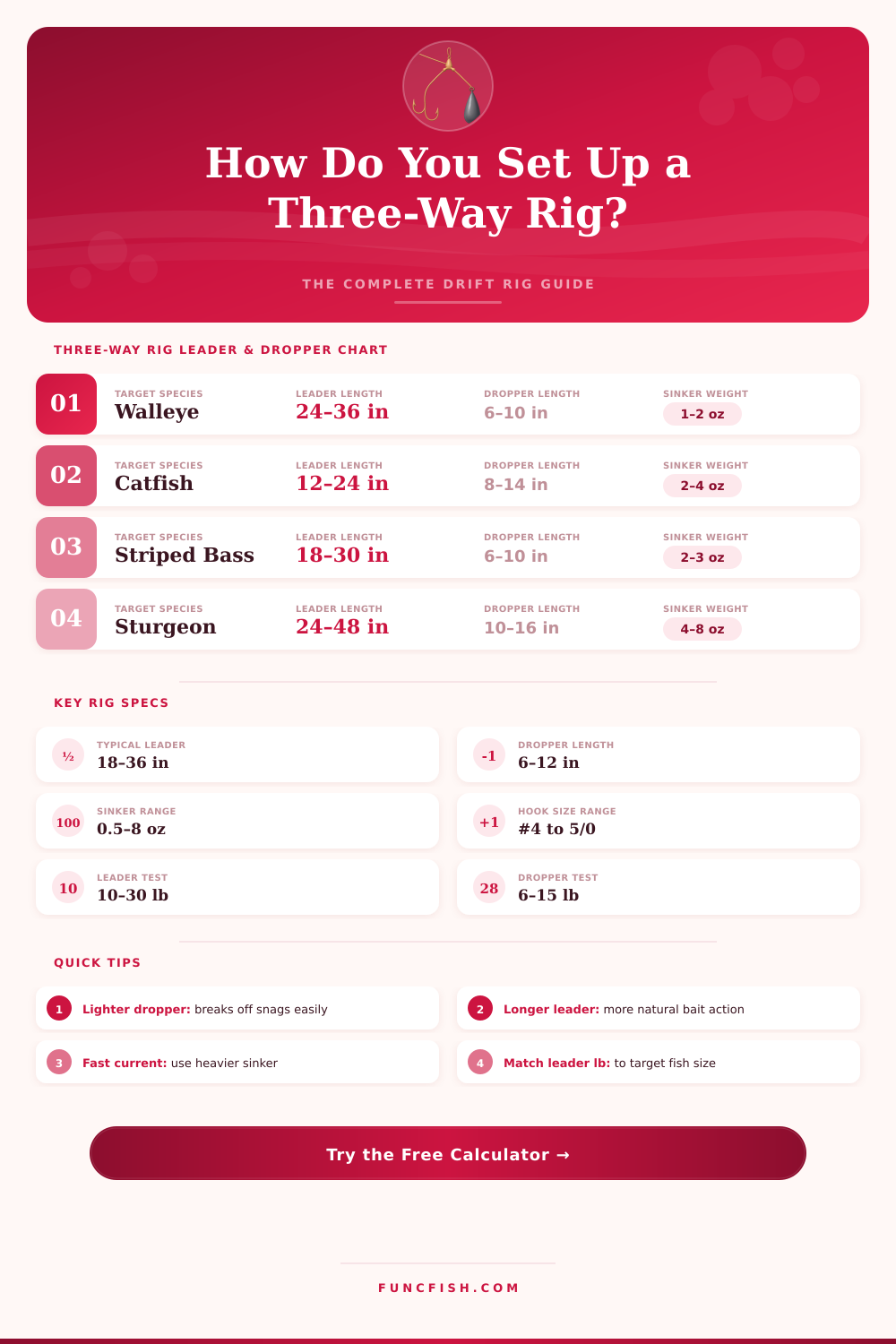
| Species | Typical Weight | Recommended Leader | Dropper Length | Sinker Weight | Hook Size | Main Line Test |
|---|---|---|---|---|---|---|
| Walleye | 2–10 lb (0.9–4.5 kg) | 24–36 in (61–91 cm) | 6–10 in (15–25 cm) | 1–2 oz (28–57 g) | #4 to #8 | 8–14 lb (3.6–6.4 kg) |
| Catfish (Channel) | 3–20 lb (1.4–9 kg) | 12–24 in (30–61 cm) | 8–14 in (20–36 cm) | 2–4 oz (57–113 g) | #1/0 to #3/0 | 15–25 lb (6.8–11 kg) |
| Striped Bass | 5–40 lb (2.3–18 kg) | 18–36 in (46–91 cm) | 6–12 in (15–30 cm) | 2–4 oz (57–113 g) | #1/0 to #3/0 | 20–30 lb (9–14 kg) |
| Trout (Rainbow) | 0.5–5 lb (0.2–2.3 kg) | 10–20 in (25–51 cm) | 4–8 in (10–20 cm) | 1/4–1 oz (7–28 g) | #8 to #14 | 4–10 lb (1.8–4.5 kg) |
| Sturgeon | 20–100+ lb (9–45+ kg) | 24–60 in (61–152 cm) | 10–18 in (25–46 cm) | 4–12 oz (113–340 g) | #4/0 to #6/0 | 40–80 lb (18–36 kg) |
| Largemouth Bass | 1–10 lb (0.5–4.5 kg) | 18–30 in (46–76 cm) | 6–10 in (15–25 cm) | 3/8–1.5 oz (11–43 g) | #1 to #2/0 | 10–20 lb (4.5–9 kg) |
| Salmon (Chinook) | 10–50 lb (4.5–23 kg) | 24–48 in (61–122 cm) | 8–14 in (20–36 cm) | 2–6 oz (57–170 g) | #1/0 to #4/0 | 25–40 lb (11–18 kg) |
| Panfish / Crappie | 0.25–2 lb (0.1–0.9 kg) | 8–14 in (20–36 cm) | 4–6 in (10–15 cm) | 1/8–1/4 oz (3.5–7 g) | #10 to #14 | 4–8 lb (1.8–3.6 kg) |
| Line Type | Stretch | Visibility | Abrasion Resist. | Sensitivity | Best Use | Leader Reduction |
|---|---|---|---|---|---|---|
| Monofilament | 25–30% | Moderate | Good | Low–Moderate | General drift, forgiving | Use same lb as main |
| Braided Line | <5% | High (visible) | Excellent | Very High | Deep water, strong current | Step down 2–4 lb |
| Fluorocarbon | 15–20% | Very Low (near invisible) | Very Good | High | Clear water, leader material | Match or step down 1 lb |
| Copolymer | 15–20% | Low | Good | Moderate–High | All-around, good sensitivity | Same as main |
| Current Type | Leader Length (in) | Leader Length (cm) | Dropper Length (in) | Dropper Length (cm) | Sinker Multiplier |
|---|---|---|---|---|---|
| Slack / Still | 18–30 | 46–76 | 5–8 | 13–20 | 0.5x base |
| Light (<1 mph) | 20–36 | 51–91 | 6–10 | 15–25 | 0.75x base |
| Moderate (1–3 mph) | 24–42 | 61–107 | 6–12 | 15–30 | 1.0x base |
| Strong (3–5 mph) | 18–30 | 46–76 | 5–8 | 13–20 | 1.5x base |
| Very Strong (>5 mph) | 12–24 | 30–61 | 4–7 | 10–18 | 2.0x base |
A three-way rig is a fishing setup that employ a three-way swivel to connect a fisher’s mainline to a sinker, dropper, and leader. The three-way rig allow a person to keep a sinker on the bottom while allowing the bait to remains above the bottom. If a sinker is set too lightly, it will drift with the current.
If the sinker is too heavy, the bait will sit too closely to the mud bottom. A person must find the perfect balance between the sinker, dropper, and leaders to make the three-way rig effective. A three-way swivel allows a person to split the fishing line into three separate lines.
How to Set Up a Three-Way Rig
The first portion of the line connect to the sinker to keep the bait anchored. The second portion is a short dropper that keep the sinker from continually hitting the bait. The third line portion is the leader that allows the bait to move natural in the water column.
If a person makes the dropper too long in areas with heavy water flow, the three-way rig can spin uncontrollably. If a person makes the dropper too short, the sinker will continually hit the bait as the fisher lifts the fishing rod. The length of the leader must also be adjusted according to the water clarity.
In clear water, fish can see the movement of the bait from further away. In murky water where visibility is less, fish rely on vibrations. The strength of the current in which a person intends to fish will impact how they set up their three-way rig.
For example, in areas with light current, a person can use a lighter sinker and provide a longer dropper to keep the bait clear of underwater obstruction. For strong tidal currents, the sinker should be heavier and the dropper more short to ensure that the sinker lands on the fishing bottom. The weight of the sinker should be heavy enough to overcome water drag and the resistance of the bottom.
The type of bottom into which a person is fishing will also impact the weight of the sinker. For instance, gravel bottoms require less sinker weight than rock ledge. The type of bottom into which a person is fishing will impact the components of the three-way rig.
For example, sandy bottoms is forgiving so a person can use longer leaders and lighter presentation of the bait. Under difficult bottoms like timber or shell beds, a person should use shorter leaders and no-roll sinkers to avoid getting snagged on underwater growth. A no-roll sinker is one that do not roll on the fishing bottom if it gets into a snag.
A person may even use pencil lead sinkers instead of egg-shaped sinkers. The lead of the pencil sinker will allow it to cut through the resistance of water more easy. The different types of fish require different setups for the three-way rig.
For example, catfish require heavy sinkers and stout hook because catfish eat scented bait in the channels. Steelhead require long leaders and require soft drift in the water because the steelhead live in clear water. Pike require wire leaders with wide hook gap because pike have sharp teeth that will otherwise cut standard fishing line.
A person must adapt the three-way rig according to the species of fish they are interested in catching because the fish mouth and habits will determine how the hook should be presented to entangle the fish. The type of fishing line a person choose impacts the three-way rig. For instance, a person can use braided line because it will provide a sharp feeling of the ocean floor.
However, they may want to use a fluorocarbon leader to remain stealthily in clear waters. If a person chooses monofilament line, they can land large fish because the line will stretch when the fish bites. However, monofilament line may continue to move in the tide.
In both cases, the size of the three-way swivel should match the strength of the fishing line and the weight of the sinkers. Many people makes mistakes when they set up their three-way rigs. For example, one of the most common mistake is that a person will use a heavier sinker if the bait gets tangled with the sinker.
Instead of using a heavier sinker, the person should lengthen the dropper. Another mistake is to use long leaders for bait in clear water. This do not work well when there is a strong current because the bait will drift away from the desired location.
In areas where the person will be fishing at night or in muddy water, the bait will rely on noise to find the fish instead of the visual bait movement. In this case, the leader should be shorter to allow for this. A person can improve a three-way rig by observing the load on the fishing rod.
If the sinker is too light, it will drag when the person lifts the fishing rod. If the sinker is too heavy, it will float when the person lifts the fishing rod. By testing the three-way rig in currents similar to the fishing spot where the person intend to fish, they can adjust the components of the three-way rig to ensure that the setup holds its position in the current.