
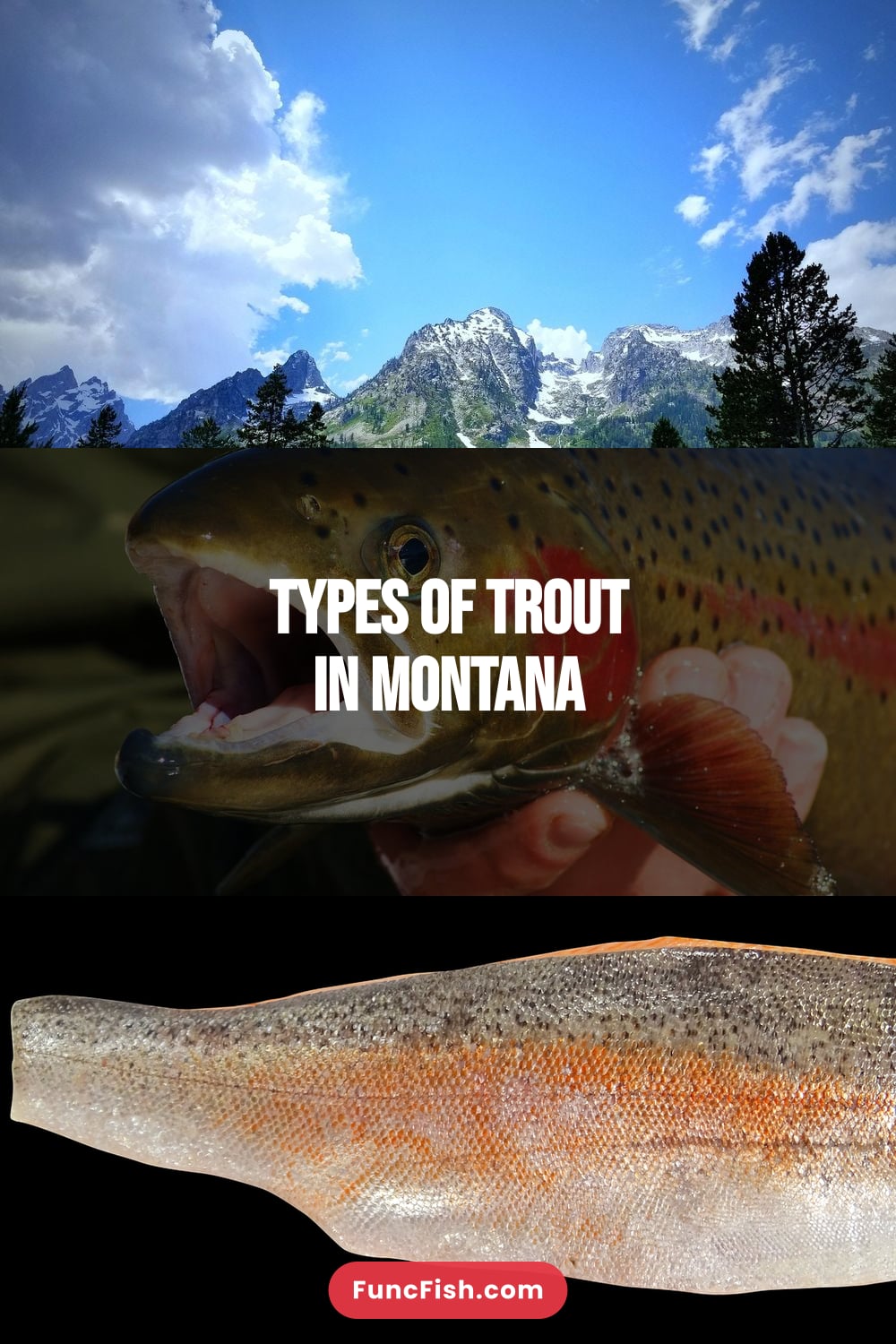
The rivers and lakes in Montana contain a special kind of magic for any person who enjoys cast a fishing line. The cold and clean water that can be found throughout the state is capable of supporting trout populations that most other place in the world are unable to achieve. Whether you are looking to fish for a few hour after the workday, or if you are planning to go on a fishing trip that will last for many days, it is important for any angler to be aware of the type of trout that can be found in the state of Montana.
Not only does knowing the type of trout that lives in these bodies of water inform the angler of how to fish for these trout, but it also impacts the kind of flies that anglers should tie to the fishing line, and even how the angler feels when the fish begins to hit there line. Each type of trout species has some differences from the other species, such as in the way in which each trout behaves, where each trout species live, and how each trout species fights with the angler when it is caught. It is important to take a quick tour of each of the main types of trout that can be found in Montana.
By taking this quick tour, anglers can make decisions regarding where to fish for trout, what kind of fishing tackle to bring, and how to handle the trout that the angler catches. The following is a list of each of the trout species that can be found in Montana. This list will begin with the trout species that the people of the state know best, and will end with the trout species that require anglers to invest extra effort in catching them.
Common Types of Trout Found in Montana
1. Rainbow Trout

The rainbow trout is the fish that has made the state of Montana famous. Rainbow trout have a silver hue to their bodies, but display a vivid pink stripe down the middle of their bodies. Additionally, rainbow trout is known for their tendency to jump out of the water when an angler hooks them.
Rainbow trout can be found throughout almost every river in Montana, from the Madison River to the Missouri River. Most rainbow trout are found in areas within these rivers that have a current and abundant insect for the trout to eat. Rainbow trout typically grow quick, and river stocking programs add them to most populated rivers in Montana, leading to the presence of these trout throughout the state.
Rainbow trout are attracted to flies that are cast into the water. Rainbow trout will often attack dry flies when the insects are hatching within the rivers, and will chase streamers into the water after the sun begins to set. Rainbow trout are picky about the flies that they are offered, however, especially if the trout populations within a river have become accustomed to the flies that anglers use.
To successfully catch rainbow trout, anglers can either attempt to match the hatch that occurs in the river where the trout live, or they can swing a woolly-bugger fly to get their attention from the trout. Rainbow trout provide anglers with an exciting fight between the angler and the fish, as the rainbow trout typically jump into the air once the fight begins.
2. Brown Trout
Brown trout species were introduced into Montana from Europe over one hundred years ago.
These trout species have a golden-brown hue to their bodies, with black and red spots distributed across their bodies. Brown trout typically grow to be larger than rainbow trout species within the same river. They are often found resting against the banks of the rivers, behind large boulders, or lying in the deep pools within the rivers, typically located downstream from the areas with the rocky areas in those rivers.
Brown trout begin to act more nocturnal as they age, leading anglers to catch these trout species at dusk or after the sun sets into the horizon by casting mouse patterns into the water. Brown trout are cautious about the items that anglers cast into the water. A large brown trout may inspect the fly for several seconds before either eating the item or swimming away from the angler.
The caution exhibited by these trout species is one of the reasons that anglers consider the catching of a twenty-inch brown trout to be an achievement. Anglers that are experienced with fishing for these trout species typically dont use dry flies when fishing for brown trout that are larger than sixteen inches in length because of the caution that these fish exhibit. An encounter with a heavy brown trout that swims downstream like a bulldog, and buries itself into the weeds where the angler catches it, is an experience that reward the angling efforts of the angler.
3. Cutthroat Trout
Cutthroat trout species have the most distinct appearance within Montana. Trout species have bright red markings within their mouths that give the fish its name. Their bodies are typically olive-gold in color, with black spots along their bodies.
Within Montana, there are two main subspecies of cutthroat trout. The west slope cutthroat trout live in the western rivers of Montana, while the Yellowstone cutthroat trout live in the eastern rivers of the state. These cutthroat trout species are rare in their ability to remain purebred due to the tendency of trout species to exhibit cross-breeding with rainbow trout species.
Still, there are numerous population of cutthroat trout species that live in the high mountain lakes and rivers of the state. Cutthroat trout species are much more forgiving of new anglers than brown trout. These trout species will eat elk hair caddis even if they have seen countless amount of those flies getting eaten by other trout.
This behavior makes cutthroat trout popular species to introduce to children into fishing, or to fish for quiet afternoons when trout populations sip at the insects that are airborne within the water. Most cutthroat trout species that live in streams grow to a maximum length of fourteen inches, while those that live in lakes can reach lengths of twenty inches. The willingness of cutthroat trout species to eat flies is the main reason to pursue these fish in fishing trips.
4. Brook Trout
Brook trout species are some of the most beautiful fish in Montana. Their dark backs display light markings that look like worms, their sides have red and blue spots that have a ring of gold around each spot, and their lower fins have bright white edges. Brook trout species are native to the eastern United States.
Today, however, they are common in the smaller rivers and lakes of Montana, typically those that remain below sixty degree in temperature. Brook trout prefer cooler and smaller streams than species like rainbow or brown trout, and are typically located in areas that require anglers to hike or to drive for long distances on Forest Service roads. Brook trout are aggressive fish, and especially so in the early stages of their fishing season.
They will charge at insects that anglers introduce into the water, whether they are tiny nymphs or bushy dry flies. Brook trout grow to be small in size, between six and twelve inches in length, but are numerous and live in remote locations. Anglers that catch a dozen brook trout during a single day in locations like the Beartooths range in the state feel good about their fishing efforts for the day.
However, brook trout species often overpopulate certain location, and exhibit stunted growth when overpopulated. Because of this, many fisheries managers encourage anglers to catch a few brook trout for dinner. Lake trout, which are also referred to as mackinaw, are the largest species of trout that live in Montana.
They live in the deepest and largest lakes in the state, such as Flathead Lake, Lake Koocanusa, and others. Trout species that live in these lakes have gray and silver bodies with pale spots, and a deeply forked tail. These fish can weigh more than twenty pounds, and can reach weights of over forty pounds.
Because lake trout live near the bottom of these deep lakes, where the depths range between forty and one hundred feet, anglers will not be successful in attempting to catch them with a five-weight fishing rod and a dry fly. Instead, anglers can successfully catch lake trout by using downriggers or heavy spoons to troll the areas where lake trout live. Additionally, the fight between the angler and these fish is different from other trout species; it is a slow fight.
There is no long jump of the fish into the air when these trout species are caught, and that fight is the reason that some anglers drive across the state to fish for these giant trout. Rather than the experience of fishing for smaller trout in streams and rivers, anglers trade their experiences with a few trout species for the chance to land a giant lake trout that barely fit in an angler’s cooler. When these giant fish break the surface of the water beside the angler’s boat, it is a memory that remains with anglers for the rest of their lives.
5. Bull Trout
Bull trout live in the rivers in which they are still found. Bull trout are native to Montana, and can grow to lengths of thirty inches or more, and can weigh over ten pounds. Bull trout species have olive-green bodies dotted with cream colored spots, and have a massive square jaw.
Bull trout are a threatened species to the state of Montana, and therefore, catch and release fishing is required of all anglers wherever bull trout live. Bull trout species require the coldest water in the state, and require that they are permitted to travel between different sections of the rivers where they live and spawn. Anglers typically hook bull trout when they are fishing for other fish species; bull trout are an opportunistic species that will eat a streamer that is used for catching other kinds of trout.
Bull trout species fight with raw power rather than speed when anglers fight them. Additionally, bull trout push forward in their path like a heavy weight boxer. Anglers must be careful to revive these fish gently once they are released back into their river home.
Bull trout species are the most difficult for anglers to target with their fishing efforts, but offer the best fishing experience when they happen to cross paths with an angler. Whatever species of trout that an angler targets within the state of Montana, the water itself contains the real magic. Each species of trout evolved to live within a specific niche within Montana’s waterways.
Each species of trout possesses its own unique behaviors and habitat requirement. When anglers understand these niches and requirements of each trout species, the good fishing days become great days. Rainbow trout may be lurking in the fast moving riffles in the rivers, brown trout species may be hiding under the banks in the rivers, and cutthroat trout may be in the high meadow streams.
Anglers should pay close attention to the water temperature, the kind of insects that live in the water, and the time of day that they are fishing for trout. These aspects of fishing for trout are the aspects that separate those that catch a few trout species from those that fully understand the reason for which the trout species are living within the water of Montana. Next time you find yourself with your gear in place, remember that every trout has a story about the land.
Read there story. The river will usually respond with a tug on your line, and it will feel exactly right.