
Walleye fishing require a great deal of patience and timing when fishing for walleye. The primary factor that determines how walleye behave is the temperature of the water. Many peoples know that walleye prefer cooler water.
However, you need to understand how the water temperature determine the depth at which walleye live. The depth at which walleye are found isnt random but dependent on the temperature of the water in which walleye live. By understanding these two factors, you can find the fish instead of making guesses about where they are located.
How Water Temperature Changes Where Walleye Live
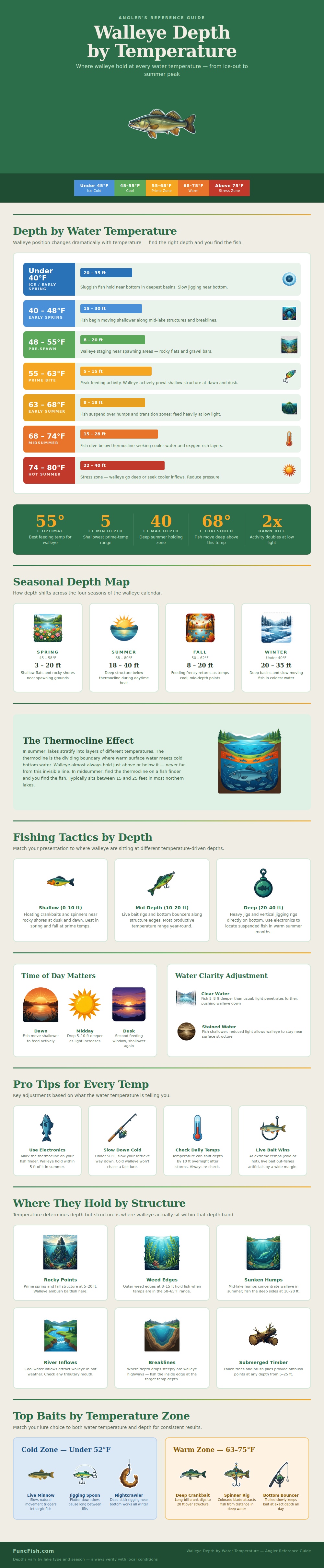
The relationship between the water temperature and the depth at which walleye are found cycle through a few different stages that determine the reason that walleye seem to move from one location to the next. In the coldest water in the lake, walleye seek out the deepest water. This is because the deeper water maintains a more stable temperature for walleye and allows them to stay in this depth in very cold water and not exhibit many feeding behavior.
As the temperature of the water starts to warm up, walleye begin to move to areas in the lake that people refer to as breaklines. As the water continues to warm, walleye begin to exhibit more movement from their home ranges. However, once the water reaches the temperature that walleye begin to feed aggressive in these temperatures, shallow area in the lakes become productive fishing spots for walleye that are trying to feed on the fish they target for food.
You dont have to memorize the exact depth at which walleye will live in different water temperature. However, you should of understand that every degree increase in water temperature provide walleye with more option for finding their food. In the colder temperatures in which the water climates live, walleye are only found in the deepest portion of the lake.
Between 55 degrees and 60 degrees, walleye can be found in the shallower flats and rocky area within the lake. Each season has its water temperature and walleye adjust their depth accordingly to one that reflect the temperature of the season in which they are living. Summer brings about the most change in the depth at which walleye live.
Summer temperatures can lead to the water stratifying in the lake. Stratification occur when the surface water temperature reaches 65 degrees and above. The stratification of water create a layer of cool water just beneath the warm surface water.
Walleye live in this layer because of the perfect water temperature and the amount of oxygen that is present in this layer. Walleye do not move to the deeper waters of the lakes due to the time of year but due to the need for the deeper water to satisfy the biological need of the species. Fall occur when the water temperature begins to drop.
Walleye begin to feed more aggressive during this time of year. They also begin to move toward the mid-depth area in the lake. You can fish for walleye in the fall due to their movement towards the depth in which baitfish live.
Winter brings the walleye to the deep waters of the lakes where they reside for the season. Their movement in winter can be minimal in their home ranges. However, the importance of temperature to determine the depth at which walleye can be fished for is maintained throughout the year.
Walleye can also be affected by the clarity of the water and the amount of light that pass through the water. In lakes with clear water, walleye will be found deeper in the lake then what the temperature chart would suggest. In lakes with murky water or stained water with various tannins, walleye will live in shallower depths because the murky water will provide cover for walleye when they are exhibiting their natural behavior.
Additionally, low light period will move walleye to the shallower waters as compared to bright light during the middle of the day. Before you launch your boat into the water, make sure to check the surface temperature of the lake. Storms can cause the water to warm up overnight.
In this situation, walleye will have moved five to ten feet into shallower water. If there was a cold front that passed over the area, the water will have dropped in temperature, and the walleye will have moved into deeper waters in search of warmer water. Therefore, you should check the temperature of the water each day before you go into the lake to fish for walleye because the movement of walleye with respect to location can happen quite quick.
By knowing the temperature of the water in which you are going to fish, you can narrow your search for walleye. Once you have found the depth at which walleye live in the current temperature, you can search for structure and find the best way to present your bait to the walleye. By using this method, you will save yourself time fishing area that dont contain any walleye.
The cycle of walleye movement can be used to your advantage to determine where to start looking for walleye in any given season.