Braid to Leader Knot Ratio Calculator
Compare braid, leader, knot choice, diameter mismatch, and drag so the connection is matched to your fish, cover, and technique.
📌Scenario presets
⚙Line and knot setup
Knot ratio analysis
Full breakdown
🧵Knot and line reference grid
FG Knot
Alberto
Double Uni
PR Knot
📋Ratio and knot tables
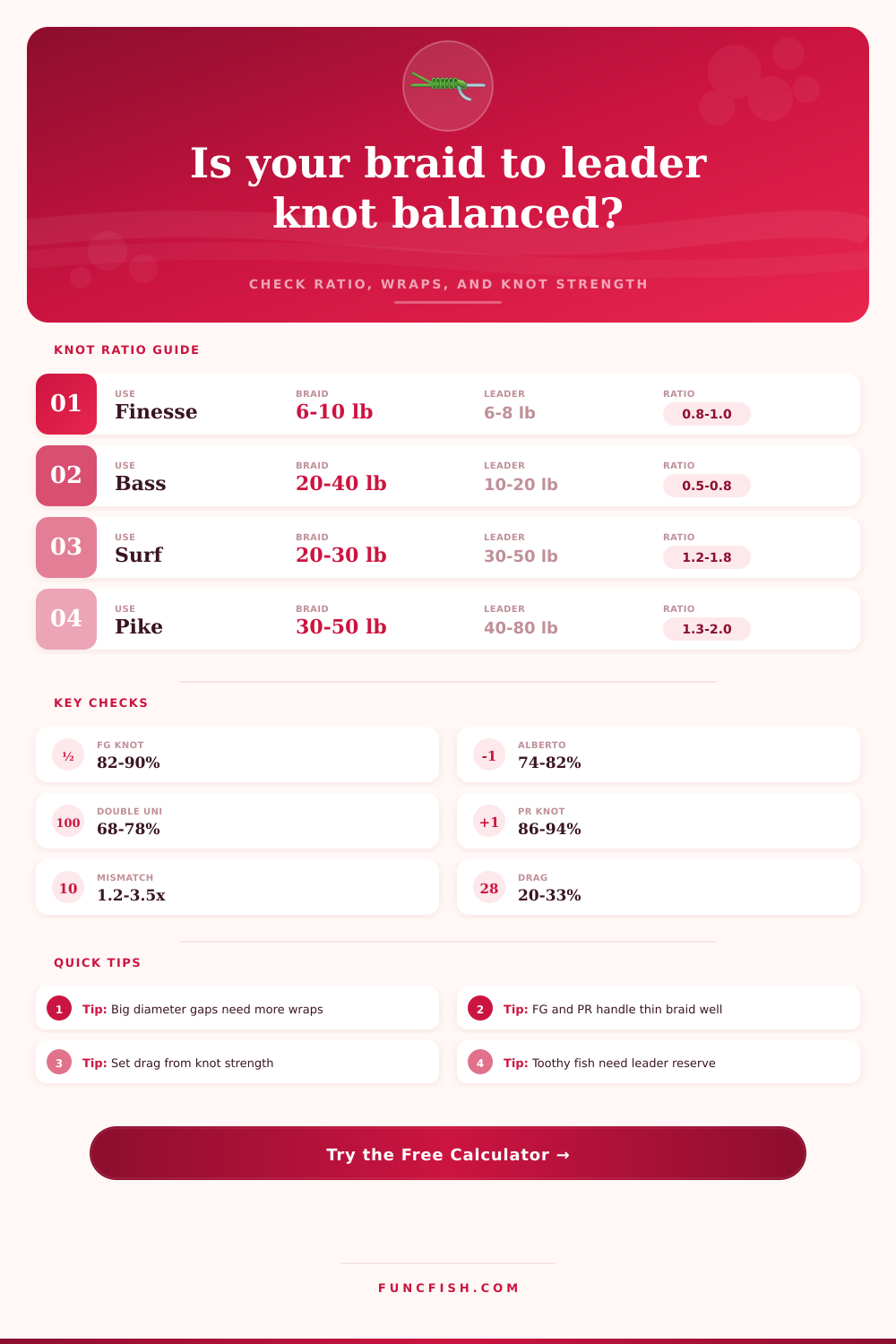
| Fishing setup | Common braid | Common leader | Good ratio | Primary reason |
|---|---|---|---|---|
| Panfish ultralight | 4-8 lb / 1.8-3.6 kg | 3-6 lb / 1.4-2.7 kg | 0.6-0.9:1 | Light bites and stealth |
| Trout clear stream | 6-10 lb / 2.7-4.5 kg | 4-8 lb / 1.8-3.6 kg | 0.6-0.9:1 | Small leader diameter |
| Bass finesse | 10-20 lb / 4.5-9.1 kg | 6-12 lb / 2.7-5.4 kg | 0.45-0.8:1 | Casting and bite feel |
| Bass cover | 30-50 lb / 13.6-22.7 kg | 15-25 lb / 6.8-11.3 kg | 0.45-0.7:1 | Leader abrasion reserve |
| Inshore shell | 10-20 lb / 4.5-9.1 kg | 20-30 lb / 9.1-13.6 kg | 1.2-2.0:1 | Shell, dock, and gill plates |
| Surf shock leader | 20-40 lb / 9.1-18.1 kg | 40-80 lb / 18.1-36.3 kg | 1.5-2.5:1 | Cast load and abrasion |
| Knot | Base efficiency | Diameter mismatch | Best leader | Notes |
|---|---|---|---|---|
| FG knot | 86% | 1.3-4.0x | Mono / fluoro | Excellent guide clearance if tied cleanly |
| Alberto knot | 78% | 1.1-3.2x | Mono / fluoro | Fast field knot with good grip |
| Double uni | 73% | 0.8-2.2x | Similar diameter | Simple but bulky through guides |
| PR bobbin knot | 90% | 1.5-5.0x | Heavy mono | Strong heavy-tackle connection |
| SC knot | 81% | 1.2-3.8x | Mono / fluoro | Slim casting knot with moderate learning curve |
| Triple surgeon | 68% | 0.7-1.8x | Similar diameter | Useful when speed matters more than profile |
| Line class | Braid diameter | Fluoro diameter | Typical use | Ratio note |
|---|---|---|---|---|
| 6 lb / 2.7 kg | 0.005 in / 0.13 mm | 0.009 in / 0.23 mm | Trout, panfish | Thin braid grips well with extra wraps |
| 10 lb / 4.5 kg | 0.007 in / 0.18 mm | 0.011 in / 0.28 mm | Finesse bass | FG or Alberto works well |
| 20 lb / 9.1 kg | 0.009 in / 0.23 mm | 0.016 in / 0.41 mm | Inshore, walleye | Watch guide clearance |
| 40 lb / 18.1 kg | 0.013 in / 0.33 mm | 0.024 in / 0.61 mm | Cover, surf | Leader can exceed braid for abrasion |
| 65 lb / 29.5 kg | 0.016 in / 0.41 mm | 0.032 in / 0.81 mm | Heavy cover | PR or FG keeps bulk down |
💡Practical checks
Tip: Set drag from the estimated knot strength, not from the printed braid rating. The connection is usually the practical weak link.
Tip: A strong leader can still be a poor match if its diameter is too large for the knot, guides, and casting style.
When a person encounters a connection failure between the braid and the leader, the issue are typicaly caused by the connection between the braid and the leader itself. The ratio of braid to leader, the diameters of the two sections at the knot, and the drag that a person can place on that connection before the knot itself fail affects the connection between the braid and the leader. The relationship between the braid and the leader is, therefore, a critical factor in the success of the fishing setup.
Braid is a thin yet strong material. In contrast, the leader material, such as fluorocarbon or monofilament, are a thicker and stiffer material. The knot that connect these two sections must grip both the braid and the leader, and must remain small enough to pass through the fishing guides.
How to Join Braid and Leader
Using too little leader will result in a lack of abrasion protection for the fishing line. Using too much leader will create a bulky connection that will suffer in relation to the casting of the line. The connection calculator allow a person to enter several different variable regarding the braid and leader sections, and returns values that indicate whether the connection between the two sections is realistic.
The type of species that you target, as well as the fishing technique, will change the requirement for the braid and leader sections of the line. For instance, for finesse bass fishing, braided line will have a heavierer test than the leader portion of the fishing line. However, inshore fishing near shells or fish posts will require the leader to have a heavier test than the braided portion of the fishing line.
The connection calculator requires these variables, as the different species and fishing techniques will alter the acceptable requirements for the braid and leader portions of the fishing line. Furthermore, while a certain ratio of braid to leader may appear correct according to the line specifications, that ratio may not be correct in area with high cover or species with strong teeth. The type of knot that the angler utilizes with the connection between the braid and the leader will affect the strength of that connection.
For instance, FG knot are best used with a moderate difference in diameter between braid and leader. PR knots can handle greater differences in diameter between the braid and the leader, but require more time to tie the knot. Double uni knot are quick to tie, but lose efficiency when the braid and leader have significantly different diameters.
The angler that are using the connection calculator can adjust the efficiency of the knot in the connection calculator according to the type of knot that is to be utilized, the braid carrier count, and the fishing skill level. A knot tied at 78% efficiency will have less strength than a knot tied at 90% efficiency. If the difference in diameter between the braid and the leader is significant, the knot may slip or become bulky.
Very thin braid may require extra wrap around the leader to allow the knot to gain adequate grip on the leader, and very thick leader sections may overpower a knot that is designed for lines with closer diameters. The connection calculator indicates the recommended mismatch in diameter between the braid and the leader, as well as the suggested number of wrap for the connection between the braid and leader. While the calculation of the strength between the braid and the leader is important, the same amount of effort should of been invested in properly tie the connection between the two sections of fishing line.
Finally, testing the strength of the connection between the braid and the leader should also be performed prior to go fishing with this line setup. Through repeated fishing effort, the angler will learn which combination of braid and leader are effective in the anglers fishing locations. For these reasons, the connection calculator help to remove guesswork in the fishing process; instead of relying upon an angler’s experience or there hopes for success with a certain line setup, their decisions can be based upon experience and the data returned from the connection calculator.