
You’ll offer up something different then what the trout expected and guess what? They won’t take it. That’s frustrating enough if you’re trying something new, but it is maddening when you’ve been fishing a particular run for years.
Most times, however, the right bead size are directly related to current conditions. And it’s less about luck and more about getting it right. Trout is visual creatures and they have certain expectations regarding their prey. Violate them with the wrong offering and they will shut down immediately.
How to Choose the Right Bead and Hook
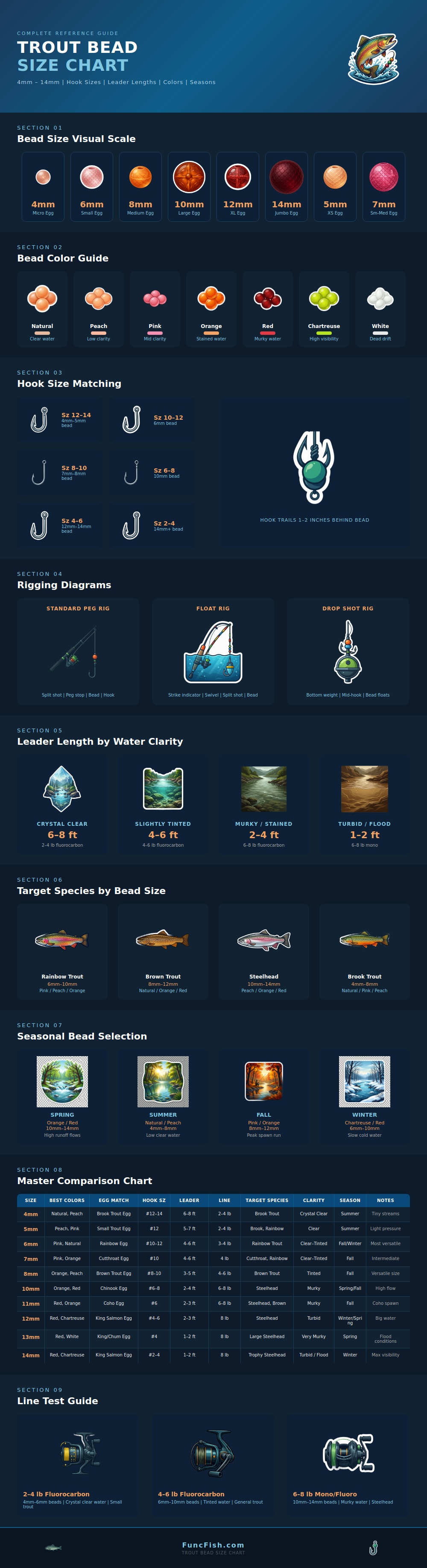
Remember, water will distort everything, so much so that visual scale is more important then most anglers understand. What seems like a small bead in the palm of your hand could be mistaken for a boulder in dirty spring runoff. As shown on chart, we link diameter with hook size and visibility. So if the water is crystal clear, like in low summer flows, you have to go smaller. Big beads in close quarters scare skittish fish before they even know what it are.
And you’re right, in clear conditions like this, fine diameter fluorocarbon leaders coupled with smaller beads let the whole rig float freely with no odd resistance or shadow to spook any curious fish. Instead of looking like something that doesn’t belong here, it just looks like one egg being washed along by current.
The same rules apply with regard to color choice, only now there’s more than one variable: how much light can penetrate the water. Clearer water makes colors perform better and look more naturaly. That includes tan or peach shades that will match the riverbed bottom. But in dirty water, where rain events stain the water, all that subtlety dissapears. You go to something bolder such as red or orange that still provides definition. Always contrast against the background. A bright-colored bead against a dark-gravel river bottom? Yes. What about against a light-sand bottom? Maybe not; maybe something darker instead. So while you’re selecting your favorite color, you’re also solving an environment-created visibility puzzle.
This also has a lot more to do with the hook size than you’d think. A lot of folks is guilty of using huge hooks on tiny beads; it throws the balance out of whack and causes the rig to swim unnaturally. For a good set, the bead should lay snug against the fish’s lip and the hook gape should match diameter of the bead. Presentation is what matter for penetration. You want a smaller hook for a smaller bead to get good penetration. When you lift your rod the bead will slide to the side and expose bare metal if the hook are too big. Proper bead placement happens when it triggers the bite reflex. Keeping the sizes balanced allow the bead to stay put.
The one thing I’d like to discuss specifically is leader length. This determines your proximity to the fish before they detect you. Long leaders (six or eight feet of tippet) are necessary for clear water as it allows the trout time to ease up and inspect. The fish feel comfortabley getting close enough to check it out.
Shorten that up considerably in tough conditions where visibility is reduced. Sometimes that’s just down to two feet, which looks aggressive but the fact is that the fish never see the line leading back to you. It’s now a dead drift in their face and will save a day on a quick rise of water following a storm.
Flows change with the season, and so does the angle of sunlight, causing adjustments to happen automatically. Big baits, big offerings is required in spring runs that are fast and dirty. Everything slows way down in summer and subtle techniques comes into play with tiny, accurate presentations. Fall turns it around again with bigger beads for aggressive feeding fish going for their spawn on natural eggs. And winter has you dialing up brightness to penetrate cold water that’s often stained and very slow. Knowing the cycles prepares your kit before you get on the water.”
Fishing with beads is all about systematically reading the river. The chart gives us the words; we must write the story with each cast.
First, look around, see the clarity of the water and the way light reflects on the surface. Pick the right-sized bead. Next, match the hook so it balances. Shorten or lengthen the leader depending on how shy the fish seem to be. Stop guessing; begin matching conditions, and those head shaking refusals becomes abrupt takes. You’ll find the river tells you its secrets; one catch at a time.”