
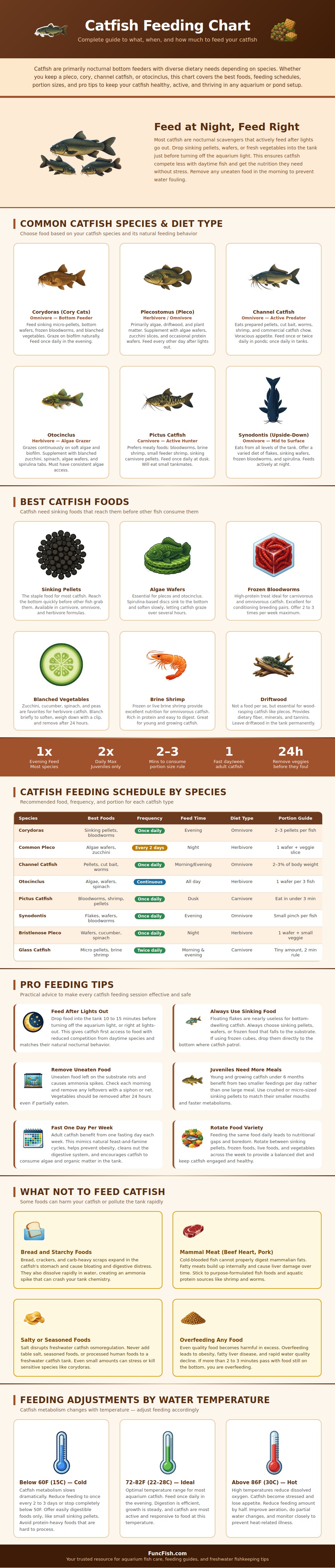
Turning out the aquarium light marks beginning of your catfish’s active time, signaling that it is time to feed them. As other surface dwelling fish retire for the evening, most catfish are nocturnal predators that will goes hunting. By feeding them during daylight hours in an illuminated tank, you’re not paying attention to their biological nature. When you feed them at night, you eliminate any potential for dominant mid-level fish snatching sinking foods as it descends toward substrate. Follow your catfish’s nocturnal nature and let them enjoy level playing field for dinner.
Not all catfish are alike. Different types of species does eat differently. Newbies tend to lump all bottom dwelling fish into one category: scavenger. It isn’t so. Some catfish is herbivorous, some are carnivorous, some are omnivorous. This graphic lays it out in black and white. Do you think you can feed the same food to a Pictus catfish that you’d feed a pleco? If you don’t differentiate between two, one will be fat while the other dies of starvation.
How to Feed Your Catfish Correctly
Sinking pellets is always a good starting point. They can varies from plant-based to high-protein depending on needs of your fish, such as muscle building versus fiber. Nutritional monotony leads to slow decline.
The whole system’s metabolism (and therefore appetite) is controlled by water temperature. That means you should of feed more frequently and/or at higher rates during warmer periods. Cold water slows down digestion, so any food stay in your fish’s stomach longer, increasing the risk of undigested waste rotting. When the temp drops below 60°F (chart), cut back on how often you feed. Skip a meal rather than risk exposing your fish to ammonia due to undigested waste.
Warmer temperatures makes them hungrier and more active. However, it also decreases dissolved oxygen. Finding a balance is tricky. You must provide enough food to support high energy output without adding extra organic waste that robs oxygen. This process involve both chemical and biological factors.
Don’t feed anything from human diets and don’t feed bad quality food. The latter is by far most common error made by hobbyists. Human food will dirty the water more quicky than nearly everything else. It will expand in the digestive tract and break down very fast. Mammal meat (such as pork or beef heart) are problematic because fish do not handle its fats well, which can eventualy result in liver conditions. Finally, salt will stress the kidneys of fresh water animals and interfere with their ability to regulate body fluids. (Salt doesn’t help; it harms.) Although these may be convenient and affordable options, they’ll only end up making your fish sick, not healthier. You want sustained healthy fish, not short-term solutions that ultimatey does damage.
To maintain a healthy digestive system, vary your diet with blanched veggies, frozen bloodworms, and sinking wafers. Rotating the food source not only mimics their natural environment in which resources is variable but also prevents any potential nutrient deficiency. Although seemingly counterproductive to growth, a weekly fasting day empty the gut and reduces waste output. It allows biological filtration system some time off from continually breaking down waste products. When adding such routine into feeding schedule, you train your catfish to efficiently eat instead of constantly grazing on leftover crumbs.
Observation and patience matter more than fancy equipment when keeping catfish successfully. Observe their behavior; know when they’re active. Know which foods they like. Know when they’re not hungry. These aren’t things that chart can tell you. You learn them by watching. Feed to match seasonal changes and your water parameters (the chart is a framework only). Know what your fish need. Don’t guess anymore. Feed them sinking food at night and let them follow their own body clock, you’ll know exactly what to do so they thrive.