
That medium action rod you purchased…remember? It said it was going to give you the best of both worlds. It has enough tip to sense the most picky bite and enough backbone to land a fish of decent size.
That’s what you thought you got when you picked up your medium action rod off the wall. It is versatile for walleye, bass, panfish and light salt water fishing. If there was one rod that could do everything right out of the box it would be this one.
Reality isn’t always as clean. Rods are tools. Most anglers view them as unbreakable weapons, something that doesn’t need service and checking from one year to the next.
It’s a gradual accumulation of little things gone wrong, and before you know it your great rod is now a liability. You didn’t notice a crack in the ferrule until you went to make a nice casting swing in the parking lot, but when that three pounder takes off running for cover, watch out! Knowing about this stuff sooner rather then later keeps the confidence up and the wallet intact.
I’ve broken down the most common issues with medium action rods. I start with the easy stuff and move toward the structural failures we all experience at some point and just have to accept and buy new gear. Knowing what these points of failure are will help you maintain your gear for a longer time and get more miles out of it while fishing.
Top Common Problems With Medium Action Rods
1. Loose Guides
Perhaps the most common culprit is loose guides which take the brunt of every cast and retrieve. Repeated contact between guides and other components on boats, along with vibrations, will eventually cause the metal insert found within guide frames to loosen. A loose guide will create a point of friction which will quickly damage your fishing line beyond usual abrasions.
Listen for abnormal sounds when retrieving lures, look for increased line tangling and feel around your guides gently with your finger tips to see if there is any give indicating a loose guide. If you have screw-in guides that become loose, they’re easy to tighten back up. Epoxy-set guides are typicaly best left to a pro to ensure no further damage is done to the rod blank.
2. Misaligned Guides
A telltale sign of a deeper problem than just wear-and-tear is a frayed or cut-off line around the tip. It’s understandable for the line to degrade over time, but excessive nicks around the first or second guide point indicate that your guides aren’t aligned properly. When your guides is slightly out of line, the line won’t go down the middle, it will be rubbing along the side of frame constantly.
That abrasion tears up even good fluorocarbon in no time. Look the rod over carefully from several different angles; does it look like there’s a straight path from the butt guide to the tip? A little adjustment can solve some problems, but if they’re really off you may have other issues with the internal structure of the blank that ruin its strength on a permanent level.
3. Peeling Paint or Finish
A cosmetic complaint that turns practical fast is peeling paint or finish around the reel seat. If you’ve kept your rod in extreme hot or cold temps, it’s possible to put stress on the epoxy resin that protects the graphite or carbon fiber blank. This can cause it to crack.
When the finish cracks moisture can get behind it and into the composite layers of the rod. Moisture break down the bond of the fibers. This reduces how sensitive the rod feels and makes it much more likely to snap when you set the hook into a big load.
You can spot potential water intrusion early by looking for small white scratches or bubbles near the handle area. Using some epoxy sealant or rod wrap glue will keep it from getting worse. However, once it gets cracked too bad, it is almost always game over for the rods long term.
4. Slipping Reel Seat
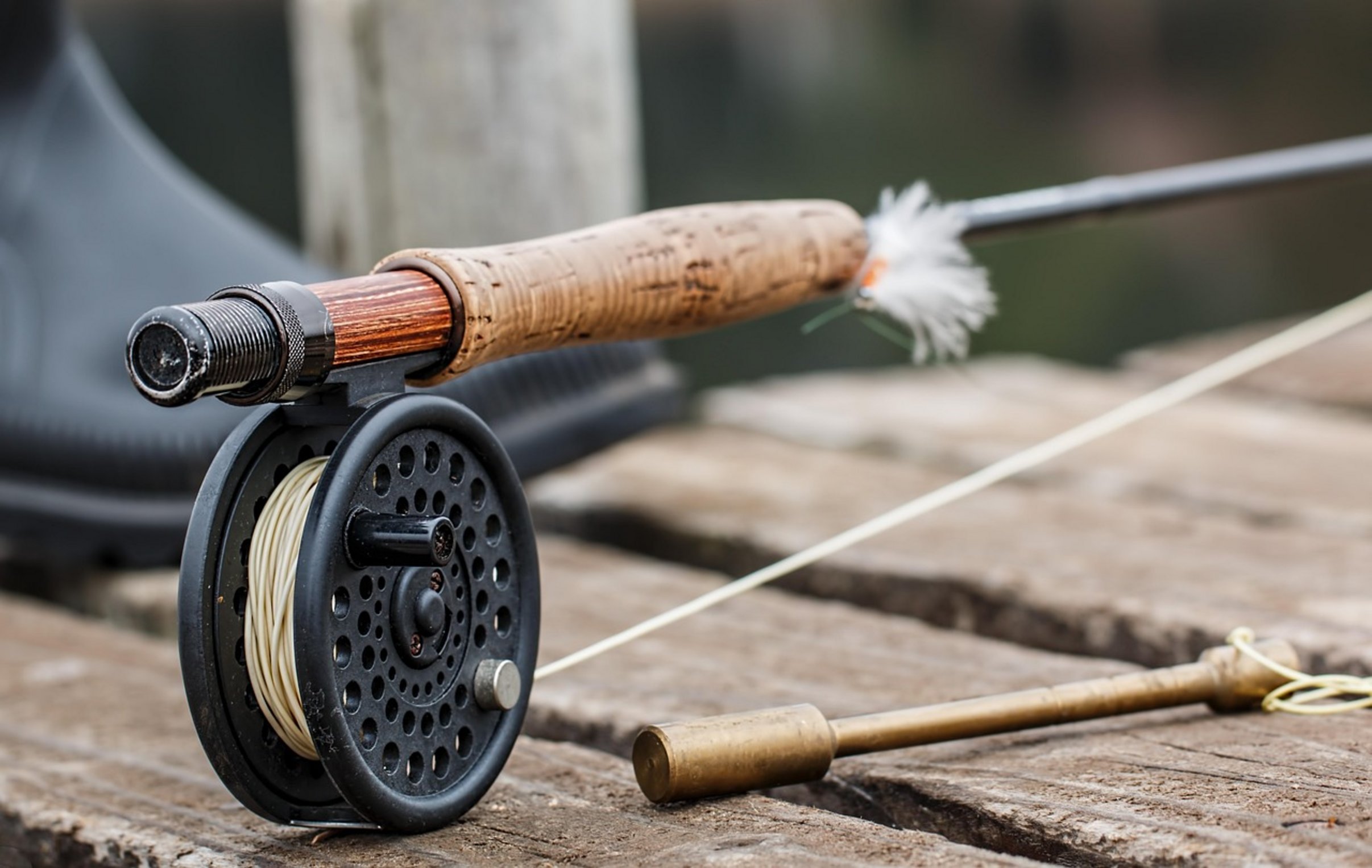
The reel seat is slipping. The reel seat slipping is an annoyance that turns dangerous when you are fighting a fish. Often, medium action rods are paired with moderate size reels, creating a lot of pressure on the reel locking mechanism.
When this happen, the reel seat knob doesn’t hold securely enough. The reel spins freely during your cast or, even worse, slips back on you as you put pressure on a fish. The culprit is typicaly dried out lubrication in plastic reel seats and/or worn threads on aluminum reel seats.
Applying fresh marine grade grease will normally tighten the thread tension, and you can clean them up with some rubbing alcohol on a Q-tip. But if the screw mechanism inside is stripped, then you’ll need to replace the entire reel seat assembly.
5. Broken Rod Spine or Ferrule
Rod Spine, This one will kill you.
It is a break in the actual rod spine itself. Power transfers through these threaded or slip-fit joints in two-piece rods to reach the business end of your setup. Any hairline crack begins as just that, a hairline.
With every cast, it gets larger. Finally, the two pieces pull apart, leaving you with nothing more than a broken rod suitable only for very light duty use. Examine the joint closely in good lighting, looking for any irregularity in the surface texture or thread alignment.
If a ferrule cracks, the rod can no longer be repaired to be safe enough for fighting fish or casting consistently. Gluing them back together almost never returns the strength to the rod to withstand fishing pressure. No one wants their rod to break when they’re out on the water.
6. Internal Core Shift
While you can visually inspect a rod for things like loose guides or cracked ferrules, there’s also something called internal core shift which is harder to detect. Blank construction uses fibers wrapped around an internal core. When a rod experience side loads (stepping on it, leaning it up against a rock), it can cause those layers to delaminate internally.
On the outside, everything looks good, but you notice it being less responsive and mushier than before. This weakens how the composite material holds together and makes power transfer ineffective. Until it snaps under load, there’s no visual clue.
Taking preventative measures includes never standing your rods up as a support structure and always keeping them in protective tubes when not in use.
7. Grip Failure
Grip failure happens when the foam in the grips separates from the blank underneath them. This is often seen where cork or EVA grips have endured years of exposure to the elements (UV rays, saltwater, and perspiration).
Over time this can cause the glue to weaken and the handle will begin turning on its own axis. This makes casting feel odd and makes it harder to feel vibrations through the handle. Sometimes you’ll find the grip has moved position on the rod relative to the reel seat mid-day on the second day of fishing.
You can re-glue the grip section back into place with strong epoxy, but it is quite a mess. Most times, just removing and replacing the whole grip section allow for a clean fix and returns you to comfortable handling and control.
8. Tip Ring Failure
While larger structural failures are significant, tip ring failure might seem minor compared to them, but it kills casting accuracy immediately.
Long casts put an incredible amount of pressure on the last guide on the rod. When the foot of this guide pull from its epoxy base, the tip gets bent out of shape. That can completely change the action profile and make a medium feel like an ultra light or vice versa.
Your distance will be shorter and you’ll see a lot of erratic flight paths but won’t know what’s going on. To fix the tip ring, the old epoxy needs to be removed, the area cleaned, and then it must be rebuilt with care. This is a delicate task that calls for a patient hand.
Not fixing it will cause other guides to wear faster as they drag improperly against the blank.