Fillet Yield by Fish Weight Calculator
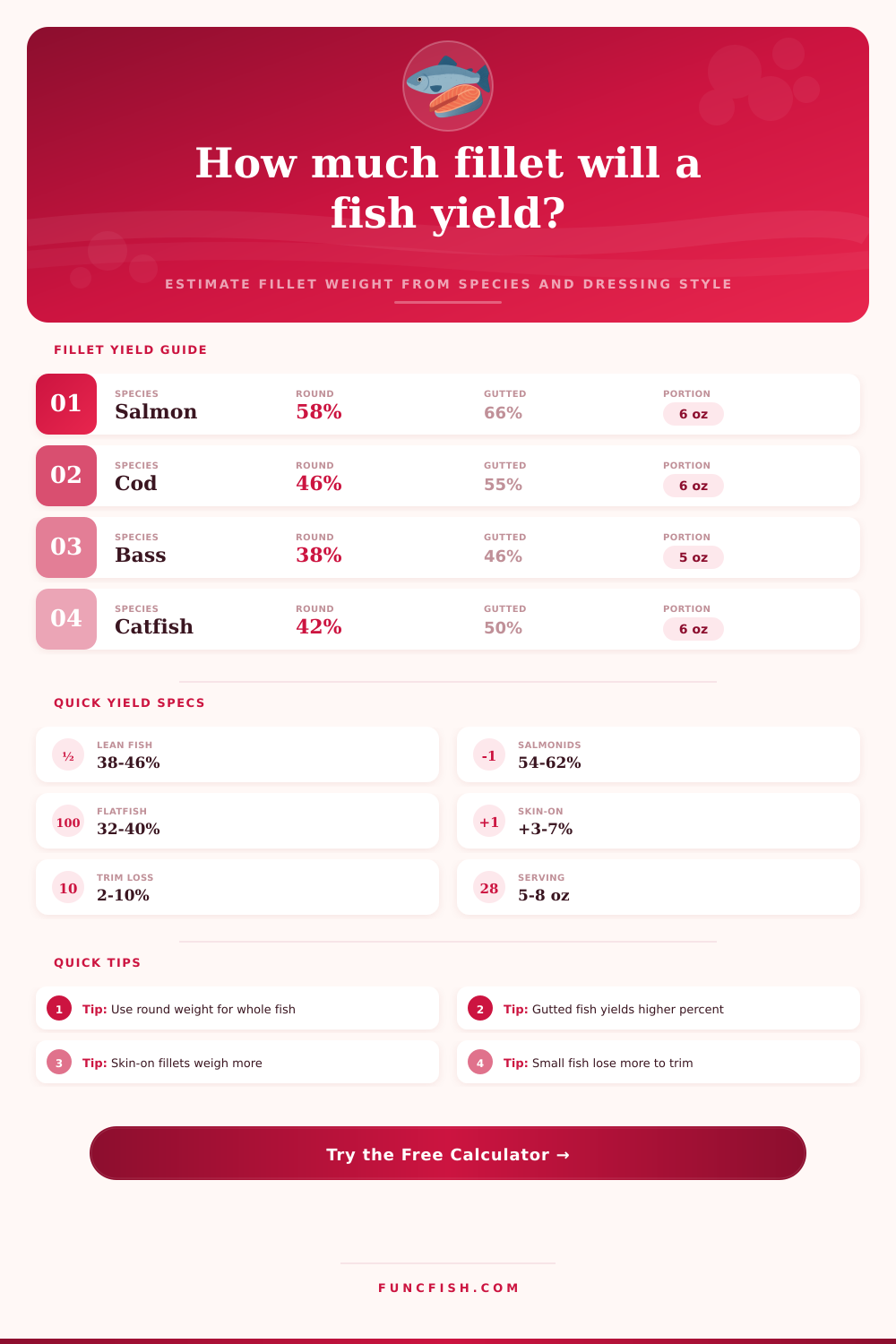
Estimate finished fillet weight, yield percent, serving count, and trim loss from fish weight, count, species, dressing style, size class, skin choice, bone style, and trim level.
📌Fillet yield presets
⚙Fish weight and yield settings
Enter the average weight for one fish in the selected starting condition.
Reserve factor lowers the serving count so the estimate stays conservative when fish sizes vary.
Estimated fillet yield
Calculation breakdown
📊Species and fillet style comparison grid
Salmonids
Whitefish
Warmwater
Flatfish
📋Species reference yields
| Species profile | Round-to-fillet baseline | Gutted start estimate | Common finished style | Typical portion |
|---|---|---|---|---|
| Salmon, Atlantic or king | 56% to 60% | 64% to 69% | Skin-on side or skinless side | 6 to 8 oz / 170 to 227 g |
| Trout, rainbow or brown | 48% to 54% | 58% to 64% | Butterfly or paired fillets | 5 to 7 oz / 142 to 198 g |
| Cod, haddock, or pollock | 44% to 49% | 53% to 58% | Skinless fillet or loin trim | 6 to 8 oz / 170 to 227 g |
| Snapper or grouper | 38% to 45% | 46% to 53% | Skin-on or skinless table fillet | 5 to 7 oz / 142 to 198 g |
| Catfish, channel or blue | 40% to 45% | 48% to 53% | Skinless boneless fillet | 6 to 8 oz / 170 to 227 g |
| Walleye or sauger | 36% to 42% | 44% to 50% | Skinless boneless fillet | 5 to 7 oz / 142 to 198 g |
| Tuna, loin-cut species | 56% to 64% | 62% to 70% | Loin or block trim | 6 to 8 oz / 170 to 227 g |
| Halibut or large flatfish | 38% to 45% | 43% to 50% | Four large skinless fillets | 6 to 8 oz / 170 to 227 g |
⚖Dressing and trim adjustment table
| Starting condition | How calculator treats weight | Yield effect | Best used when |
|---|---|---|---|
| Round whole fish | Uses full body weight as entered | Baseline species yield | Fish is weighed whole before dressing |
| Gutted whole fish | Removes viscera loss from divisor | About +7 to +10 percentage points | Scale weight is after gutting |
| Headed and gutted | Head and viscera are already removed | About +16 to +22 points | Market H&G fish are being portioned |
| Dressed pan-ready | Weight already excludes head and organs | Highest fillet percentage | Small fish are sold or stored dressed |
| Steaked or sectioned | Uses cut sections before boneless trim | Moderate boneless recovery | Large fish sections become fillets or loins |
🍴Portion planning table
| Serving target | Ounces per person | Grams per person | Use case |
|---|---|---|---|
| Light tasting portion | 4 oz | 113 g | Small plates, mixed seafood, or lunch portions |
| Standard fillet portion | 5 to 6 oz | 142 to 170 g | Most table fish estimates |
| Large dinner portion | 7 to 8 oz | 198 to 227 g | Hearty meals or thick salmon/tuna cuts |
| Batch reserve portion | 6 oz plus 5% | 170 g plus 5% | Mixed fish sizes or uneven fillet thickness |
🧮Yield factor reference
| Adjustment | Typical range | Calculator effect | Result impact |
|---|---|---|---|
| Skin-on fillets | +3% to +7% | Adds style weight | Higher finished fillet weight |
| Skinless fillets | -2% to -5% | Removes skin weight | Cleaner but lighter output |
| Premium loin trim | -8% to -15% | Removes belly and tail sections | Fewer portions, thicker cuts |
| Small fish size | -2% to -6% | Raises bone-to-meat ratio | Lower recovery per pound |
| Skilled recovery | +2% to +5% | Improves close-to-frame cuts | More usable fillet weight |
💡Calculator notes
Weight input note: Match the scale weight to the selected starting condition. A gutted fish and a round fish with the same scale weight do not produce the same yield percentage.
Portion planning note: Use the reserve factor when fish sizes are mixed, fillet thickness varies, or you need whole portions instead of fractional serving math.
So now you’ve got three big ones in the cooler and you know it’s not all bone, scale, guts and water. You’ll never eat any of that stuff anyway, but knowing what you actualy have helps avoid an unsatisfying feast. Estimating how much fish you catch turns to calculating how much you can keep. For an accurate result, it helps if you know where you’re starting from.
Most guys puts the fish on the scale right after catching ‘em. That’s round weight, including all the internal organs plus some slimy coating. Estimate based off these figures and you’re going to overestimate what you get. The calculator does that math for you, just pick whether the fish is dressed, gutted, or round, and it accounts for the varying waste levels at each stage. A round fish has the greatest volume of non-fish matter so you recover the least meat.
How to Get More Meat From Your Fish
The amount of meat will also depend on species. Big fillet to body ratio makes salmon and other salmonids like trout very efficient packages. Whitefish like snapper and cod has bulkier bodies with more room for bones, which makes them harder to work with. Before you put faith in a percentage, get used to how your fish is put together. A 45% yield is common on bass but that’d be low on salmon. It’s a reflection on the structure of the animal, not your skill level.
Another factor in size is choice of trim. Many home cooks like having their fish with skin intact; it helps keep them together when cooking as well as adding some weight. Because of this, you get less meat because you lose those parts when you cut under the skin. A clean bite can be achieved by further trimming out any dark bloodlines or pin bones, but each snip brings the poundage down one last time.
Does presentation trump quantity? If so then go ahead and get cleaning, because messy fillets will suffice for a casual backyard grill. A nice dinner party benefits from an extra few minutes of cleanup time but pleases guests. Skill level is a hidden variable in most yield discussions. An experienced angler can gets tight to the rib cage while an amateur will cut off the meat along with it on the bone.
Since practice changes your results, the tool adjusts for accuracy here. Expect lower numbers if you’re a new filletter. The more you hesitate, the thicker the wasted cut out around the frame becomes. That’s just the cost of learning, not a failing of technique. Those few ounces will add up over time to another meal or two out of the same haul.
These all combine into an action plan with portion size as the key. Typical restaurant servings is about 6-ounces. Home cooks tend toward larger portions if they want something filling. Add a reserve factor to the calculation (to account for any mistakes trimming/uneven sizes of fish) so that even if a big fish contains fewer ounces than expected (poor flesh condition/presence of parasites), you don’t wind up short. Better to have a bit left over for lunch tomorrow then to serve thin, disappointing portions.
Show respect for the resource by focusing on fillet yield. The fish we’re catching is valuable and perishable, so taking care to process them properly shows respect for our investment in catching them. To manage expectations and waste, you must understand what to expect. From a community fish fry to a few fillets in your small freezer chest, understanding how to adjust yields helps ensure that every ounce of meat that can be used makes it onto the dinner table.
You’ll never have more meat out of a fish than the fish has in it. But with some tweaks here and there, you can use every ounce of fish that’s usable. You should of kept the goal simple. Minimize the waste, maximize the meal, and enjoy the results of a well-planned harvest.