
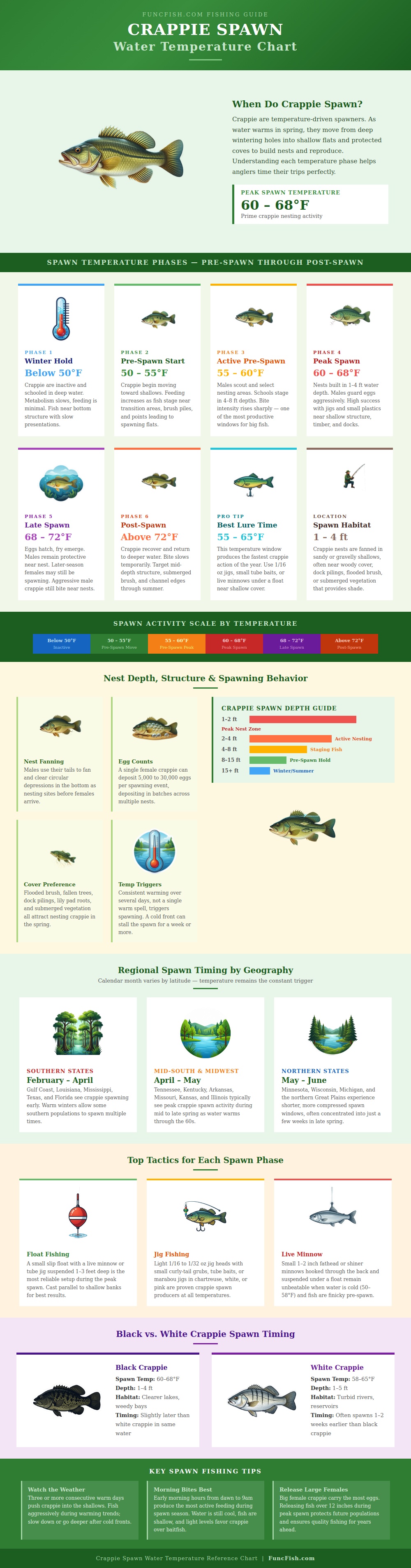
Every spring, there’s something about that water under your boat that changes. The wind might be blowing different, the ice is off but what realy catches your attention is on your electronics. That number on the temperature gauge creeps up to a point where they no longer stay down deep; now, they heading shallow and they’re headed somewhere. That movement is what makes or breaks a good day on the water.
Don’t just think of water temperature as a number; think of it as the main trigger for their urge to spawn. If you know what heat does to ’em, then you don’t have to guess when you go fishing; you can be purposeful. These phases is easy to see on graph (above) and also illustrate why change in activity occurs with warmer water.
How Water Temperature Changes Crappie Fishing
Crappie’s metabolism slows down before the water reaches the fifty-degree mark, making them generaly inactive. They’re going to have no interest in eating until their body tells them otherwise. So basically, you probably would of not been able to talk them into biting at this point. As soon as the water exceeds that threshold, however, fish starts moving towards transition areas such as points and brush piles and activity picks up.
This period of pre-spawning movement can go unnoticed by anglers waiting for prime conditions. But you’ll find some aggressive bites when they do. The males begins scouting out potential nest locations while the females continues to hang a bit deeper feeding up. In this small window, you’ll catch your bigger fish and enjoy some action free from craziness that follows once the spawn gets started.
When the temperature stabilizes in the sixties, real action happen. To attract females, males digs out circular depressions in sand bottom or around submerged timber to make a nest. Anglers get a window of opportunity during this prime spawning period if they’re willing to fish shallow cover. Look to flooded brush, lily pads, and docks that offer some shade for protection. Crappie will be lurking nearby, they’re fierce about guarding their eggs.
Because the male is territorial, an angler can finds easy fish by presenting his bait slowly and allowing it to fall naturaly. Here’s where accuracy trumps quantity. Live minnows under a float and small jigs is your best bets. Keep your casts parallel to shoreline so you stay on target while avoiding spooking these sensitive critters.
Crappie are a little different in how they do this process, black and white crappie have their preference. Black crappie like the clear lakes and more of the weed filled bays while white crappie is more likely to be found up the muddy reservoirs and rivers. They can coincide pretty well, but knowing what they likes will help you determine which lake to hit.
Weather is another regional factor that impacts time frame. In the southern parts of the country, they may starts spawning in February, while in the northern states it may not happen until June. The trigger is still the same, temperature, but everywhere has its own variation based off geography. When a strong cold front hits, it will stop all of them dead in their tracks and make them slide out further until things settle down again.
You just have to be patient when weather goes sour, but watching for warming trends realy pays off soon. The key is more about what the conditions are versus getting locked in on dates. A couple days of sun will bring shallow flats over 60 degrees, and that makes it a go day no matter what month it is.
The best time is early in the morning, before the new sun has had enough time to reach deep into the water and push the wary fish back out. Also, letting those big females go helps keep the season going since you’re releasing quality egg layers for next year’s class. When you master the rhythm, you’ll stop fishing “lucky” with each early spring and be consistently dialed-in. Pay attention to the weather, follow the heat, and the fish will signal their readiness.