
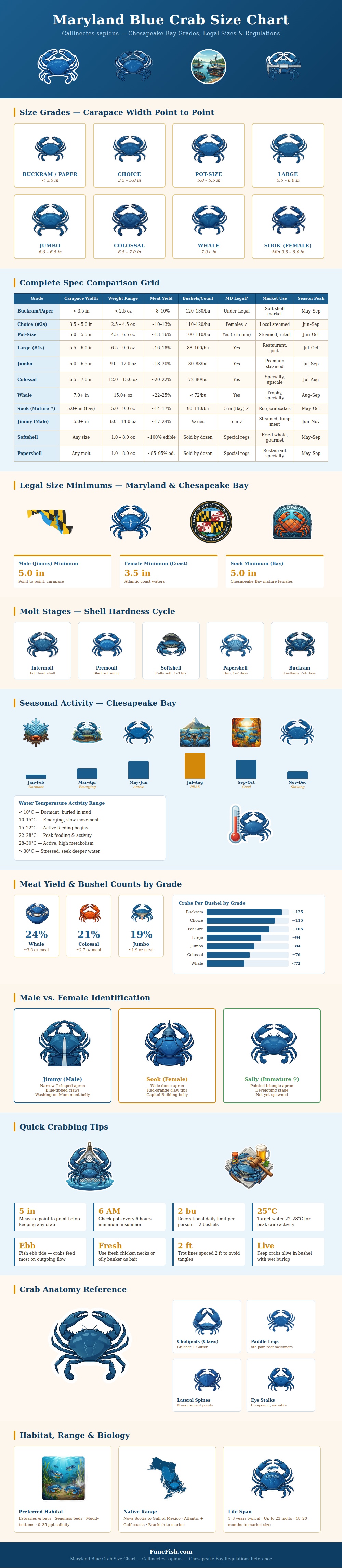
How big is a 5-inch crab? How about a 6-inch one? The size grade breakdown in infographic makes it easy to see just how much meat you’ll be getting from every class of blue crab. This chart will help you understand how much meat you’re going to get from any given crab size, and turn your shell-hunting adventure into a full-fledged meal-planning mission. Now you won’t leave the beach with a bushel of shells that have no meat inside. The chart helps you understand how carapace width relates to meat content so you never end up disappointed.
But novices tend to gloss right past the details of how fine the classification system is. For instance, Paper or Buckrams; the tiniest marketable crabs, is frequently dismissed as too small for eating. But these tiny specimens are actualy mostly males and are prime candidates for soft-shell crab production. These crabs shed their shells, and when the new one is soft enough, it’s a foodie’s delight, consumed entire. The chart show that even when their shells are hard, these small crabs don’t provide much meat once cooked. From May-September, they’re the rockstars of the soft-shell season. If you skip them, you miss out on another experience altogether.
How to Choose the Right Crab Size
So if you’re looking for the more traditional steamed crab experience, check out Large and Pot-Size grades. While it may seem cool to have a Jumbo or even Colossal crab sitting up in your trap, the data makes clear that meat percentage doesn’t increase at the same rate than the width of the crab. Sure, maybe a Whale is bigger than a Jumbo but when it comes down to actualy cracking all those giant claws, that extra amount of meat inside isn’t really worth the added work. The sweet spot for most seasoned crabbers are the Large and Jumbo categories: enough meat from the claws to keep you busy while also maintaining a manageable shell thickness.
If you’re interested in keeping what you catch, you will want to be sure that it falls within some pretty clear guidelines imposed by law. Male crabs must measure at least 5-inches wide between their tips from front to back (known as the carapace). Because there are two types of female crabs, mature ‘Sooks’ with egg sacs and immature ‘Sallys’, there is separate guidelines. The chart defines this difference. It also highlights why immature females should never be kept, as keeping them reduces the overall population ability to reproduce in the future. Not taking is not optional. It is necessary for sustaining the Chesapeake Bay ecological system. Measure first, then retain.
Size matters, but so does timing. Crabs are ectothermic, meaning their activity level depend on water temperatures. They’re most active when the water reaches that twenty-two to twenty-eight degree range during the height of summer months. This is when they really start chowing down and filling up your pots. Conversely, they dig into the mud and go dormant during the cold winter months, making them practically impossible to catch. You won’t have much luck trying to crab in January; the crabs simply aren’t active.
In the end, following the rules and respecting the animal is key. Knowing what size and what type of crab you want (soft-shell for that sweet treat versus Jumbo claws for their hearty lump meat) make all the difference in the world. Make sure to check your traps often, re-bait as needed, and measure each and every crab before keeping one. This means the crab population can grow back, so there is no shortage of crabs coming from the bay.