
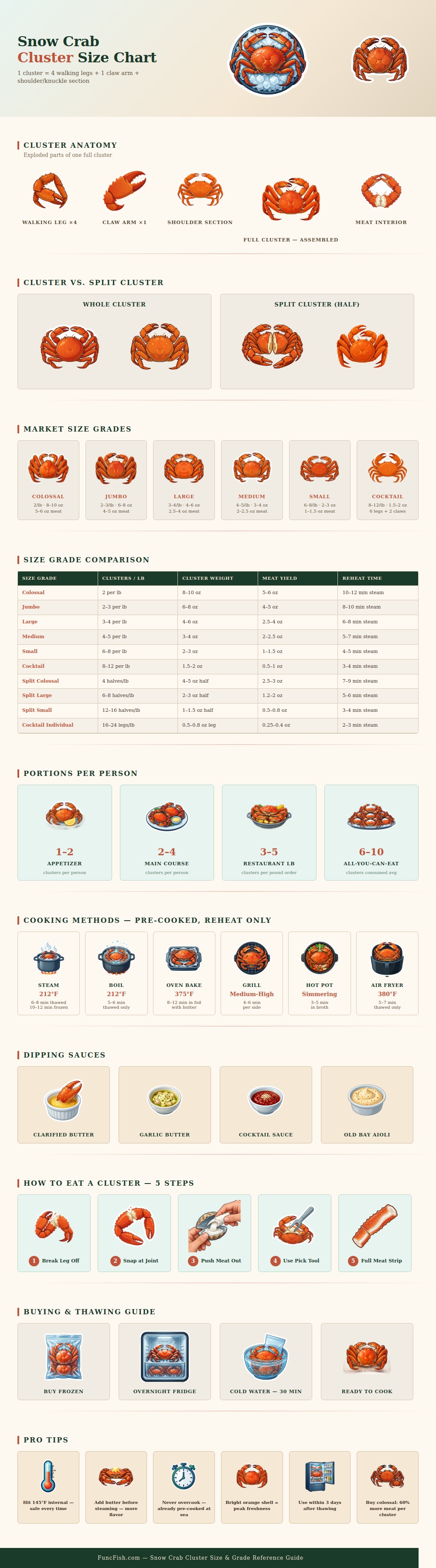
Without knowing about snow crab leg grading, buying them can be a crapshoot. That bag that seemed big may not have much meat in it but a lot of shell. By learning about grading, you get a standardized measurement on quality which means you’ll always know what you’re getting. Otherwise each purchase will require a guess on how many you’re going to end up with.
The anatomy of a snow crab cluster are straightforward: One shoulder joint, one claw arm, and four walking legs. Knowing this anatomy will help you cook it better. Refer to the diagram above for an idea of how all those components come together in either a whole cluster or a split half (hence why some parts appears large and other parts look small).
How to Buy, Cook, and Eat Snow Crab
Now you know a huge grade means there’s much more meat in each unit. That alters your approach to planning out your dish. Forget leg-counting; focus on yield per pound.
Size up: Convenience vs. Cost Efficiency When it comes to deciding which size to buy, consider cost efficiency and convenience. If you’re hosting, and your guests expect an impressive presentation but don’t want to do any tedious work, go big. Colossal or jumbo-grade clusters has a higher meat-to-shell ratio. For casual get-togethers in which speed is valued more than appearance, smaller is just as fine (small or cocktail clusters). The visual guide explains why each grade serve its own unique purpose, so no single one are the best for every situation.
Because of their pre-cooked state coming out of vessel at sea, there is a need for restraint in cooking these crustaceans. Too many home cooks steam or boil too long, afraid the product is not fully cooked. This results in the meat shrinking up inside shell, becoming rubbery and wasting some pretty good ingredients.
All that’s really needed is for the meat to be heated through to an internal temperature of 145 degrees Fahrenheit. Steam cooking is typically most forgiving, gently heating the clusters but not waterlogging the flesh. Butter can be added right into steamer pot, infusing flavor while the heat makes its way into shells.
There’s also letting them thaw, again, patiently. It wouldn’t of been good if there are clumps that aren’t completely warmed up. Putting the bag on the counter will result in uneven heating. Best bet: remove the frozen clusters from the bag and place them in the fridge overnight, to thaw slowly and evenly. If you’re in a hurry but don’t mind waiting an hour or so rather than having poor quality product, put the sealed bag of shells into some cold water.
When thawed, the shells will have a bright-orange color; that indicates they’ve been handled properaly along the way.
When planning to feed a crowd, it can get dicey when considering portions. Plan on 2-4 clusters per person for your main dish, depending on what else is being served. Plan on one to two cluster per person for appetizers, as there will be other dishes. These rough guidelines found in the reference guide should help you avoid both starvation and excessive food waste. It is both practical and generous.
Snow crab doesn’t require a lot of fancy tricks to enjoy. It’s all about the care for the product. Select a grade appropriate to the event, defrost correctly, and gently warm meat through. Snap the leg off at the joint, pull out the cylinder of snow-white meat, and dunk into garlic aioli or clarified butter. Don’t smother its sweet flavor with large amounts of sauce; let natural goodness speak for itself. Good snow crab is shown by that vivid orange shell, so honor the promise by leaving the cooking uncomplicated. Keep it basic, believe in the process, and enjoy the outcome.