
You’ll see it on seafood counters: Jumbo. Prime. Whale. Those labels denote market grades for size.
It’s about when the crab was harvested. These are Atlantic blue crabs, freshly plucked from their hard outer shells before new ones harden. If you buy them too soon, you get one who’s still got her tail tucked in the old skin; if you wait to long, what you get isn’t worth the money, because it will be sandy to your teeth.
How to Pick and Cook Soft-Shell Crabs
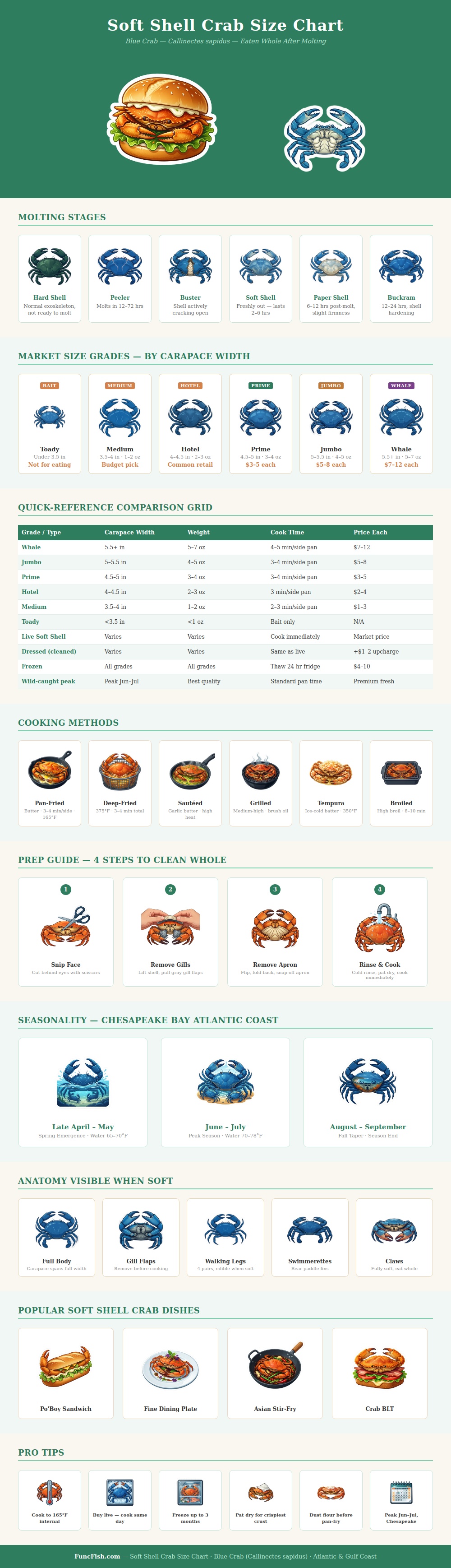
Crabs is sized according to their carapace (shell) width; this is called the “grading” system. Whale is the largest, while Bait are the smallest. Home chef typically lean toward the Prime and Jumbo sizes as those will contain plenty of meat, yet not too much shell. Though bigger crabs take a little more care when being cooked, you’ll have more delicious body meat in your end product. The chart break down what each size means for price, prep time, etc.
Knowing about the size of the crabs at the end isn’t the whole story; knowing how they get there… About the molt, is equally critical. When crabs moves from one hard shell to another, they go through several stages. There is the peeler, the buster (when the old shell has cracked), and then the soft-shell. The soft-shell stage last just a few hours before it turns firm again and becomes known in the trade as buckram or paper shells. Because biology controls the pace of hardening, the window of opportunity for tenderness is brief.
Live soft-shell crabs should of been purchased quickly; they’re perishable. At home preparation is easy but requires attention to detail. Before cooking, remove apron near the tail and the gills, as both areas hold water that will make the dish bitter or soggy. Once cleaned, gently pat the crab dry on a towel. Moisture on the exterior means that the crab won’t crisp in the pan; it’ll steam.
Flour is optional, but provides a texture barrier between the tender meat and the hot oil. Because part of the cooking process occurs when the crab molts, it doesn’t take long after that to cook thorough. The idea is to brown the surface of the crab to add some flavor while heating it all the way through. Deep frying often hides its natural sweetness, but pan-frying it with butter or sauteing it in garlic oil bring out the best of the crab’s sweet flavor. It needs to be heated until the inside reach 165 degrees Fahrenheit, though looking for a golden outside and a still-white, yet firm interior is helpful as well. Because these are delicate creatures, many make the mistake of overcooking them as if they were hard-shell legs, but they really only need a minute or two under the heat.
The other factor is that there’s a big difference based off season. In regions such as the Chesapeake Bay, the best months are June through July, around 70- to 78-degree water temperature. Crabs will be most plentiful then, with soft, thin shells. If you buy them out of season, you’ll either get old, tough-shelled crabs or ones that have been shipped across the country. You want your crab to be fresh which makes for the best texture.
Soft-shell crab needs care, and that starts with knowing your ingredient. You must handle it carefully, cook it fast, and take advantage of the small window when the whole critter can be enjoyed. Whether on a plate with some garlic butter or as a sandwich filling, the goal is always to achieve tenderness before it’s too late. Knowing the grading system help you pick the finest crabs from the crate.