
So let’s say you have a planted tank full of lush mosses and you’d like some other life in there too. Algae-eating shrimp on leaves sounds good! After all, they’re small and they eat algae.
But here comes the trap for new keepers. All freshwater shrimp are not the same. There are two primary genera, and buying the wrong one for your water chemistry will be the quickest way to lose a colony within a month. If you know the difference between these two main genera, this scenario can easily be prevented.
How to Choose the Right Shrimp for Your Tank
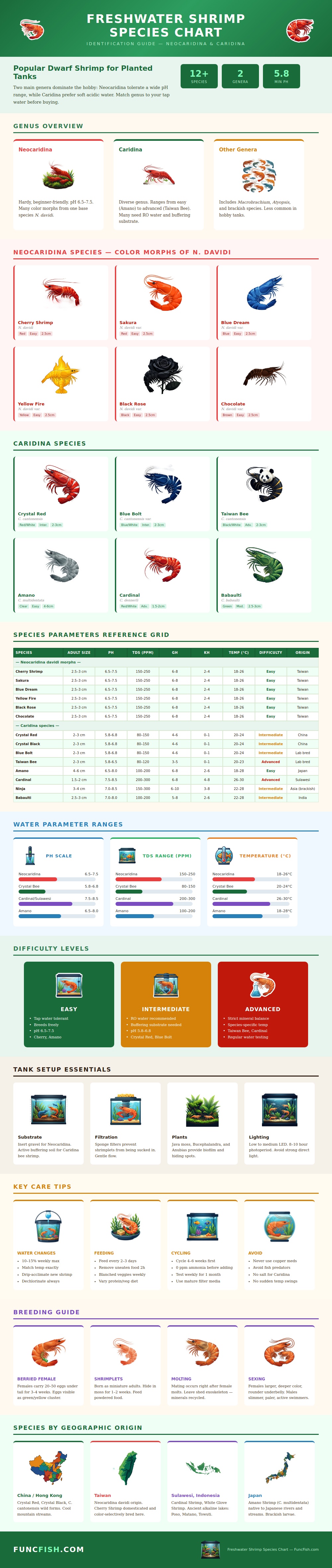
First is the separation of Caridina and Neocaridina on the chart. This is the main question you should of asked yourself before purchasing some shrimp. If you buy Neos, you’re getting a tough generalist that comes from locations such as Taiwan, which have varying water conditions. Because Neos are accustomed to variable water conditions they are very tolerant of “normal” tap water. As far as parameters go, they does well in a pretty wide pH range (about 6.5… 7.5). Moderately hard water is fine for them too. These shrimps can be used if your tap water is slightly alkaline/more basic. The benefit is that no parameter tweaking is necessary. Get soft colors like Sakuras or brighter colors such as Cherries. It also makes aquascaping easy.
The Caridina species tend to be specialist species. Most originate in Japan or China from soft, acidic blackwater streams. Because of their nature they need low mineral water that is also quite stable. A lot of these shrimps is in the range of a 5.8-6.8 pH, which means you have to mix RO water with special buffers. You can’t just throw a Crystal Red shrimp in an aquarium containing average tap water. It will get stressed by all those minerals. Adults may die earlier and their offspring won’t keep the same color.
A common mistake people make is assuming any dwarf shrimp will live in any bowl, sorry but that’s incorrect. These guidelines don’t apply across the board. For example, the Amano shrimp is also a Caridina (genus), but its roots are based off brackish river mouths and thus it tolerates harder water. Likewise, the Cardinal shrimp are from Sulawesi and require opposite conditions (alkaline) different than their Crystal cousins.
This is where knowing what genus matches your tap water makes sense, see the ranges for each on the same graph in the infographic. Knowing where you start helps inform which animal to select. Beyond picking out the proper species, maintenance is all about keeping things stable and avoiding the need to tweak chemicals.
Sudden change bothers shrimp. A slow drip of fresh water is no problem. Shock of chlorine or even just cold tap water, that’s a no-no for them. Always dechlorinate water. Match the water temperature. Patience will win out during acclimation; it’s often the key to success or failure.
Intuition applies here too with feeding. Shrimp graze, they like biofilm that forms on rocks & glass. They also requires supplements to their diet. Regular foods such as blended vegetables, shrimp specific pellets, and occasional protein food all promote regular molting. Molting is what allows them to mate and grow. If a shrimp fails to shed its exoskeleton due to lack of correct mineral balance/minerals in the water it will die in the process. Leaving that empty shell in your tank is a good idea, since it will recycle calcium back into the system naturaly.
If you’re breeding it’s even better. The female Neocaridina keep their eggs under their tails for about three weeks. Once hatched the shrimplets resemble miniature versions of their parents and will instantly seek shelter in your crypts or moss. Depending on where they hide, you may not spot them for some time. Nevertheless, they’ll be working to clean the tank bottom and eat any debris and waste.
That’s how it works, it becomes a self sustaining process that maintains the healthiness of your ecosystem. Your choice of shrimp makes all the difference. Instead of seeing your tank as nothing more than a visual decoration, you now see it as a living ecosystem with requirements.
So first things first, test your water parameters. Compare those results against the matching species profile in this guide. Sit back, relax and let the little guys come out of hiding among your plant. It’s worth doing the homework.