Crab Bait Quantity Calculator
Plan how much crab bait to pack for pots, traps, rings, hand lines, or trotlines using gear count, bait durability, soak time, pull schedule, water temperature, current, bait loss, and reserve.
📌Crabbing presets
⚙Gear, bait, and soak inputs
Crab bait plan
Calculation breakdown
🧰Bait type data grid
Good scent, medium durability, strong all-around pot bait.
High scent output for quick sets; protect soft pieces in current.
Durable and easy to portion for rings, hand lines, and trotlines.
Soft and attractive; use more weight or a tight bait bag.
📊Gear comparison grid
Ring nets
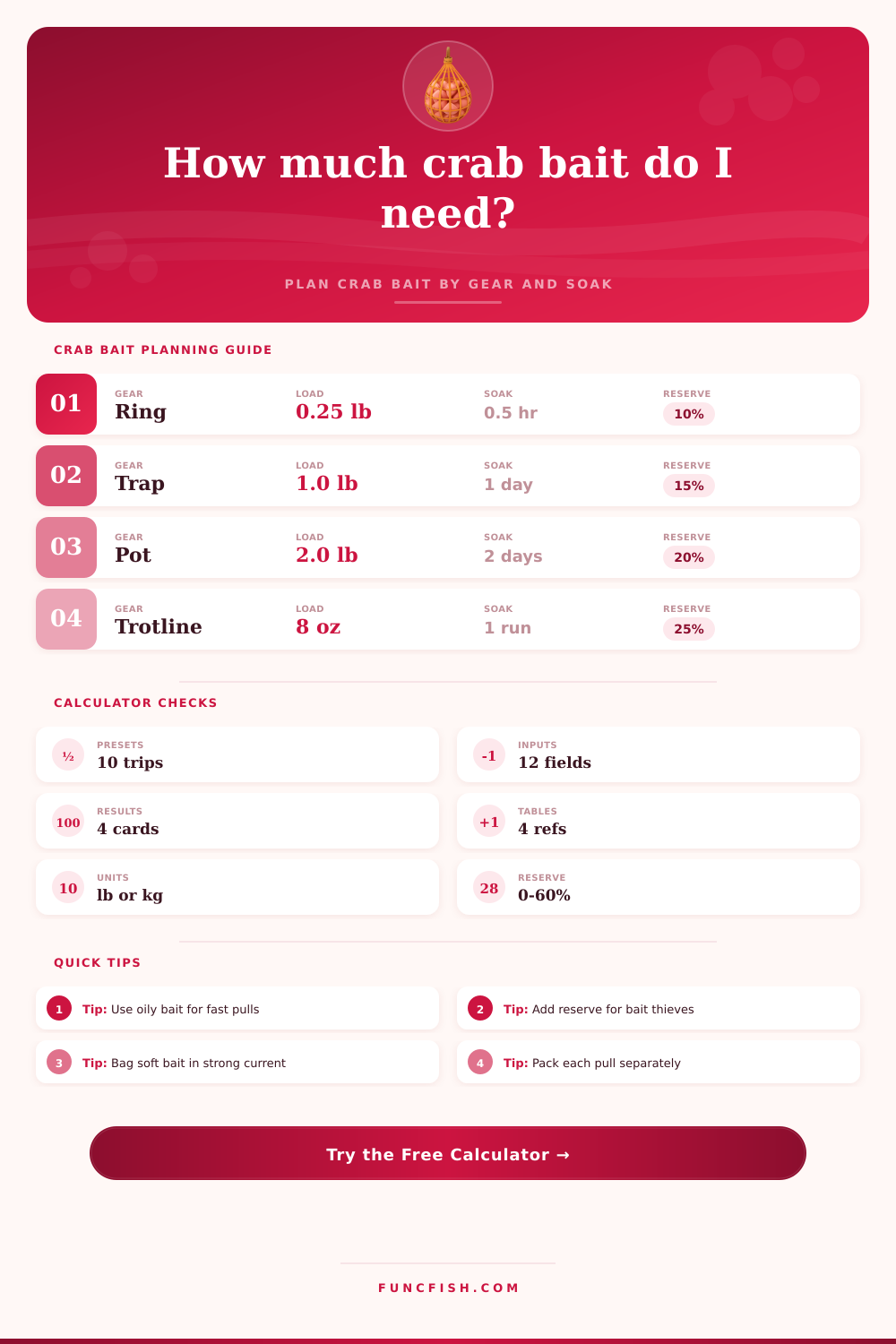
0.25-0.75 lbFrequent short pulls need smaller but fresher bait portions.
Collapsible traps
0.5-1.5 lbGood for docks, creeks, and small boats with one to six hour checks.
Full crab pots
1.5-3.5 lbLonger soaks and larger doors usually justify heavier bait loads.
Trotlines
6-12 ozPlan by bait count and replacement runs rather than one large block.
📘Reference tables
| Gear style | Typical load | Metric load | Best planning use |
|---|---|---|---|
| Hand line or hoop bait | 0.10 to 0.35 lb | 45 to 160 g | Short checks, visible bait, easy replacement. |
| Ring net or drop net | 0.25 to 0.75 lb | 115 to 340 g | Fast dock or pier pulls where bait is refreshed often. |
| Collapsible crab trap | 0.50 to 1.50 lb | 225 to 680 g | Creeks, marsh edges, and protected bays. |
| Full crab pot | 1.50 to 3.50 lb | 0.68 to 1.59 kg | Bay, channel, and overnight soaks. |
| Trotline bait spacing | 6 to 12 oz per 100 ft | 170 to 340 g per 30 m | Chicken necks or eel strips replaced by run. |
| Bait type | Scent strength | Durability | Quantity note |
|---|---|---|---|
| Fish racks or carcasses | Medium-high | Medium | Reliable base estimate for mixed crab sets. |
| Menhaden, bunker, oily baitfish | High | Medium-low | Use slightly less in quick pulls, but protect in strong flow. |
| Chicken necks or backs | Medium | High | Use a little more weight for scent but expect good hold time. |
| Clam, mussel, or shellfish scraps | High | Low | Increase reserve because soft bait can vanish quickly. |
| Squid or eel strips | Medium | High | Good when small fish strip softer baits. |
| Target crab | Typical setup | Bait intensity | Planning note |
|---|---|---|---|
| Blue crab | Rings, traps, trotlines | Medium | Fast pulls often use smaller, fresher pieces. |
| Dungeness crab | Full pots, heavy traps | High | Larger pots and longer soaks usually need more bait mass. |
| Stone crab | Weighted traps | Medium-high | Durable bait and firm holders help on overnight sets. |
| Mud crab | Estuary pots | High | Warm water and bait thieves call for a bigger reserve. |
| Rock crab | Bay pots | Medium-high | Plan for sturdy bait when fish and snails are active. |
| Condition | Adjustment | Why it changes bait | Calculator field |
|---|---|---|---|
| Warm water above 75 F | +8% to +18% | Scent disperses fast and soft bait breaks down sooner. | Water temperature |
| Strong current or surge | +12% to +25% | More washout and more bait pulled through mesh. | Current and surge |
| High bait thief pressure | +15% to +30% | Small crabs, fish, eels, and snails strip bait early. | Bait pressure |
| Rigid bait box | -8% to -12% | Less waste, slower access, and better leftover bait recovery. | Bait holder |
| Overnight soak | +20% or more | Bait must keep scenting after the first feeding rush. | Soak hours |
💡Planning tips
This planner estimates bait quantity only. Check local gear limits, seasons, size rules, and harvest rules before setting any crab gear.
There is no more guesswork on how much bait to put into your crab pots because calculator handles the math once you plug in variables like water temperature and current strength. Simply enter your soak time and number of pots/gear, and let the tool do the math. By doing this, you’ll avoid running short or using too much bait. A lot of guys just dump what looks good and end up with empty traps.
This tool doesn’t use intuition; it uses hard facts, saving you time and money. The calculator also queries how strong current is and what the temperature of water is. Current scatters bait. Warmer water scatters scent trails faster then cooler water because the scent washes away quicker in warm water than in cold, still water. Bait in warm water can absorbs blown out quickly, if you put pots down overnight in warm water, the bait could go fast. On the other hand, two pounds of menhaden may last the whole day in calm water but hours in strong surge.
How to Use the Crab Bait Calculator
The water carries the scent so the tool adjusts your estimate based off that fact. The stronger the current, the more bait you should of had. This results in a higher amount suggested by the tool. How much you bait depends on your gear (rings vs). Pots; baiting a large bay pot with high tide will take more than what’s needed for a collapsible trap sitting quietly in a creek.
Also, bait degrades faster in a ring versus a pot so you swaps out the bait before it goes bad. Rings were built to be changed out fast, in fact, that’s their purpose. Pots are built to last long, they’ll keep the bait alive longer and they can do that because they have more room. Larger gear has more surface area and volume so you will need more bait to create a strong scent signal.
Under-baiting a big pot means crabs won’t sense its presence from afar. Instead, they’ll just pass by without turning into it… There’s not enough of a signal. The oily baits gives off scent rapidly, but they also fall apart quickly in the water. Crabs are attracted from a distance by the scent of mackerel or bunker, but the baits break down rapidly. Chicken necks (or other tougher baits) resist breaking down at the paws of the scavengers better, but don’t establish that instant scent cloud. Soft baits will be washed away in heavy current unless contained. A mesh bag lets the scent escape but keeps the bits bundled together.
You can select type of bait holder you’re using with the calculator, which will include containment efficiency. Less waste means you’ll extract more value from every pound of fish. Another consideration is bait thieves, such as small crabs, snails, and eels that will pick a pot bare. Don’t think I am being paranoid when I say add ten to twenty percent more bait. I’m not; I am being practical.
Some bait gets stolen on the trip. Some gets trimmed away or suffers from freezer burn. And then you get through your first several sets and find yourself with only partial amounts left in pots. By thinking in terms of “pulls” instead of just days, you don’t end up running out of fresh bait too soon. A reserve gives you enough to last throughout the session, keeping your traps productive all day long.
Packaging matters for quality control. When you buy the bait in bulk, it will degrade over time, so portioning out before departure is good. That way everyone has a fair shake in the traps. And you’ll learn what’s working best. One set might be catching more crabs than another? Adjust accordingly next time. Know your results = refine your game.
You’ll know exactly how much bait went into each setup. Planning ahead and knowing your numbers helps take some of the stress out of crabbing. Using the calculator will help you worry less about having enough and more on what’s going on out there with the catch and the tide. Letting your equipment do the work for you lets you enjoy the outing more.
Baited up properly and packed right they’re an investment that pays off big-time in terms of a good day on the water. Making yourself work methodically using this tool means better days overall. Actualy, it makes life easier.