Hydration Needs per Fishing Hour Calculator
Estimate fluid per hour, total carry volume, bottle count, and electrolyte range for boat, bank, kayak, surf, wading, and offshore fishing sessions.
🎣Fishing hydration presets
⚙Trip and body inputs
Fishing hydration result
Formula breakdown
💧Hydration gear data grid
Good for short bank sessions, but several are needed in heat.
Common bottle size that maps cleanly to hourly targets.
Useful for kayak, wading, and surf trips where hands stay busy.
Practical electrolyte concentration for longer hot sessions.
🛠Gear and species comparison grid
Frequent casts, deck glare, and livewell chores usually need steady bottle access.
Cool water hides sweat loss; waders raise heat load during hikes and riffle pushes.
Soft sand, plugs, and wind make carried volume more important than cooler volume.
Sun, salt spray, and rail work favor electrolyte bottles staged before the bite.
📊Reference tables
| Technique intensity | Base rate used | Typical fishing use | Calculation note |
|---|---|---|---|
| Still fishing or slow trolling | 3.5 ml/kg/hr | Anchored bait, trolling, bobber watching | Low movement but sun exposure can still raise the final hourly amount. |
| Light casting, seated breaks | 4.4 ml/kg/hr | Bass boat, skiff, pier, easy bank | Frequent breaks lower the activity term while heat still matters. |
| Steady casting and net work | 5.2 ml/kg/hr | Power fishing, lure changes, landing fish | Good middle setting for most active freshwater trips. |
| Wading against current | 6.0 ml/kg/hr | Trout, steelhead, salmon, smallmouth | Cold water can mask sweat, but waders and current add workload. |
| Paddling or pedal drive | 6.8 ml/kg/hr | Kayak marsh, lake, inshore flats | Includes propulsion, balance, and limited access to a cooler. |
| Surf walking with gear | 7.2 ml/kg/hr | Surf, jetty, beach plugging | Soft footing and carried tackle make this the highest shore option. |
| Heat index band | Multiplier | Fishing meaning | Planning adjustment |
|---|---|---|---|
| Below 55°F / 13°C | 0.78x | Cold trips with low sweat feel | Still carry water; cold air can hide fluid loss. |
| 55-69°F / 13-21°C | 0.90x | Comfortable shoulder-season fishing | Use normal bottle rhythm and check urine color later. |
| 70-79°F / 21-26°C | 1.00x | Baseline warm fishing | Hourly amount comes mostly from activity and body weight. |
| 80-89°F / 27-32°C | 1.12x | Warm deck, bank, and wading sessions | Add bottle capacity before the bite window starts. |
| 90-99°F / 32-37°C | 1.28x | Hot summer fishing | Plan shade breaks and electrolytes on longer trips. |
| 100°F+ / 38°C+ | 1.48x+ | Very hot and humid exposure | Reconsider timing, shorten effort, and monitor symptoms. |
| Fluid concentration | Sodium per liter | Best trip fit | How calculator uses it |
|---|---|---|---|
| Plain water focus | 0-250 mg/L | Cool trips under about two hours | Shows low electrolyte priority when heat and duration are low. |
| Light electrolyte | 300-450 mg/L | Warm half-day bank or boat trips | Lower bound for moderate sweat and steady sipping. |
| Standard hot-trip mix | 500-700 mg/L | Long, hot, or humid fishing | Main range used for sodium cards on multi-hour sessions. |
| Heavy sweat support | 700-900 mg/L | Kayak, surf, wading hike, offshore work | Upper bound appears when sweat load and heat index are high. |
| Split bottle plan | Water plus mix | Anglers sensitive to sweet drinks | Alternate plain water and electrolyte fluid to stay consistent. |
| Species or venue | Common exposure | Carry pattern | Hydration watchpoint |
|---|---|---|---|
| Bass or walleye from boat | Open deck glare | Cooler bottle every 45-60 minutes | Wind makes thirst less obvious while casting. |
| Trout or steelhead wading | Cool water, warm layers | Hip pack bottle or small bladder | Waders trap heat during bank walks. |
| Redfish or snook kayak | Low shade, paddle effort | Bladder plus one backup bottle | Launch delays can consume the reserve early. |
| Striper or pompano surf | Sand, wind, reflected sun | Backpack bladder or staged cooler | Soft footing raises workload fast. |
| Tuna, snapper, or mahi offshore | Salt, sun, and deck work | Labeled bottles before the run | Seasickness and spray can reduce drinking rhythm. |
💡Calculation tips
The reason you get tired in the afternoon on a boat is you are losing fluids when casting. Water moves out of cells to perform other bodily functions, and your brain gets smaller. You don’t even know how much water has been lost from your body till you begin getting headaches. Staying sharp is a physics problem. Most anglers does not think about it and only deal with hydration as an afterthought.
The calculator above take your body weight, heat index and style of fishing to come up with numbers. Knowing those inputs will help change what you put in your cooler.
How to Stay Hydrated on a Boat
Sweat is your cooling system and it goes on overdrive. Getting wet makes your body think “oh we’re cool now.” But wearing breathable waders or pushing the pace through current will spike your core temp even when water is chilly. You’ll lose fluids through sweat but won’t feel wet. Air temp isn’t as important as activity levels, paddling upwind saps energy and depletes water quicker then hanging out in the shade.
Don’t worry about carrying too much on an easy paddle morning. Use tool’s adjustable base rate to account for your effort and weight.
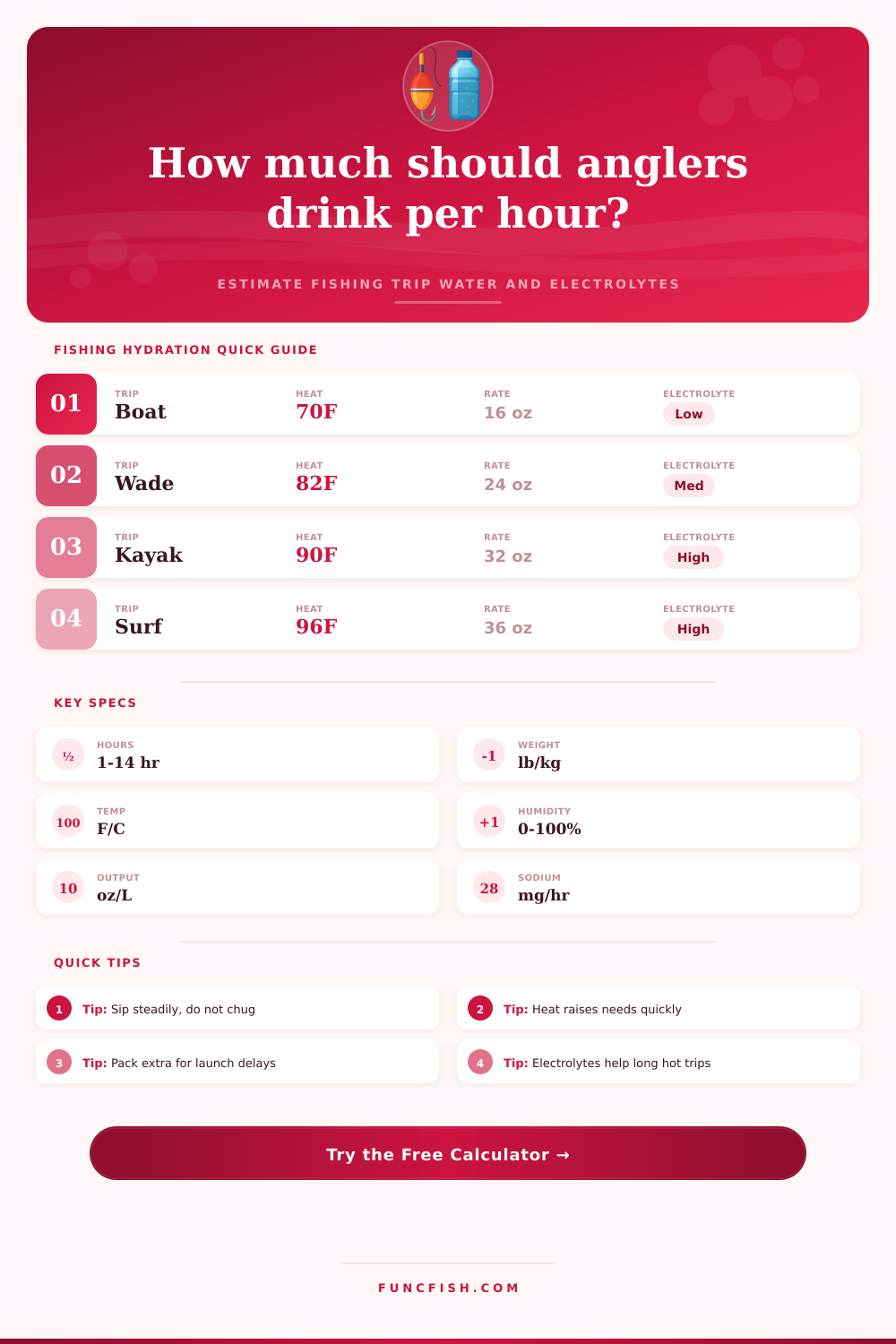
We feel dehydration slowly. By the time we’re thirsty, we’ve already underperformed. Humidity makes it worse as sweat doesn’t evaporate as well. Your body has to sweats more just to cool down. You don’t see that additional loss when measuring flat water intake. To illustrate how heat bands alter needs, look at the reference table. When targeting bass on a hot July day with no wind and full sun, the need increase dramatically, going from a baseline to critical reserve level. Overlooking this multiplier will result in subpar days toward the end of the day.
Most anglers don’t need sugar-laced sports drinks on water. Long days use up blood sodium, and plain water is all you need to thin it out. Hyponatremia can make you feel worse despite being hydrated because drinking plain water alone dilutes your blood sodium levels. You want a balanced electrolyte solution. The sweet spot is generaly between five hundred and seven hundred milligrams of sodium per liter. That gives you the ability to cast longer without the lethargy that usually ends good trips early.
How much you drink depends off your gear. When wading, a bladder inside a hip pack ensures hydration’s always nearby. If offshore deck fishing, staged bottles avoids distraction from rail work. Locking water in the cooler beneath tackle? You are not likely to get it down. Every time, proximity trumps volume. Better two liters at hand than five gallons out of sight.
Bottle count suggestions and reserve target calculations provides advice turned into a packing list. Start slightly over-hydrated. If you expect to be out there four hours, factor in time spent at the launch ramp and fiddling with tackle in the heat. The unexpected can happen fast. If you expect to be out there four hours, factor in time spent at the launch ramp and fiddling with tackle in the heat. The unexpected could of happen fast. So begin the day ever-so-slightly over-hydrated not dead-on-target. Drink slowly and consistently, not one big gulp. Periodically check the color of your pee (this is roughly accurate).
Think of it: Hydration is just another tool in the tackle box. Keep your mind on task until shadows grow long.