
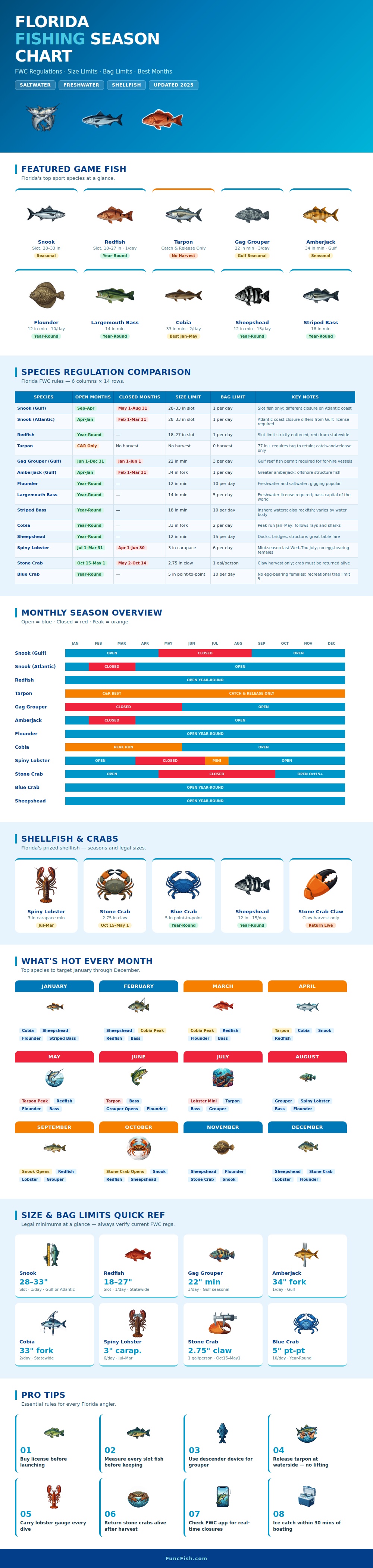
The fishing regulations in Florida can be tricky. They’re made to help save fish that has different reproductive windows throughout the year. Check out the chart above which details the exact dates each season open and close for both freshwater and saltwater gamefish. This way you won’t get schooled on the law after you recieve your citation but instead before setting foot onto the water.
Knowing these changes isn’t so much about remembering a calendar as it is knowing how to respect the waters natural cycle. Because there are strict slot limits for snook, meaning they need at least some mature breeding adult fish in the wild, you can’t simply take all the fish you land. Only snook measuring between 28-33 inches will be counted towards your daily bag limit. That’s good because it saves big breeders which account for most of the eggs as well as smaller fish that haven’t yet matured.
Why We Need Fishing Rules in Florida
See the infographic for a comparison of seasons between Atlantic and Gulf, both of which run a few months apart. Anglers who hop from one side of state line to another often forget to check the zones. They get tripped up on a small detail that makes the difference between coming home with an empty cooler or a full one for dinner.
Statewide, redfish are fair game year-round although there’s a strict slot limit on these fish to avoid over-harvesting the medium sizes. Tarpon offer another twist. These silver bullets is catch-and-release only. You’re not fishing to fill a cooler; you’re fishing for the fight. A big mistake many novices make with tarpon is lifting the fish out of the water, which damages its swim bladder and fatally injures the fish hours or even days later. To save these prized fish for future anglers leave them in the water as you unhook them. It’s good practice because these fish travels great distances outside of Florida waters and must survive more than one season before returning.
For example, certain bottom feeders such as amberjack and gag grouper has limited seasons designed to give those fish time to replenish during key spawning times. Besides following the rules, you may also need specific permits when fishing from a charter boat which an occasional angler might not think about. If you plan to visit during a specific month, this color-coded chart will quickly show you what species should be targeted based off availability, thus preventing wasted time chasing off-season or otherwise closed fish. For instance, you can target some of the deeper-water fish such as grouper best between June and December and focus more effort on near-shore types such as sheepshead and flounder in the spring. Knowing that is the difference between a good cast and being left scratching your head.
These are the rules for catching shellfish: The bottom line is sustainable harvest rather than easy prey. When you catch stone crab, you has to leave it alive; take off the claws, return the animal to the water so that it can regrow them and still eat. With spiny lobster, there are mini-seasons when people swarm the waters for a brief period, then things gets calm again until the fishery can restock. Blue crabs? They’re open year-round, but even then there’s a minimum size to keep from snatching juvenile animals who haven’t had a chance to breed yet.
All this may sound like complaining, but it’s the kind of thing without which the industry would of collapsed in one decade flat. Laws keep changing based off scientific findings. Always be sure to get the updated rules before going and take something to measure fish with. I also encourage every angler to ice their catch right away. It keeps the fish good and honors all of the work you went through to land the fish.
That’s a quick guide map to understanding those complex fisheries. Once you realize the reasoning behind the size limits and closed months, you won’t think of the fishing regulations as a roadblock anymore but rather a tool to ensure we can all enjoy the water in the future. The truth is, you don’t go fishing in Florida to catch whatever you can; you want to leave enough so others has a chance to do the same. Knowing you fished fair will make standing there on that dock with a full limit feel even sweeter.